Yes, most PET and PP strapping can be recycled once it is sorted by material and compressed into a dense format. Businesses make it financially viable by shredding or baling straps onsite, keeping streams clean and monomaterial, and working with a collection partner or buyback scheme rather than sending straps to general waste.
TL;DR:
- Keeping PET and PP straps separate and free of contamination significantly increases their recycling value and likelihood of acceptance by processors.
- Densifying straps through shredding or baling onsite reduces transport costs and transforms waste into a viable revenue stream.
- Equipment selection depends on site volume and space, with shredders suitable for small volumes and balers for larger, established operations.
- Tracking volumes, establishing minimum collection thresholds, and maintaining batch records are crucial steps to ensure economic and environmental benefits.
- Most plastics are recyclable if sorted properly, but mixed or contaminated loads are rejected or receive lower rebates, so effective separation is essential.
Table of Contents
- Which strapping types are recyclable and what affects value
- Why businesses often do not recycle strapping
- Onsite solutions to make strapping recyclable
- Setting up a commercial collection stream
- End markets, pricing signals and environmental impact
- How Compact helps: audits, buyback and equipment
- Measuring success and avoiding common mistakes
- Get a free waste audit or start a bale buyback
- Sources
- FAQ
Which strapping types are recyclable and what affects value
Plastic strapping comes in two main polymers: PET (polyester) and PP (polypropylene). Both are monomaterial plastics, which makes them straightforward to reprocess when kept apart from each other and free of contamination, as outlined by strapping manufacturer Teufelberger’s better.collect scheme. Mixing the two, or letting food residue, adhesive tape or metal clips into the stream, drags down what a recycler will pay.
Food-grade PET strapping used around consumer goods tends to command better rebates than strapping that has picked up oil, dust or general warehouse grime. Thermoform contamination, where PET strapping gets tangled with unrelated plastic sheet or film, is another common reason processors reject a load or drop the price.
- PET strapping is dense, strong and widely accepted by recyclers when clean and sorted.
- PP strapping is lighter and equally recyclable but must never be mixed with PET in the same bale.
- Mixed or contaminated loads typically see reduced rebates or outright refusal from buyers.
Separating streams at the point of use, rather than trying to sort them later, is the single biggest factor in whether a load earns a refund at all.
Why businesses often do not recycle strapping
Strapping is bulky and springy. A skip full of loose straps is mostly empty air, so haulers end up charging to move volume rather than weight, which makes uncompressed strapping expensive to collect. This is the main reason so much of it still ends up incinerated with general waste, according to industry practitioners writing in Packaging Journal.
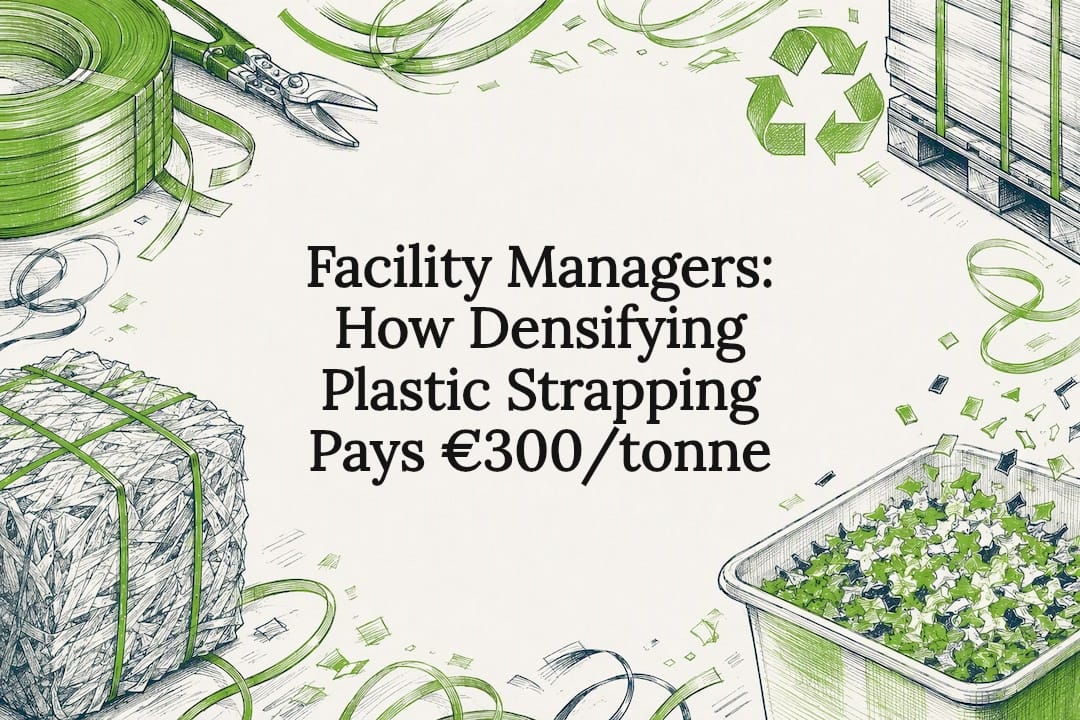
Densifying strapping before it leaves site is what turns a cost centre into a saleable material. Teufelberger’s own case notes describe a scenario with an 800 kilometre transport run costing roughly €1,000, against a refund of around €300 per tonne for clean, baled PET strapping. Below a certain volume, that transport bill simply outweighs the refund, which is why collectors set minimum tonnages before they will schedule a pick-up.
Shipping loose straps also carries a carbon cost out of proportion to the material moved. Compressing straps into bales or shredded flake before collection cuts the number of journeys needed per tonne of usable recyclate, which is the difference between a programme that pays for itself and one that quietly loses money.
Onsite solutions to make strapping recyclable
Matching the right equipment to your volume, space and staffing is what decides whether a strapping stream actually gets collected. Three approaches cover most sites:
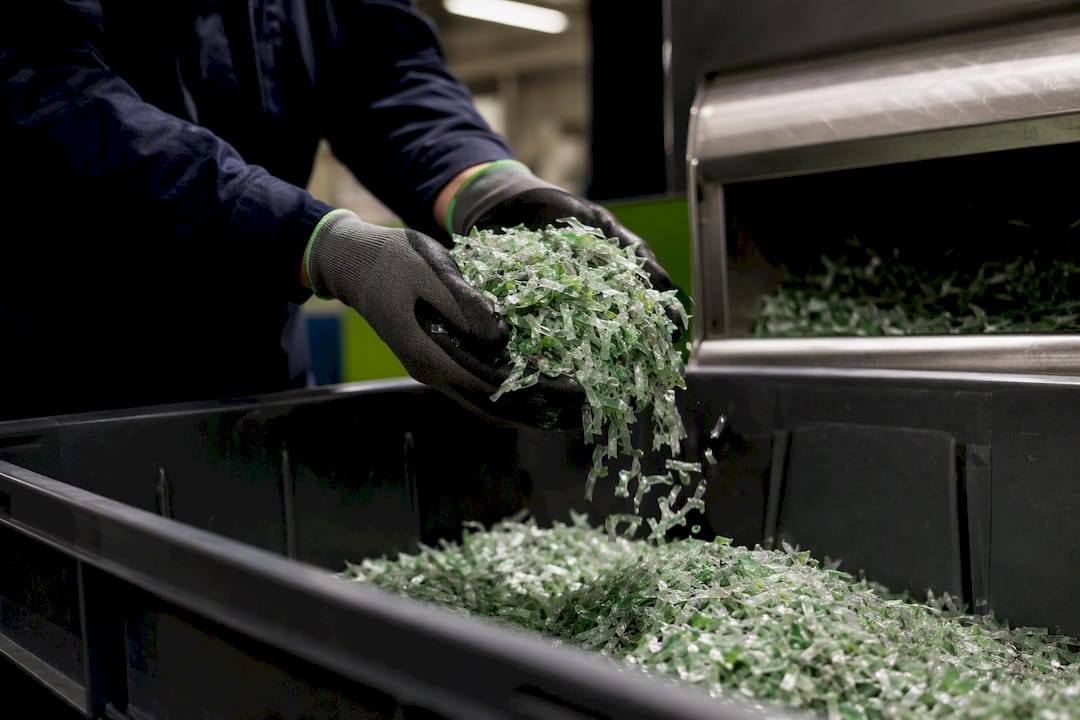
- Strap choppers and small shredders reduce straps to loose flake, ideal for sites with limited floor space or where straps arrive dusty and need volume reduction fast, an approach industrial shredders are built for.
- Strapping presses compress straps into dense pucks or blocks, suited to mid-volume sites that want a manageable, stackable output without a full baler.
- Balers, the same principle used for cardboard balers, compress straps into bales for sites generating enough volume to justify the equipment footprint.
Each option trades space against throughput: choppers need the least floor area but produce loose flake that still needs bagging, while balers need more room but produce the densest, easiest-to-transport format. Labour is a factor too. Someone still has to remove metal or plastic clips, keep straps dry and free of food residue, and feed the machine consistently rather than letting straps pile up loose.
Pro Tip: If your straps trap dust or would take up more storage space as bales than you can spare, shred rather than bale. It is the faster route to a manageable, saleable stream.
Setting up a commercial collection stream
Turning captured straps into income follows a fairly consistent sequence, regardless of sector.
- Measure your volume. Track monthly or annual strapping output and estimate what proportion is clean PET versus PP.
- Choose a densification method. Decide between bales, big bags or shredded flake based on the space and equipment covered above, and label each batch by material.
- Agree collection terms. Settle on a minimum tonnage threshold and who pays for transport before a collector schedules a pick-up, since this is often what makes or breaks the economics.
- Keep batch records. Note dates, weights and material grade for each collection to avoid disputes and demonstrate a clean chain of custody.
Programmes that skip the measurement step tend to underestimate how long it takes to reach a viable pick-up volume, which leads to straps piling up loose in the meantime. A simple spreadsheet tracking weight and material type per batch solves most of that friction early.
End markets, pricing signals and environmental impact
Clean PET strapping generally moves into fibre and packaging applications, while PP recyclate feeds back into industrial products including new strapping itself. PET is among the most actively traded recycled plastics globally, though prices stay under pressure from virgin resin costs, as noted by BEWI Connect’s market data.
Refund levels depend heavily on purity, proximity to a processor and current resin prices, all of which move independently of each other.
| Factor | Effect on price |
|---|---|
| Bale purity (single polymer, no contamination) | Higher refund per tonne |
| Distance to processor | Higher transport cost eats into refund |
| Virgin resin price | Falling virgin prices pull recyclate prices down |
| Collection volume | Below minimum tonnage, pick-up may not be offered |
End-of-waste standards, including IS EN criteria referenced by the EPA for PE and PP recyclate pellets, set the quality bar processors must meet before material stops being classed as waste. National strategy documents, including Repak’s packaging recycling strategy, identify tertiary packaging such as strapping as a stream that still needs better capture to meet EU packaging recycling targets.
How Compact helps: audits, buyback and equipment
Effective strapping recycling programs require measurement, densification, and matching to the right collection route. A waste audit is often the starting point for many sites.
- The bale buyback scheme offers a direct route to turn baled or shredded strapping into payment once minimum volumes are reached.
- For sites generating enough volume, Compact supplies balers, industrial shredders and compactors suited to the format a buyer will actually pay for.
Which route makes sense depends on volume: lower-volume sites often start with an audit and a shredder, while higher-volume operations move straight to a baler and a buyback agreement.
Measuring success and avoiding common mistakes
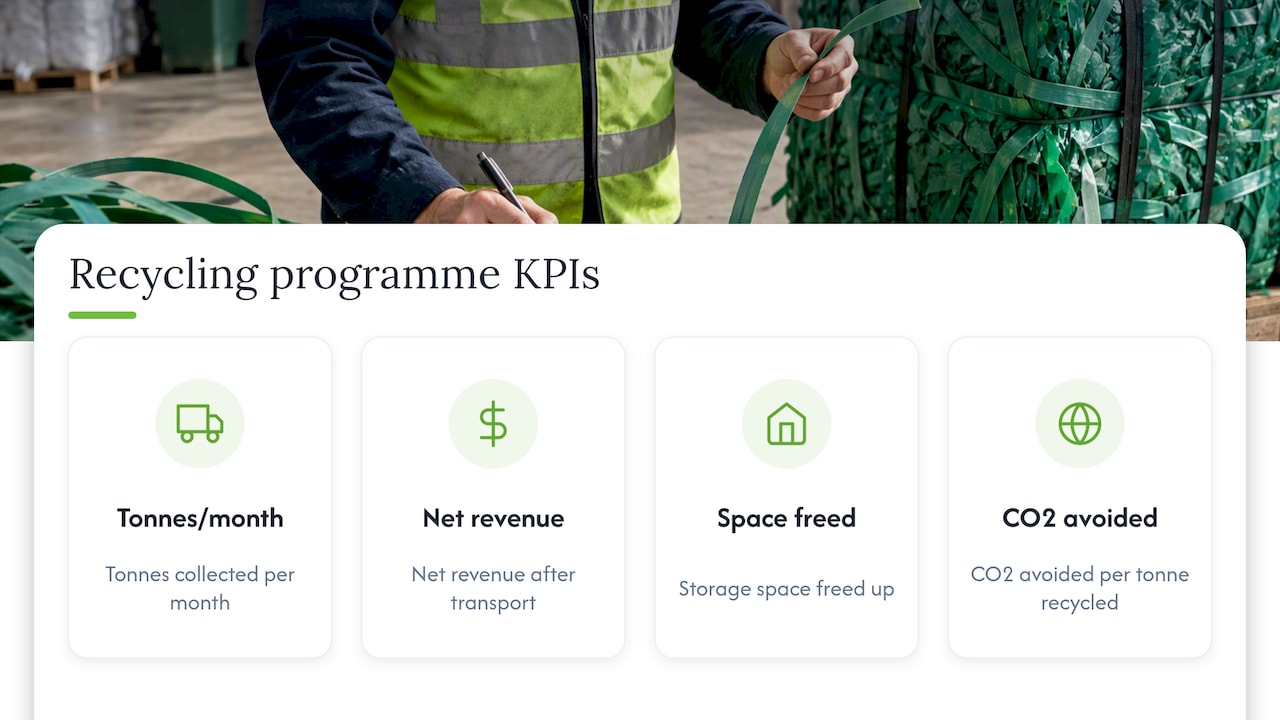
The clearest sign a strapping programme is working is a simple set of numbers: tonnes collected per month, net revenue after transport, storage space freed up, and, where a processor reports it, CO2 avoided per tonne recycled.
Most failed programmes share the same faults: straps stored loose instead of densified, PET and PP mixed in the same pile, and nobody checking the minimum tonnage a collector actually needs before agreeing to pick up.
The fix is rarely complicated. Start shredding or baling immediately, keep straps dry and out of general waste, and segregate PET from PP from day one rather than trying to untangle them later.
— Graham
Get a free waste audit or start a bale buyback
Compact turns strapping waste into a revenue line rather than a disposal cost, through a free waste audit that maps your current volumes, a bale buyback scheme that pays for clean baled material, and equipment supply for sites that need to densify strapping before collection.
After an audit, you get a straightforward plan: whether your site needs a shredder, a baler or simply a scheduled collection, and what a buyback arrangement would look like for your volumes. Businesses shipping straps loose to general waste, or paying to move mostly air on a truck as highlighted by logistics cost analysis, typically see the fastest turnaround once densification is in place.
Book a free waste audit to find out what your strapping stream is worth.
Sources
- better.collect – Circular Strapping and Recycling System | Teufelberger
- A recycling system for strapping – packaging journal
- Plastic Packaging Recycling Strategy 2018-2030 | Repak
- End-of-waste criteria for PE & PP recyclate pellets | EPA
FAQ
Can you recycle plastic strapping?
Yes, most PET and PP plastic strapping can be recycled once it is sorted by polymer type and kept free of contamination. Manufacturer schemes such as Teufelberger’s better.collect reprocess clean, densified strapping into new material.
Are plastic tie straps recyclable?
Plastic tie straps made from PET or PP follow the same rules as strapping bands: recyclable when clean and separated by material, but often rejected when mixed with metal clips or other plastics. Removing clips and sorting by polymer before collection improves the chances of acceptance.
What to do with excess rubber bands?
Rubber bands are a different material from plastic strapping and are not part of the PET or PP recycling streams described here. Most kerbside and commercial recycling schemes do not accept rubber bands, so they should go in general waste unless a specific local scheme exists.
What plastic cannot go in the recycling bin?
Plastics contaminated with food residue, mixed polymer items, and materials without clear end-of-waste routes, such as unsorted PET and PP strapping mixed together, typically cannot go in standard recycling streams. Compliance with end-of-waste criteria for recyclate pellets requires clean, sorted input material before any plastic stops being classed as waste.