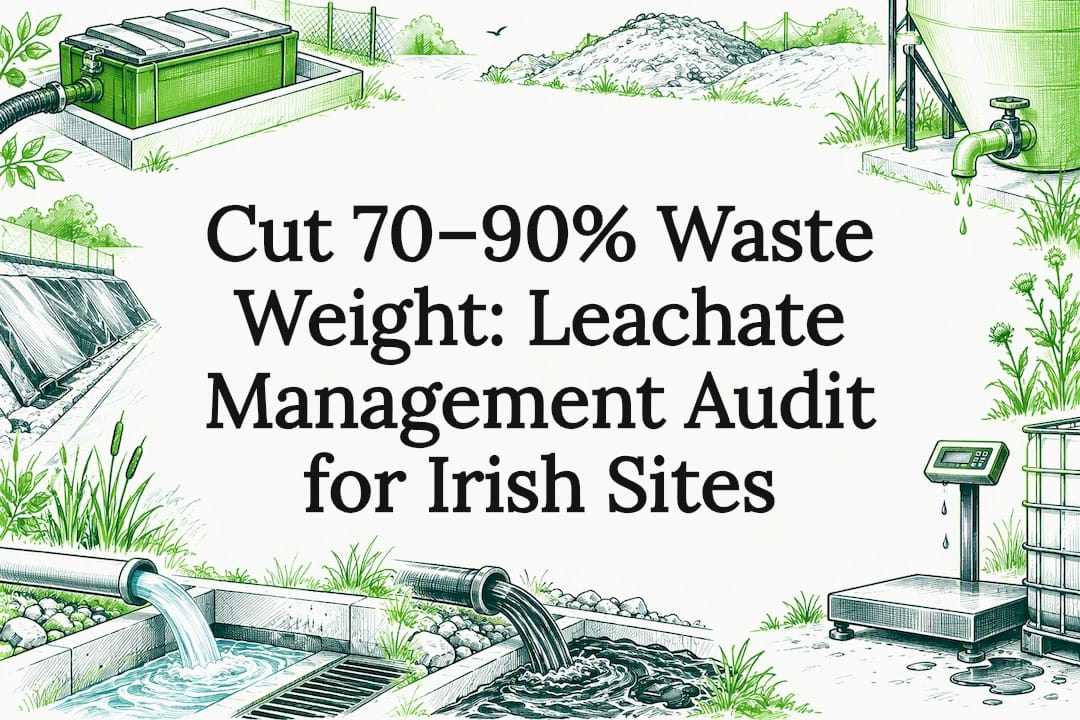
Commission a targeted waste audit and pilot an on-site dewatering option: this is the single fastest way to cut liquid weight from commercial waste and composting, and it starts revealing what your feedstock will actually yield before you spend on equipment. On-site dehydration systems can reduce weight and volume by roughly 70 to 90%, which is where most of the disposal cost saving comes from.
TL;DR:
- On-site dehydration systems can reduce waste weight and volume by approximately 70 to 90 percent, significantly lowering disposal costs.
- Proper leachate control involves segregating liquids, fixing containment, and pilot testing dewatering methods before full-scale installation.
- Conducting a waste audit and sampling feedstock moisture content is crucial to selecting appropriate equipment and predicting actual dewatering yield.
- Regulatory requirements vary by capacity, with smaller operations often needing only a registration certificate and larger ones requiring permits or licenses.
- Regular monitoring of moisture, temperature, and odor prevents anaerobic conditions and ensures efficient composting or waste management.
Table of Contents
- What leachate management means for commercial waste and composting
- Practical steps to reduce, collect and control leachate on site
- Equipment and systems that reduce weight and disposal costs
- What to check before installing on-site treatment
- The business case for controlling leachate on site
- Quick checklist for facility managers this week
- A practical approach to leachate control
- Get a site-specific plan for your waste
- Sources
- FAQ
What leachate management means for commercial waste and composting
In this guide, leachate management means controlling the liquids that come off commercial waste streams and on-site food composting: drip trays, bin liquor, dewatering run-off and the free water that separates from organic feedstock once it starts breaking down. It is not about landfill leachate treatment plants or environmental permitting for municipal sites. If you run a kitchen, a retail back-of-house, a food processing line or an on-site compost unit, this is the liquid you are already paying to have collected or that is quietly adding weight to every skip.
Moisture is the variable that decides whether composting works. The accepted range is 45 to 60% moisture by fresh mass: below that, microbial activity slows and breakdown stalls; above it, the pile turns anaerobic, smells and attracts pests. Getting close to that band before material goes into a composter, or before it leaves site as waste, is the whole game.
Not every feedstock dewaters the same way. Research into food waste digestate shows that extracellular polymeric substances (EPS) and how far digestion has progressed strongly affect dewaterability, so two kitchens producing what looks like similar waste can behave completely differently under a press or centrifuge. That variability is why:
- A waste audit before equipment purchase is not optional, it is the only way to predict yield.
- Mixed feedstocks (fats, fibrous trim, liquids) often need trial runs rather than supplier spec sheets alone.
- Seasonal or menu changes can shift moisture content enough to change which equipment class makes sense.
Practical steps to reduce, collect and control leachate on site
Cutting leachate starts before any machine gets involved. Changing how waste is handled at the point it is generated removes a surprising amount of free liquid before it ever reaches a bin or compost unit.
- Segregate at source. Keep wet trim, spoiled stock and liquids separate from dry cardboard, packaging and general waste so liquid does not contaminate recyclable material.
- Fix containment and drainage. Sealed sumps, kerbed gullies, bunded storage areas and tanks that route liquid to a controlled discharge point stop leachate migrating across a yard or into drains it should not reach.
- Pilot a dewatering option on a small batch. Before committing to a full line, run one shift or one week of representative waste through a trial unit to see real weight reduction, not a catalogue figure.
- Reuse collected leachate carefully in composting. Research on digestate post-treatment shows collected leachate can work as a moisturising agent added back into feedstock before sanitisation, cutting fresh water demand, but only when kept strictly separate from treated or finished product.
- Monitor and log moisture, temperature and odour. A simple daily or weekly log catches drift towards anaerobic conditions before it becomes a smell complaint or a pest problem.
Pro Tip: Weigh a sample bin before and after a dewatering trial run rather than relying on a visual estimate: the weight difference is the number that actually feeds your cost case.
Keeping clean and dirty water pathways separate matters as much as the equipment itself. A dewatering unit feeding straight back into a mixed drain undoes most of the benefit it was bought for.
Equipment and systems that reduce weight and disposal costs
Several equipment classes handle the dewatering step, and the right one depends on what you are feeding it. Screw presses and belt presses suit continuous, moderate-volume streams; centrifuges handle finer, more liquid-heavy feedstock; in-vessel systems with drainage valves work well when dewatering is paired with on-site composting rather than disposal.
The 70 to 90% weight and volume reduction range reported for commercial-scale dehydration is achievable for many wet food waste streams, but the same research notes that matching the dried output to a genuine end use, such as feed or fuel pellets, is harder than hitting the reduction figure itself: consistency, not dryness, is usually the barrier to resale.
When choosing between options, weigh up:
- Throughput needed against your actual daily or weekly waste volume, not a worst-case guess.
- Solids content and how variable your feedstock is week to week.
- Maintenance demands and who on site can realistically service the unit.
- Footprint against available space, and where the extracted liquid will go afterwards.
Compact’s Beverage Dewatering C200 and Beverage Dewatering C350 are built for liquid-heavy commercial streams and differ mainly on throughput, worth discussing directly against your audit figures. The LiquiDrainer suits sites that need a smaller-footprint collection and drainage step rather than a full dewatering line. Where feedstock needs size reduction first, combined shredding and dewatering equipment can be worth discussing at the same time.
What to check before installing on-site treatment
Before installing any dewatering or treatment system, confirm what authorisation your capacity actually needs. Ireland’s Food Waste Regulations guidance sets out that smaller on-site treatment, broadly up to 50 tonnes a year and no more than 20 tonnes on site at once, can often operate under a Certificate of Registration, while larger throughput needs a full permit or licence.
- Confirm which authorisation tier your projected volume falls under before ordering equipment.
- Check trade effluent discharge conditions on flow rate, BOD, COD and suspended solids limits if any liquid goes to sewer.
- Remember that dewatered solids do not leave the system: the same regulations keep solids subject to food waste collection and treatment rules regardless of how dry they are.
- Contact your local authority early and keep written confirmation of what it tells you, rather than relying on a supplier’s assumption.
The business case for controlling leachate on site
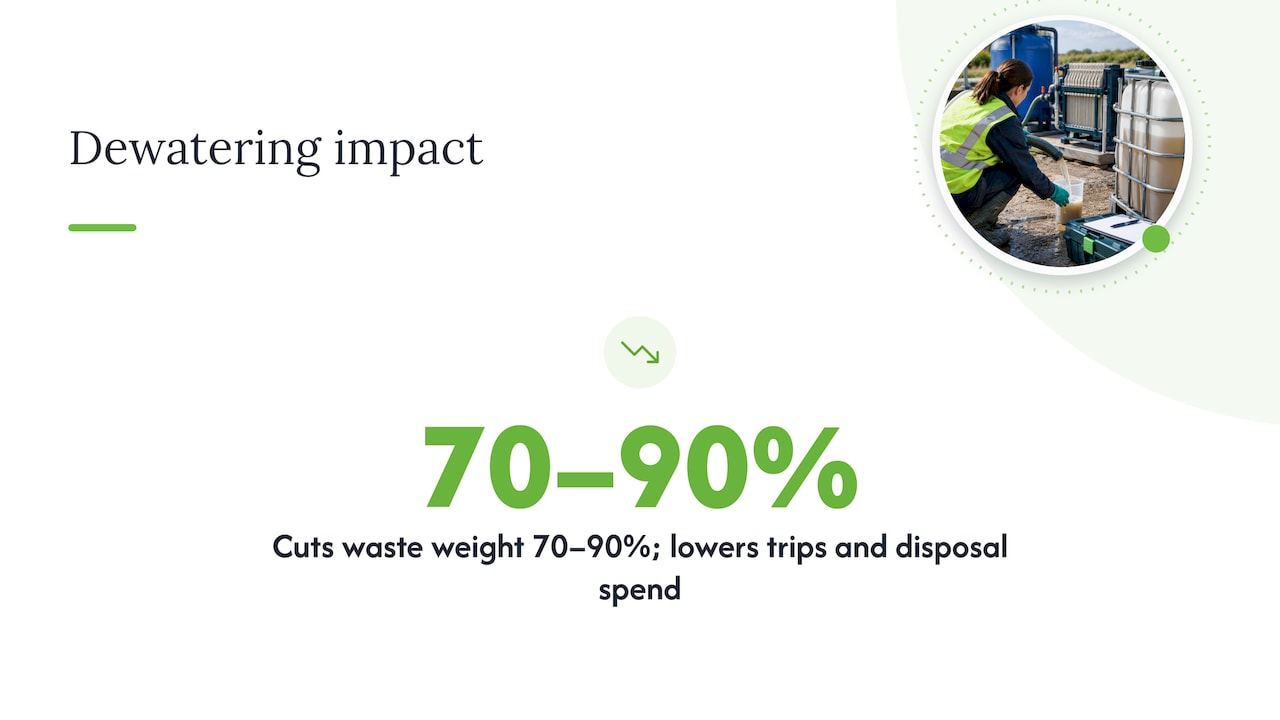
Weight is what you pay to have collected, and liquid is dead weight with no recycling value. Using the researched 70 to 90% reduction range for on-site dehydration, a facility sending out heavy, wet waste several times a week could realistically see that same proportion come off its collection weight once dewatering is running, cutting both transport trips and per-tonne disposal charges.
On-site dehydration can cut commercial food waste weight and volume by 70 to 90%, and that reduction is the main lever behind lower collection and disposal spend.
Drier output is also easier to store and handle, and in some cases can be considered for onward use such as compost, feed or fuel, subject to the same regulatory checks covered above. For recyclable streams like cardboard and plastics that come out of a waste stream once liquids are separated, Bale Buyback arrangements offer a way to turn that material into a payment rather than a cost. The decision points that matter most are your current waste volume, your existing disposal spend and whether you have space to run a dewatering unit without disrupting daily operations.
Quick checklist for facility managers this week
- Commission a targeted waste audit and sample your waste for moisture content and dewaterability.
- Pilot a small-scale dewatering unit or a trial collection run on one shift before committing to a full installation.
- Check your trade effluent licence terms and confirm where dewatered liquor is allowed to discharge.
- Ask suppliers for ROI modelling that includes disposal savings alongside any resale value for drier recyclables.
A practical approach to leachate control
Most facilities overestimate how much they know about their own waste until they actually weigh and sample it. The gap between what a kitchen or compost unit thinks it is producing and what an audit measures is usually where the real savings sit, not in the equipment itself. Equipment is only as good as the feedstock data behind the purchase decision.
A service approach involves starting with an audit, then matching equipment to the audit, followed by exploring routes to monetise the output through a Bale Buyback scheme. Where liquid control intersects with other facility environmental concerns, such as managing dust or airborne particulates around processing equipment, the same discipline of measuring before installing applies, as general facility environmental control guidance also sets out.
— Graham
Get a site-specific plan for your waste
A waste audit is the practical next step if you want a real number rather than a guess before buying anything. Compact’s Free Waste Audit covers a site visit, sampling of your current waste for moisture and dewaterability, and an estimate of what on-site dewatering or composting equipment could realistically save against your current disposal costs.
- Request a Free Waste Audit to get moisture and dewaterability figures specific to your feedstock.
- Review equipment fit against your audit results, including the Beverage Dewatering C200, Beverage Dewatering C350 and LiquiDrainer.
- Ask about We Buyback Bales if your waste stream includes cardboard or plastics once liquids are separated out.
Book your audit and get a plan built around what your site actually produces, not a generic estimate.
Sources
- Assessment of dehydration as a commercial-scale food waste valorization strategy
- Monitor moisture in composting (Cornell compost resources)
- Dewaterability of anaerobic digestate from food waste: Relationship with extracellular polymeric substances
- Digestate post-treatment and upcycling: unconventional moisturizing agent for food waste in-vessel composting
- Food Waste Regulations – Comments/Questions (FAQs)
FAQ
What is the ideal moisture level for on-site composting?
The accepted range is 45 to 60% moisture by fresh mass. Below that band, microbial activity slows; above it, the pile can turn anaerobic and produce odour and pest problems.
How much can on-site dewatering reduce waste weight?
On-site dehydration systems have been shown to cut weight and volume by roughly 70 to 90% for many commercial food waste streams. The actual figure for any one site depends on feedstock composition, which is why a waste audit before installing equipment matters.
Can collected leachate be reused safely in composting?
Research on digestate post-treatment indicates collected leachate can be reused as a moisturising agent before sanitisation, reducing fresh water demand. It must be kept strictly separate from treated or finished compost to avoid contamination.
Do I need a permit to run on-site food waste treatment?
It depends on capacity. Guidance on Ireland’s Food Waste Regulations indicates that smaller throughput can often qualify for a Certificate of Registration, while larger operations need a full permit or licence, and any liquid discharge to sewer is separately governed by trade effluent conditions.
Why does dewaterability vary between similar waste streams?
Dewaterability depends heavily on extracellular polymeric substances and how far the material has already broken down, and research on food waste digestate confirms this variability even between visually similar feedstocks. That is why a waste audit and a small pilot run matter more than a supplier’s general specification.