A bale buyback programme means you compress your cardboard and plastic into dense bales on site, and a buyer collects them and pays you for the material instead of charging you to dispose of it. In Ireland, Repak’s best practice guidance says baling recyclables is worthwhile because they have value, and that businesses may be paid for them or have them collected free of charge (Repak Best Practice Guide). This guide explains how the arrangement works, what you need to take part, what to check in the agreement and how to make sure your bales earn what they should.
TL;DR
- A buyback scheme turns baled cardboard and plastic from a disposal cost into a payment, or at the least a free collection.
- You need a baler or compactor, space to store bales, and clean, dry, well-separated material.
- The payment depends on the grade, the cleanliness, the weight and the market on the day, so ask how each is measured.
- Only hand waste to collectors holding a valid waste collection permit from the National Waste Collection Permit Office.
- A free waste audit shows what you produce before you commit to any equipment or contract.
Table of Contents
- What a bale buyback programme is
- What you can bale, and the quality that gets paid
- Equipment, space and volumes
- How payment is worked out
- The legal checks every Irish business should make
- What to check in the agreement
- The benefits, and the practical limits to plan for
- A simple route from audit to first payment
- Our perspective
- Start with a free waste audit
- FAQ
- Sources
What a bale buyback programme is
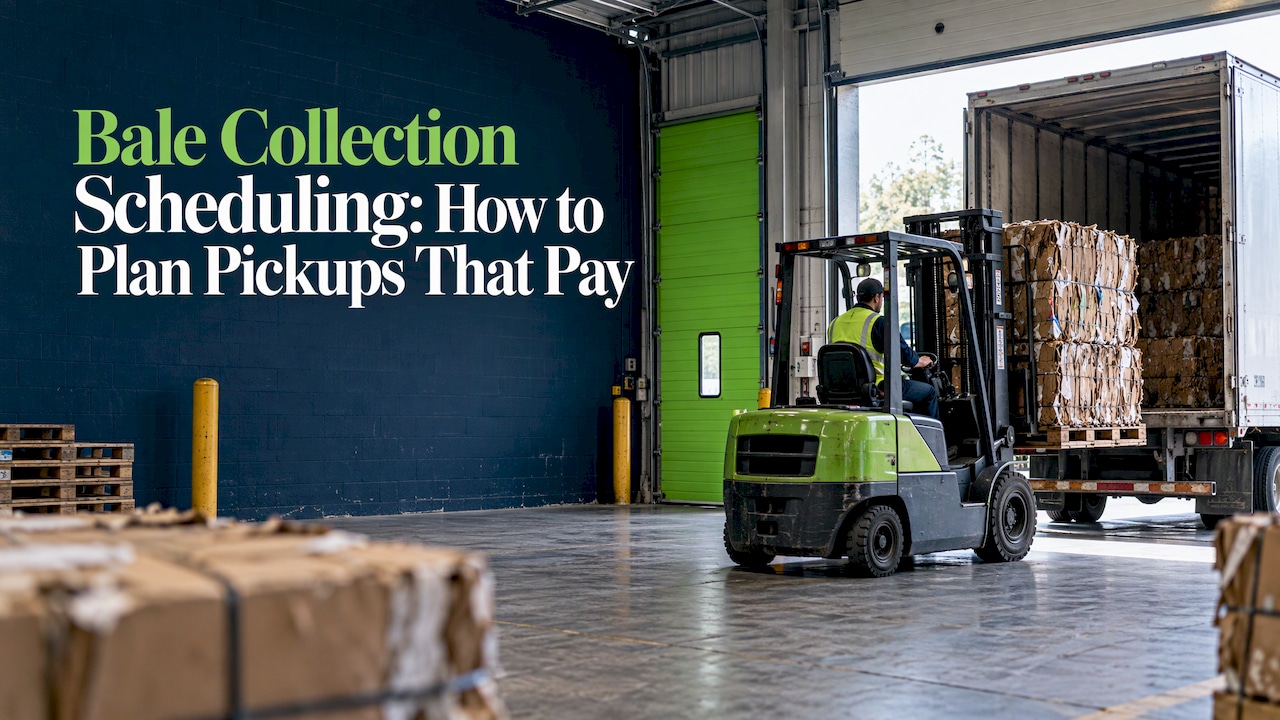
Most businesses pay to have loose cardboard collected, and they pay again for the bin space it takes up. Baling changes the economics. A baler squeezes loose material into a tied block that stacks, stores and travels efficiently. Recyclers and mills want exactly that: consistent, dense, clean material that they can process without sorting.
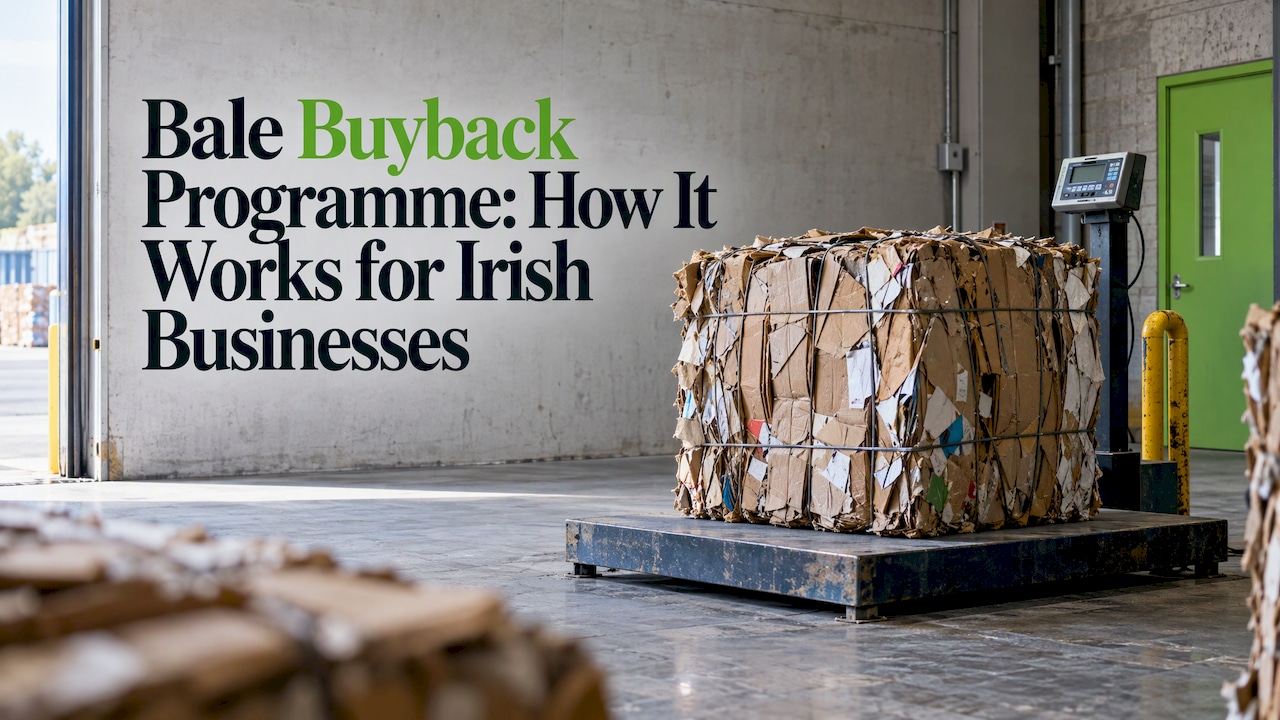
In a buyback arrangement, the buyer takes the bales, weighs them and pays you per tonne. Repak describes baling cardboard and other materials as a way to reduce waste management costs, with the potential to turn a disposal expense into a revenue stream through payments or free collection (Repak).
There are three moving parts:
- Your side: separating materials at source and baling them.
- The collection: a permitted collector picks up the bales and weighs them.
- The payment: the buyer pays against weight and grade, usually with a statement showing what was collected.
The scheme works best for businesses with steady volumes of cardboard or film: retail and distribution, food and drink, manufacturing, logistics and larger office or property operations.
What you can bale, and the quality that gets paid
Cardboard is the staple, and it is the material with the clearest market. Plastic film and some rigid plastics can also be baled, depending on the buyer. What matters across all of them is quality.
Repak’s consumer guidance for recycling bins is that items should be clean, dry and loose (Irish Examiner). The same logic applies to bales, with even more at stake: a bale of wet or food-soiled cardboard is worth less, and a bale contaminated with the wrong materials can be downgraded or rejected.
Practical habits that protect the value of your bales:
- Keep cardboard under cover. Rain-soaked board is heavy, weak and poorly priced.
- Flatten boxes and remove polystyrene, large plastic liners and general waste before baling.
- Bale different materials separately. Mixed bales are the quickest way to lose a grade.
- Keep bale sizes and weights consistent so that handling and weighing are simple.
- Tie bales securely with the right wire or tape for your machine.
Repak also advises that staff are best placed to spot improvements and should be engaged regularly through training whenever the system changes (Repak). In practice, the person loading the baler decides the quality of the bale. A short briefing for each shift pays for itself.
Equipment, space and volumes
There is no single minimum that applies to every scheme, because buyers set their own collection thresholds. The sensible approach is to measure your volume first, then choose the machine.
Balers and compactors
A baler produces tied bales that are stacked and collected, which suits businesses that want to sell material and need the bale to be a tradeable product. A compactor compresses waste into an enclosed container that is lifted away, and suits high-volume sites that want less handling. We cover the difference in more detail in our guide to cardboard balers and waste compactors in Ireland. If your budget calls for it, there are also new and refurbished balers for Irish businesses.
Smaller sites often start with a compact vertical machine, such as the Balepress 10 or Balepress 53. Bigger operations look at larger balers or a cardboard compactor. Do not forget consumables: you will need baling wire and tape in regular supply.
Space and handling
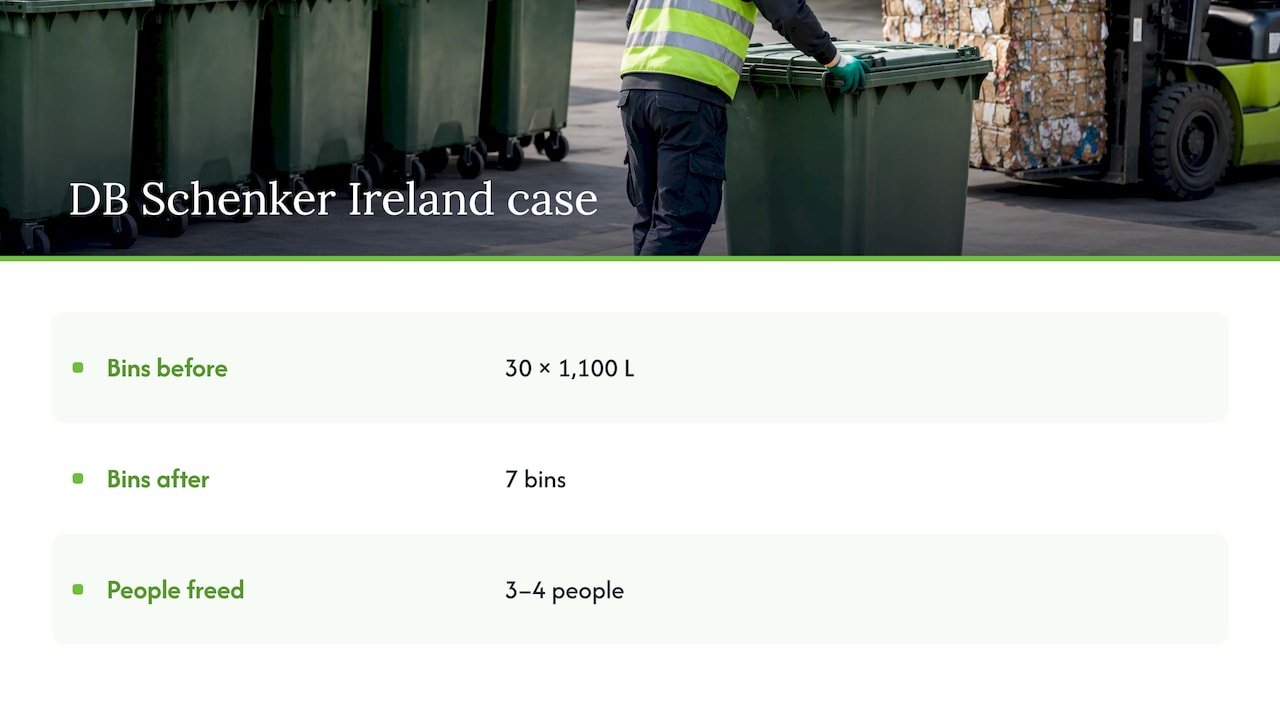
You need a dry, accessible spot for finished bales, and a clear route for the collection vehicle. Handling matters as much as the machine. A documented Irish case study published by wheel.me in January 2025 describes DB Schenker Ireland using 30 bins of 1,100-litre capacity for cardboard and plastic before baling, then needing only seven after improving the process (wheel.me). The same case says that automating bin movement to the baler freed three to four people for other work. It is a large logistics site and your numbers will differ, but it shows how much floor space and labour loose waste can consume.
How payment is worked out
This is the question most owners ask first, and the honest answer is that the rate is not fixed. The price you receive for a tonne of bales generally comes down to a handful of factors:
- Material and grade. Clean corrugated cardboard commands a different price from mixed paper or plastic film.
- Contamination and moisture. Wet or mixed bales are downgraded, or priced lower.
- Weight. Payment is per tonne, so accurate weighing at collection matters.
- The market. Recycled fibre prices move with demand from mills, so rates can rise and fall between collections.
- Volume and consistency. A reliable weekly supply of uniform bales is easier for a buyer to price well.
For a sense of the range, our own pages track what Irish buyers have been paying for cardboard bales, and set out a per-tonne benchmark: see cardboard bale prices and our note on protecting returns on baled cardboard. Treat those as guidance from our own market experience, not a guarantee of what any particular load will earn. You can also read how cardboard recycling rebates work in practice.
Ask any buyer how the rate is set, how often it is reviewed, and whether you receive a weighbridge ticket or collection statement with each pick-up.
The legal checks every Irish business should make
Selling bales does not remove your responsibility for the waste. Irish law places a duty of care on you until it is properly handled.
Use a permitted collector
Businesses have a legal duty of care to ensure that waste is transferred only to authorised collectors holding a valid waste collection permit issued by the National Waste Collection Permit Office. Engaging unpermitted collectors carries significant legal risk, including fines for the business if waste is illegally dumped and traced back to it (Department of Climate, Energy and the Environment). Ask for the permit number and keep a copy on file.
Keep your records
Keep every collection docket, weighbridge ticket and payment statement. Records are your proof that waste left your premises correctly. Some facility permits require registers of full records to be kept for at least seven years (Kildare County Council permit document). That requirement applies to those facilities, but the same discipline is sensible for your own file, and our waste audit checklist shows what to track.
Check where the bales go
A reputable buyer will tell you where material is processed. Facilities that receive waste are expected to have proper controls: one Irish licence example requires a weighbridge and waste inspection and quarantine areas (Irish Examiner). Ask any buyer how incoming loads are weighed and inspected.
What to check in the agreement
Before you sign, put these questions to the buyer in writing:
| Question | Why it matters |
|---|---|
| How is the price set and how often does it change? | Avoids surprises when the market moves |
| What grade and contamination limits apply? | Defines what gets downgraded or rejected |
| How is each load weighed, and do I get a ticket? | Gives you a paper trail for payment |
| How often are collections, and what is the minimum bale count? | Sets the storage you need |
| Who supplies and maintains the equipment? | Clarifies cost and downtime |
| What is the term, and how do I exit? | Protects you if volumes change |
| Is the collector permitted? | Meets your legal duty of care |
A clear agreement saves arguments later. If a buyer cannot answer these simply, keep looking.
The benefits, and the practical limits to plan for
The gains come from several directions at once. You may cut collection charges, free up floor space, reduce the handling labour, and receive payment for material you used to pay to remove. The EPA describes national policy as moving away from a high-waste model towards one that rewards resource efficiency and circularity (EPA State of the Environment 2024), so recovering material in a clean, saleable form fits where the market is heading.
The practical points to plan for are about discipline rather than drawbacks. Volumes need to be steady enough to justify a regular collection, bales need dry storage, and staff need to load the baler properly. The wheel.me case makes a useful point here: choosing equipment is an operational decision about space, labour and workplace safety as much as a financial one (wheel.me). Match the machine to how your site really works, and the money follows.
A simple route from audit to first payment
- Measure. Find out how much cardboard and plastic you produce, where, and what you pay to remove it.
- Separate. Set up clean, dedicated streams at the point of use.
- Equip. Choose a baler or compactor sized to your volume and space.
- Train. Brief the staff who load and tie the bales.
- Contract. Agree price method, collection frequency and weighing with a permitted buyer.
- Review. Check the statements and the grade feedback, and fix anything that is costing you value.
If you are starting from the beginning, our overview of how Irish businesses can reduce waste costs and our guide to cardboard recycling solutions in Ireland cover the wider picture.
Our perspective
Most businesses we meet are paying to remove something that someone else would happily pay for. The gap is rarely the market. It is that nobody has measured what leaves the building, so nobody knows what it is worth.
That is why we start with a waste audit. We look at what you actually produce, how it is handled today and what it costs, and then we recommend the simplest set-up that works: sometimes a compact baler, sometimes a compactor, sometimes refurbished kit to keep the outlay down.
Our approach is to keep the whole chain with one team: the audit, the equipment, the collection and the payment for your bales. When one party is accountable from start to finish, there is less room for finger-pointing over grading, weights or missed pick-ups, and we aim to maximise the rebate you receive.
Our advice is to bale clean, keep it dry, and keep your paperwork tidy. Do those three things and the bales will do the rest.
Graham
Start with a free waste audit
If you want to know what your cardboard and plastic could be worth, we begin with a free waste audit. We review your volumes, your current costs and your site, and recommend the right equipment and collection set-up for you. Once your bales are ready, our bale buyback scheme arranges collection and payment.
If you already know you need a machine, browse our cardboard balers, or run a manufacturing site? See how to run a manufacturing waste audit in Ireland.
FAQ
Is a bale buyback programme worth it for a small business?
It can be, if you produce a steady flow of cardboard or film and have space for a small baler. Compact vertical machines suit smaller sites. A waste audit will show whether your volumes justify the equipment and a regular collection.
Do I have to own the baler?
Not always. Some businesses buy new, some choose refurbished equipment to lower the upfront cost, and arrangements differ by provider. Ask what the agreement says about ownership, servicing and what happens if volumes change.
What reduces the price I am paid for bales?
Moisture, contamination and mixed materials are the usual causes. Wet cardboard, food residue or the wrong material in a bale can lead to a lower grade. Keeping material clean, dry and separated protects the price.
Is the collector I hire legally required to be permitted?
Yes. Irish businesses must transfer waste only to collectors holding a valid waste collection permit from the National Waste Collection Permit Office, and using an unpermitted collector can lead to fines if your waste is dumped illegally (gov.ie). Ask for the permit number before the first pick-up.
Sources
- Repak Best Practice Guide
- Irish Examiner: where your recycling goes
- wheel.me and LSM case study, DB Schenker Ireland
- Department of Climate, Energy and the Environment: Waste Enforcement
- Kildare County Council permit document (EPA)
- EPA State of the Environment 2024, Chapter 15