Clean, dry, well-sorted plastic bales typically earn the strongest prices, with post-use LDPE grade A bales assessed at around €500 per tonne DDP Northwest Europe, while contaminated or mixed loads fall well below that and sometimes attract extra charges. The single biggest lever you control is cleanliness and sorting. A free waste audit is the quickest way to find out what your own bales are worth before you commit to a buyer.
TL;DR:
- Published Northwest Europe benchmarks put post use LDPE at about €500 per tonne for grade A and €410 for grade B, both DDP.
- Compare offers on the same delivery basis: DDP includes transport to the buyer, while ex works leaves haulage costs and arrangements to you.
- Keep LDPE, HDPE, and PET separate, store bales under cover, remove foreign material, and follow buyer weight specifications to avoid discounts or rejection.
- Direct sales may pay more for high volumes, brokers take a margin, and buyback services trade some upside for simpler collection and direct payment.
- Staggering sales limits exposure to one poor pricing day; hold bales only with dry, secure storage and a reason to expect prices to rise.
Table of Contents
- What determines the price for a plastic bale
- How to prepare and present bales to maximise the price
- How to sell your bales: practical routes and Compact’s buyback option
- Short perspective on price volatility and practical risk management
- Why Compact is worth a call before you sell
- FAQ
- Sources
What determines the price for a plastic bale
Buyers price bales on a handful of variables, and most of them sit within your control. Polymer type matters first: LDPE film, HDPE, PET and PP all trade at different values depending on demand from reprocessors, with film grades generally commanding different premiums to rigid HDPE or PET depending on the month and the buyer.
Grade and condition matter just as much as polymer type. A grade A bale, meaning clean, sorted and low-moisture, consistently outperforms a grade B bale carrying mixed polymers, grit or damp film. Repak’s guidance on business recycling notes that source-segregated, dry, contaminant-free plastic is often collected free of charge or can even attract a rebate, while contaminated or unsorted loads tend to draw deductions or disposal costs instead.
Logistics terms shape the final number too. A price quoted DDP (delivered duty paid) already includes transport to the buyer’s gate, whereas an ex-works price leaves haulage to you, so always compare offers on the same basis.
- Material and polymer: LDPE film, HDPE, PET and PP each carry different baseline values.
- Grade: Grade A, clean and dry, outperforms Grade B, mixed or damp.
- Bale density and weight: denser, correctly sized bales reduce handling costs for the buyer.
- Pricing terms: DDP includes delivery, ex-works does not, so compare like for like.
Regional demand and seasonality also move prices, as does the gap between recycled feedstock and virgin polymer costs, which widens or narrows buyer appetite for recycled material.
Pro Tip: Ask every potential buyer whether their quote is DDP or ex-works before comparing figures, otherwise you are not comparing the same number.
How to prepare and present bales to maximise the price
Most of the gap between a mediocre offer and a strong one comes down to preparation. Follow this sequence before you contact a buyer.
- Sort by polymer first. Keep LDPE film, HDPE and PET separate; mixed bales almost always price lower.
- Keep bales dry. Store under cover, since moisture adds weight that buyers do not pay for and can trigger contamination deductions.
- Remove foreign contaminants. Strip out non-plastic packaging, food residue and metal fittings before baling.
- Bale to a consistent weight and size. Check your buyer’s acceptance specification; an oversized or underweight bale can be refused or discounted.
- Label each bale. Note polymer type, date and source, which speeds up buyer assessment and builds trust over repeat loads.
- Keep basic records. A simple log of weights, dates and visual contamination checks supports any disputed deduction.
- Check end-of-waste requirements where relevant. EPA end-of-waste criteria for LDPE plastic set moisture limits, input restrictions and chain-of-custody requirements that affect whether material can be traded as a raw material rather than waste.
Sound baling equipment makes most of this easier to achieve consistently. A well-maintained baler such as a Balepress 53 produces denser, more uniform bales, which reduces the chance of a buyer knocking points off for presentation.
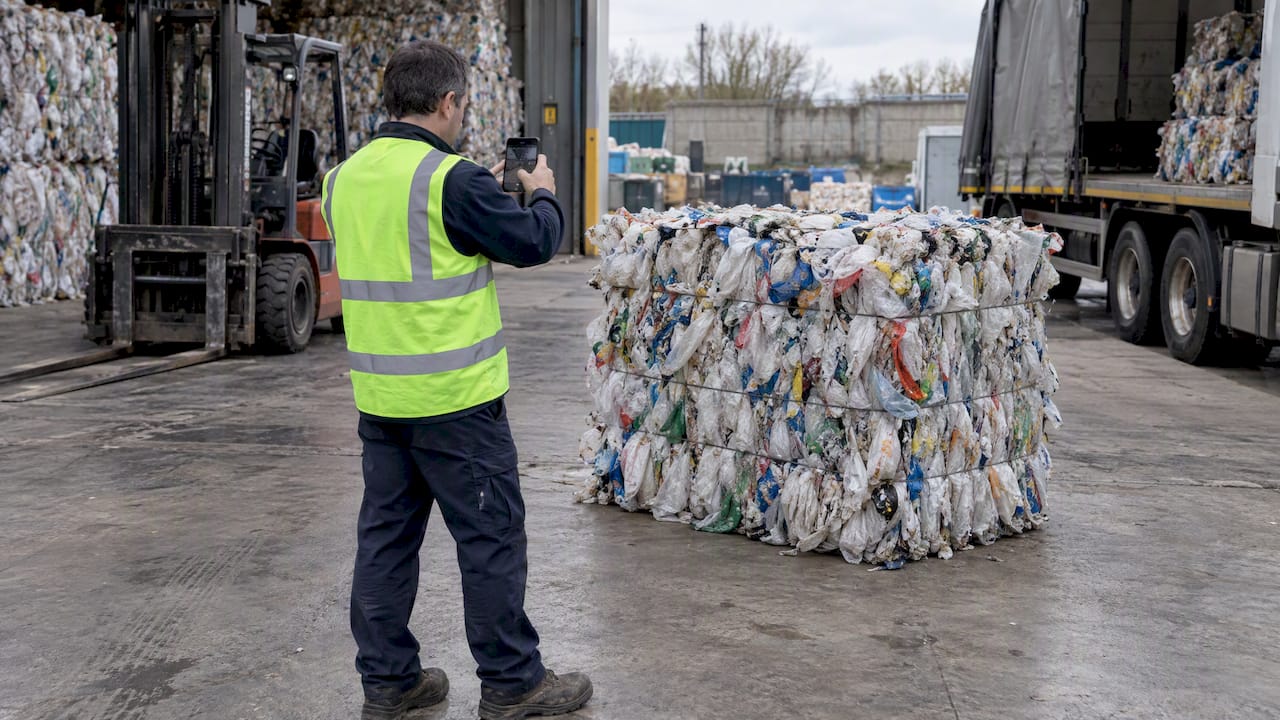
Pro Tip: Photograph each bale before it leaves your site. A quick image record settles contamination disputes far faster than a phone call.
How to sell your bales: practical routes and Compact’s buyback option
Three broad routes exist for moving baled plastic off your site, and each carries a different balance of effort and return.
- Direct recycler sale: you negotiate price and logistics yourself, which can pay well for high volumes but demands market knowledge and ongoing relationship management.
- Broker or auction sale: a third party finds the buyer and takes a margin, useful if you lack the time to shop multiple offers but it reduces your net return.
- Bale buyback programme: a single partner audits your waste stream, collects the material and pays you directly, trading some upside for simplicity and certainty.
We run our own buyback route through Free Waste Audit and We Buyback Bales. The audit looks at your current bale volumes, grade and contamination levels, and flags what you could realistically be paid before any collection is arranged. Once terms are agreed, we handle collection and pay out directly, which removes the need to shop separate offers or manage multiple hauliers.
Whichever route you choose, buyers will typically ask for a sample bale or recent photographs, a weight record and basic sorting documentation before confirming a price. For businesses arranging their own interim collection or transport, Dublin-based collection and recycling services can fill gaps where a buyer does not handle haulage. Payment timing varies by buyer, but expect it to follow confirmed weight and quality checks after collection rather than before.
Short perspective on price volatility and practical risk management
Recycled plastic prices move faster than most procurement teams expect, driven by feedstock supply, virgin polymer pricing and regional demand shifts. Southern Europe saw sharp price spikes for HDPE and PET bales in early 2026 while Northwest Europe stayed comparatively flat, and industry analysis has flagged weak overall demand through parts of 2026, making quality the deciding factor more often than timing.
Staggering sales rather than offloading one large batch reduces exposure to a single bad pricing day. Holding bales only pays off if you have dry, secure storage and a specific reason to expect a near-term rise; otherwise, selling promptly to a buyer you trust is the safer call.
— Graham
Why Compact is worth a call before you sell
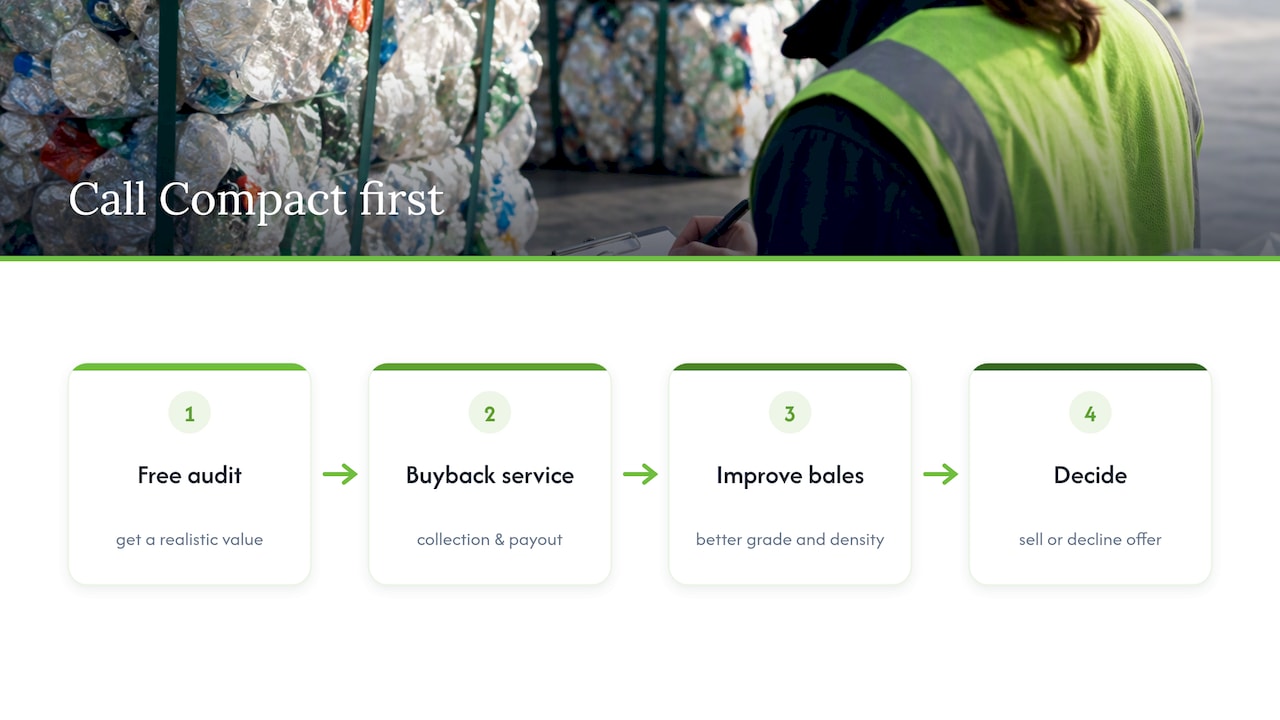
We built our bale buyback service around the problem most sellers actually face: knowing what your plastic is worth before a buyer tells you. A free waste audit gives you that answer first, looking at your current volumes, grade and contamination levels, so you walk into any negotiation, ours or anyone else’s, with a realistic number in hand.
Through We Buyback Bales, we handle collection and pay out directly once terms are agreed, which suits procurement and facilities teams who would rather have one point of contact than manage multiple hauliers and brokers. If your current baler is holding back bale density or presentation, our plastic film recycling equipment range, including the Balepress 53, can improve the grade you present at the gate.
Start with the free audit, see what your bales are worth, and decide from there.
FAQ
What is a good price for a plastic bale right now?
Clean, sorted post-use LDPE grade A bales have been assessed at around €500 per tonne DDP Northwest Europe, with grade B material priced lower. Your own price will depend on polymer type, contamination level and whether the quote includes delivery.
Why do some buyers charge a contamination fee?
Contaminated loads cost buyers extra to sort and clean before the material can be resold, so some facilities apply a decontamination charge of around €30 per tonne. Sorting and drying bales before collection is the simplest way to avoid this charge.
Does clean, source-segregated plastic ever get collected for free?
Yes, Repak’s guidance notes that source-segregated, dry, contaminant-free plastic is sometimes collected free of charge or can attract a rebate, while unsorted or contaminated loads often draw a disposal cost instead. The outcome depends on your buyer’s acceptance criteria and local demand.
How can I check if my bales qualify as end-of-waste rather than waste?
EPA end-of-waste criteria for LDPE plastic set out moisture limits, input restrictions and testing requirements that recovered plastic must meet to be traded as a raw material. A buyer or recycler can confirm whether your specific bale stream meets those criteria.
How does Compact’s buyback programme work?
We start with a free waste audit to assess your bale volumes and grade, then arrange collection and direct payment through We Buyback Bales once terms are agreed. There is no published fixed price, since payment depends on your material’s grade and current market conditions.
Sources
Price assessment services publish benchmark figures that help you sanity-check any offer you receive, though they are reference points rather than guaranteed dealer prices. Platts’ European recycled LDPE assessments put post-use grade A bales DDP Northwest Europe at around €500 per tonne, with grade B bales assessed lower at around €410 per tonne, a spread that shows how much grade alone affects value.
Post-use LDPE grade A bales have been assessed at roughly €500 per tonne DDP Northwest Europe, a useful anchor when you are negotiating with a buyer on your own film bales.
Downstream pellet and flake prices give useful context too. Post-consumer recorded rPET flakes at €1,331 to €1,341 per tonne and rPET pellets at €1,718 to €1,728 per tonne, figures that signal how strong downstream demand is for the polymer behind your bales.
A few things will reduce what lands in your account:
Regional divergence adds another layer of unpredictability. Treat any published figure as a starting point for negotiation, not a quote you are owed.