Recycling logistics for offices means the steps that move segregated materials from your desks and bins to an authorised recovery point: segregation, storage, collection, sorting and resale. The fastest route to results is a short waste audit this month, which tells you what you actually throw away before you change anything.
TL;DR:
- Contaminated cardboard can be downgraded or rejected, so quarantine suspect loads and fix unclear signage or poorly placed bins before collection.
- Businesses remain responsible for using authorized collectors and keeping movement documents, transfer notes, collection weights, and incident logs, including when brokers handle shipments.
- Track bin fill rates and contamination weekly, then review weights monthly and adjust container sizes or pickup frequency to actual volumes.
- Clean, baled cardboard and plastic may qualify for buyback payments; baling also reduces transport trips, but equipment makes sense only when volumes justify it.
Table of Contents
- What recycling logistics covers for offices
- Step-by-step recycling supply chain for offices (pickup to recovery)
- Operational bottlenecks and compliance risks to watch for
- Keeping collection and receiving predictable: scheduling, loading and supplier coordination
- Practical office implementation checklist managers can use this month
- How a tailored waste audit and bale buyback approach converts recycling into revenue
- What offices consistently get wrong about recycling
- How Compact can help: free waste audit and bale buyback
- FAQ
- Sources
What recycling logistics covers for offices
Recycling logistics sits across several people and organisations, not just your bin store. Internal staff generate and sort materials at the point of disposal; facilities teams manage containers, signage and internal movement; authorised collectors handle transport; and materials recovery facilities (MRFs) or brokers sort, bale and sell the output. Each link depends on the one before it: a clean stream at your desk becomes a saleable bale at the other end.
Most offices generate a narrower range of materials than they assume; for guidance on improving operational sustainability measures, see strategies for optimising business energy consumption.
- Cardboard and paper, the highest-volume and most saleable stream in a typical office.
- Mixed packaging and plastics, including film and rigid containers from deliveries and canteens.
- Electronic waste from replaced monitors, laptops and peripherals.
- Organic waste where there’s a canteen or kitchen, often collected separately.
How you sort internally determines what happens externally. A clean cardboard stream can go straight to resale; a mixed, contaminated one usually gets downgraded or rejected, which is where cost creeps back in.
Step-by-step recycling supply chain for offices (pickup to recovery)
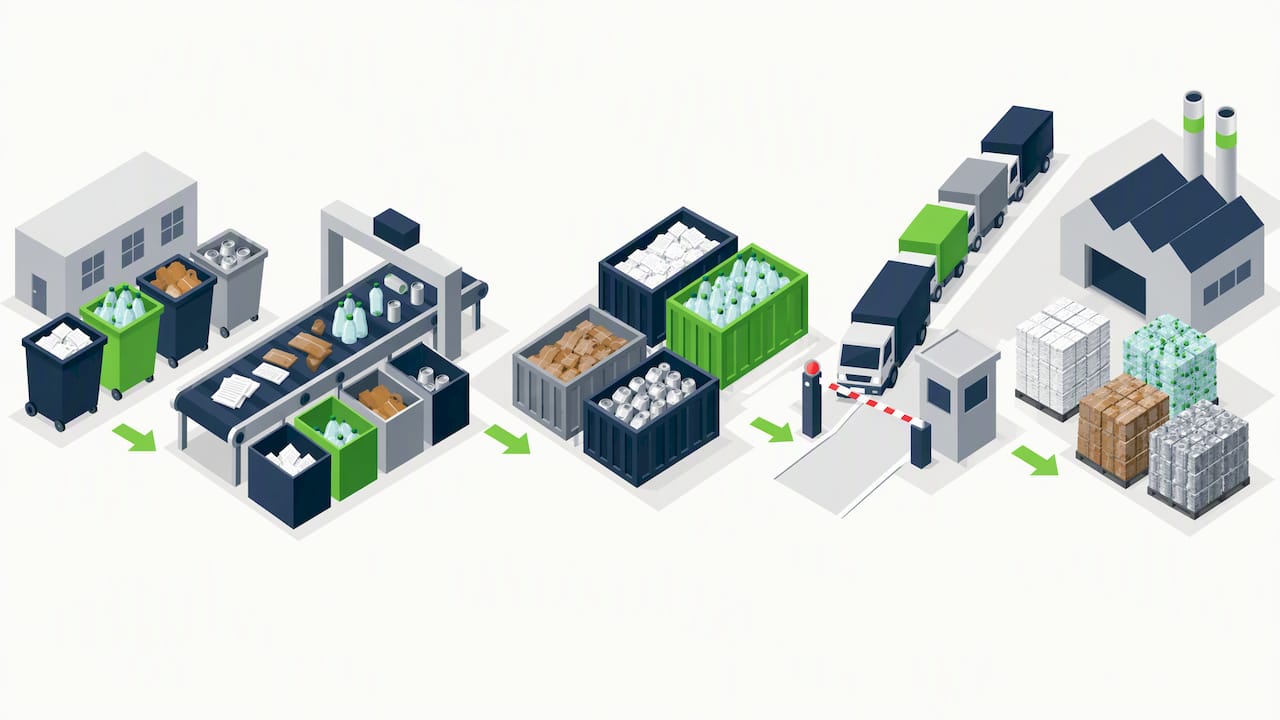
The route from your bin to a buyer follows a consistent sequence, and knowing each stage helps you assign responsibility clearly.
- Segregate and stage on site, using clearly labelled stations near where waste is generated so the correct bin is the easy choice.
- Choose containers and, where volumes justify it, compact or bale on site to reduce transport trips and improve material quality.
- Schedule collection with an authorised collector, matching vehicle type and frequency to your actual volumes rather than a default contract.
- Hand off at reception, where loads are weighed, inspected and sorted further at a materials recovery facility before resale or onward processing.
- Keep the paperwork, including movement documents and transfer notes, which Ireland’s National Waste Management Plan for a Circular Economy treats as a core requirement for businesses, not an optional extra.
WRAP’s workplace recycling guidance recommends this kind of staged approach: plan, pilot in one area, then scale once the process is proven. Running a small pilot before a site-wide rollout catches problems with signage or bin placement while they’re still cheap to fix.
Operational bottlenecks and compliance risks to watch for
Contamination is the single biggest reason a recycling stream loses value. A bale of cardboard with food waste, plastic film or general rubbish mixed in can be downgraded or refused outright at the recovery facility, turning a saleable material back into a cost.
Common issues worth checking for:
- Mixed streams at source, usually from unclear signage or bins placed in the wrong locations.
- Unauthorised or undocumented collectors, which creates a compliance gap under Irish waste law.
- Missing movement documents, particularly for cross-border or amber-listed shipments, which the NTFSO’s transfrontier shipment guidance requires brokers and businesses to share responsibility for.
- Poor recordkeeping, which makes sustainability reporting and compliance checks far harder to evidence later.
Pro Tip: Quarantine any suspect bale on site rather than sending it for collection; a five-minute check prevents a rejected load and a wasted trip.
Keeping collection and receiving predictable: scheduling, loading and supplier coordination
Unpredictable collections cost you in missed pickups, overflowing bins and rushed, poorly sorted loads. A few simple rules fix most of this.
- Agree acceptance criteria upfront with your collector, including what counts as contaminated and which destinations your materials go to.
- Set a dock check-in procedure so drivers know where to go and how long loading should take, which cuts dwell time and disputes.
- Track bin fill rate and contamination incidents weekly; this tells you whether container size or collection frequency needs adjusting.
- Define an escalation path for rejected or quarantined loads, so staff know who to call rather than guessing.
The EPA’s National Hazardous Waste Management Plan also points to the proximity principle: using a local, authorised collector reduces transport impact and tends to make scheduling easier to manage.
Practical office implementation checklist managers can use this month
A working recycling programme doesn’t need a long rollout. Most offices can get the basics running within a few weeks by following a fixed order.
- Map your streams and estimate weekly volumes for cardboard, mixed packaging, e-waste and organics.
- Appoint an internal champion who owns signage, training and the point of contact with your collector.
- Choose containers and decide whether baling or compaction makes sense for your volumes.
- Agree KPIs with your collector, including diversion rate, contamination limits and payment terms for clean bales.
- Set a recordkeeping cadence, reviewing volumes and contamination monthly rather than only at audit time.
| Step | Owner | Measure of success |
|---|---|---|
| Map streams and volumes | Facilities team | Accurate weekly weight by material |
| Appoint internal champion | Office manager | Single point of contact established |
| Choose containers/baling | Facilities team | Right-sized bins, reduced trips |
| Agree KPIs with collector | Office manager | Diversion rate and contamination limits set |
| Recordkeeping cadence | Facilities team | Monthly review in place |
How a tailored waste audit and bale buyback approach converts recycling into revenue
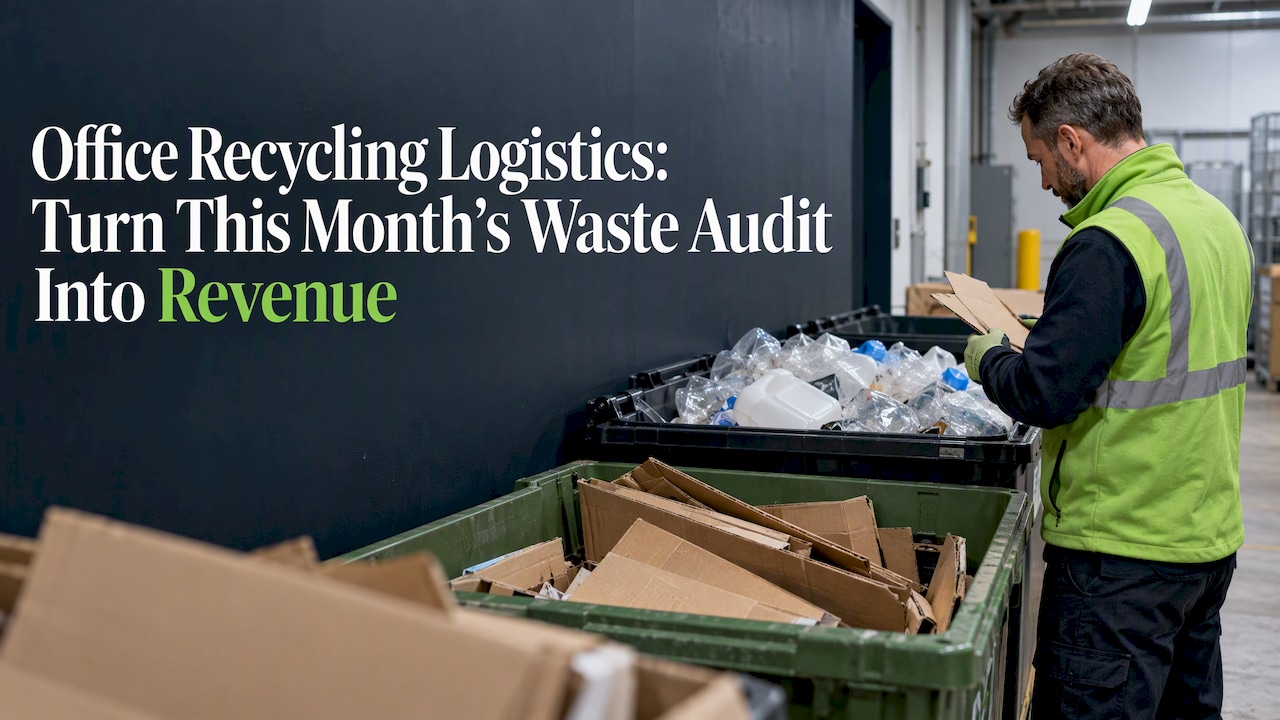
A proper office audit looks at what you’re actually throwing away, not what your contract assumes, and often finds quick wins in signage, bin placement or an oversized general waste container nobody’s questioned in years. Clean, well-sorted cardboard and plastic can then be baled, which improves material quality, cuts transport trips and makes the resulting bales easier to sell.
This is where a bale buyback scheme changes the economics: instead of paying to dispose of cardboard and plastic, you get paid for clean bales, turning a line of cost into a line of revenue.
- Audits typically flag contamination sources, oversized bins and missed segregation opportunities.
- Baling reduces volume and transport frequency, which lowers collection costs.
- Clean bales attract better rebates than mixed or contaminated loads.
What offices consistently get wrong about recycling
The biggest gap isn’t ambition, it’s measurement. Most offices set up bins and signage, then never check contamination rates or bin fill levels again, so problems compound quietly for months. The offices that do well treat recycling as a number to track, not a box to tick, and the payoff is usually a mix of steadier collections, lower disposal costs and occasional revenue from clean, saleable bales.
— Graham
How Compact can help: free waste audit and bale buyback
We run a free waste audit that maps your actual streams and volumes, flags contamination risks, and shows where a baler, compactor or simple signage change would pay off. From there, we handle equipment supply, including cardboard balers and compactors, and connect clean, baled cardboard and plastic to our bale buyback scheme, paying for material that used to cost you money to throw away.
- Book a free audit to see your actual waste streams and savings potential.
- Discuss equipment options sized to your volumes.
- Set up bale buyback payments for clean, sorted cardboard and plastic.
Get in touch through our waste audit page to arrange a visit and a quote.
FAQ
Who is legally responsible for office waste once it’s collected?
Businesses remain responsible for ensuring their waste is handled by an authorised collector and that records are kept, as set out in the National Waste Management Plan for a Circular Economy. For cross-border shipments, brokers and businesses share this responsibility under NTFSO rules.
How much contamination does it take to reject a bale?
There’s no single fixed threshold; recovery facilities generally reject or downgrade bales that mix food waste, film plastic or general rubbish into a cardboard or paper stream. Clear signage, staff training and quarantining suspect loads before collection are the most reliable ways to avoid this.
Is baling or compacting worth it for a small office?
It depends on your weekly volumes and current disposal costs: higher-volume offices tend to see the equipment pay for itself faster through reduced collection trips and better rebates on clean bales. A waste audit is the simplest way to find out whether your own volumes justify it.
What records should we keep for sustainability reporting?
Keep movement documents, transfer notes, collection weights and contamination incident logs, which support both compliance checks and diversion-rate reporting. Reviewing these monthly makes annual sustainability reporting far less of a scramble.
What KPIs should we agree with our waste collector?
Common KPIs include diversion rate, contamination limits per load, and payment terms for clean, saleable bales. Agreeing these upfront, alongside accepted destinations, reduces disputes over rejected loads later.
Sources
- Transfrontier shipment of waste guidance (NTFSO)
- Transport and storage – WRAP recycling guide
- National Hazardous Waste Management Plan 2021–2027 (EPA)