The fastest route to lower bills combines three levers: segregating recyclables and bio-waste so you qualify for cheaper collection rates, running a short waste audit to strip out unnecessary streams and renegotiate your contract, and compacting, baling or reselling material through a bale buyback arrangement. Together these actions typically show up in your invoices within one or two billing cycles.
TL;DR:
- Commercial collectors must offer separate recycling and bio-waste bins at lower rates than general waste, making correct sorting a direct cost saving.
- Start by comparing invoiced tonnage with measured output across your waste streams; reviewing the last three invoices can expose estimated billing and excess pickups.
- Trial clearer bin labels and staff briefings for 30 to 90 days, then buy equipment only if measured volume and material quality justify it.
- Track avoided collection costs, reduced purchasing, and material sale revenue separately; clean, baled cardboard or plastics may earn buyback income instead of removal fees.
Table of Contents
- What drives waste disposal costs
- Practical steps to cut waste disposal costs
- How to implement: a short audit and action plan for managers
- Measuring savings and proving ROI
- How Compact helps organisations turn disposal costs into revenue
- Prioritising low-cost, high-impact actions first
- How Compact can help: free audit and next steps
- FAQ
- Sources
What drives waste disposal costs
Your bill is built from visible charges and hidden ones, and most businesses only budget for the first group. Collection fees, transport, landfill or incineration gate fees, and container rental are easy to spot on an invoice. The costs that quietly inflate a bill are harder to catch:
- Contamination premiums charged when recyclable bins contain the wrong material
- Administrative surcharges and environmental levies added as separate line items
- Billing based on estimated rather than measured tonnage
- Evergreen contract clauses that auto-renew at escalating rates
Incentivised charging changes this picture directly. Under measures described in Gov, commercial collectors must offer segregated bins and price recycling and bio-waste below general waste, so sorting correctly is now a direct financial decision rather than a goodwill gesture.
Practical steps to cut waste disposal costs
Some actions pay back faster than others. This order reflects typical effort versus typical return, starting with the changes that need no new equipment.
- Prevent waste at source: adjust ordering quantities, switch to reusable packaging, and cut single-use items before they ever enter a bin.
- Segregate properly: separate dry recycling, organics and hazardous waste so you avoid contamination fees and qualify for lower rates; the same gov.ie press release notes that a significant portion of material in commercial general-waste bins could be diverted with better sorting.
- Reduce volume: compact, bale or dewater bulky waste streams so you need fewer collections per tonne handled.
- Optimise your contract: move to billing on actual measured tonnage, strip out evergreen surcharges, and match pickup frequency to real output rather than a default schedule.
- Monetise clean streams: sell baled cardboard and plastics through a buyback arrangement instead of paying to have them removed.
- At home, mirror the logic: compost food waste, keep the black bin for genuine residual waste only, and choose the smallest bin size your household actually fills, since most pay-by-weight or pay-by-lift schemes reward exactly this behaviour.
The common thread is that segregation and prevention cost nothing to start, while equipment and contract renegotiation need a short period of measurement first.
How to implement: a short audit and action plan for managers
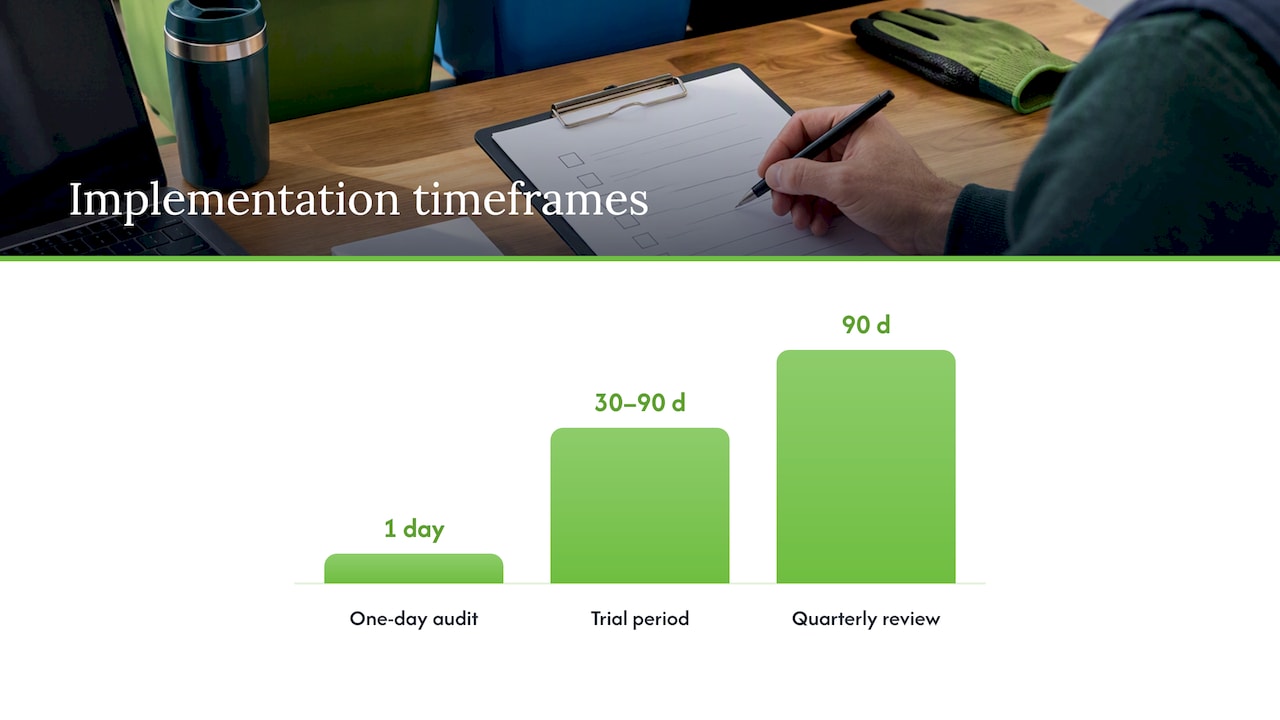
A one-day waste audit is enough to find most of the savings available to you. The process is straightforward:
- Weigh or estimate the volume of each waste stream over a representative day, including general waste, dry recycling, organics and any specialist streams.
- Sample the general-waste bin to identify what should have been segregated, since this is where contamination premiums originate.
- Reconcile what you measure against your last three invoices to spot estimated billing or mismatched pickup frequency.
- Trial quick wins over 30 to 90 days: better-labelled bins, a short staff briefing, and a trial placement of a baler or compactor if volume justifies it.
- Decide whether equipment pays for itself or whether adjusting collection frequency and contract terms is enough on its own.
- Assign one person responsibility for waste costs, set a simple KPI such as cost per tonne or cost per employee, and review it quarterly.
Pro Tip: Start the audit with a reconciliation against invoiced tonnage, not a fresh weigh-in, since the gap between the two often reveals the biggest saving before you change anything physical.
A practical waste audit checklist can help structure this first pass, and the EPA’s waste prevention case studies show the kind of operational changes that tend to produce the largest short-term gains, often stemming from segregation and staff engagement rather than new machinery.
Measuring savings and proving ROI
Three figures matter when you want to justify a change to procurement or ownership: avoided removal costs, avoided purchasing costs, and revenue from material sales. Avoided removal cost is the drop in collection charges once volume is reduced or redirected to a cheaper stream. Avoided purchasing cost applies when reuse or prevention means you buy less material in the first place. Revenue from sales applies when clean, baled material is sold rather than collected as waste.
EPA municipal waste statistics show the scale of the opportunity, with national data on recycling and landfill baselines giving you a benchmark to compare your own diversion rate against.
A simple worksheet keeps the variables straight:
| Variable | What to record | Why it matters |
|---|---|---|
| Stream tonnage | Weight per collection, per stream | Base unit for all other calculations |
| Charge per tonne or per pull | Current invoiced rate | Shows cost before and after changes |
| Container rental | Monthly or annual fee | Often fixed regardless of volume |
| Pickup frequency | Collections per week or month | Direct driver of transport cost |
Work through your own numbers using these categories, adjusting the rates to whatever your current contract actually charges.
How Compact helps organisations turn disposal costs into revenue
We start engagements with a free waste audit, measuring what you actually produce rather than estimating it, so quick wins and contract changes are grounded in your own numbers. Where cardboard, plastics or EPS make up a meaningful share of your waste, we also run a bale buyback arrangement: baling or compacting material on-site increases its density and cleanliness, which increases what it is worth to buyers and cuts how often it needs collecting.
- We supply and service cardboard balers and compactors sized to your volume.
- We offer EPS compactors for foam-heavy waste streams.
- We supply industrial shredders with dewatering for bulky or wet material.
- We offer organic waste composting machines for food-heavy operations.
Pro Tip: Ask for tonnage and contamination data from your own audit before comparing equipment options, since the right size of baler or compactor depends entirely on your actual volume, not a generic recommendation.
Prioritising low-cost, high-impact actions first
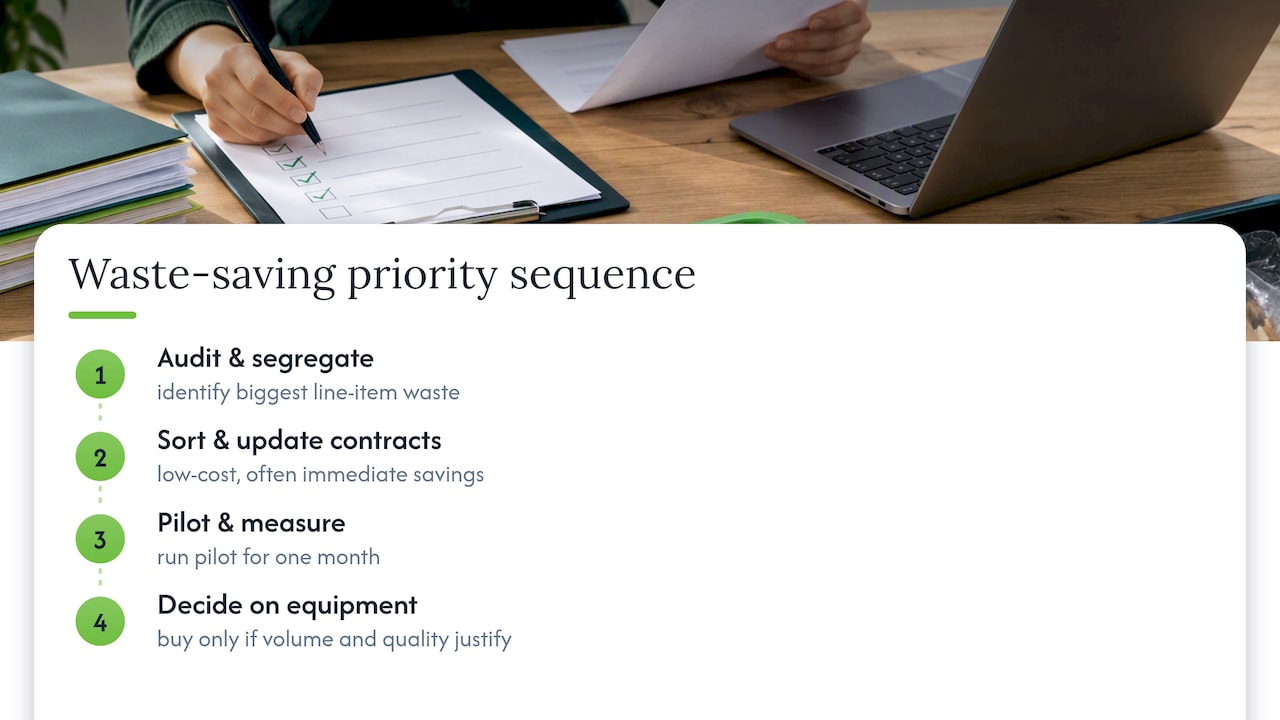
Most organisations reach for equipment before they have measured anything, which is backwards. Segregation and a short audit cost nothing beyond a day of attention, and they usually expose the biggest line-item waste before a single piece of machinery is purchased. Equipment earns its place once volume and material quality justify it, not before.
The sensible order is pilot, then scale: fix sorting and contract terms first, measure the effect for a month, and only then decide whether baling or compaction pays for itself. Start small, measure honestly, and let the numbers tell you when to invest further.
— Graham
How Compact can help: free audit and next steps
If you want the measurement done for you, we offer a free waste audit that identifies which streams are costing you the most and where a bale buyback could turn part of that cost into income. We look at your current contract, your contamination rates and your container sizing, then hand you a business case rather than a sales pitch.
What to expect from the process:
- A measured breakdown of your current waste streams and costs
- A list of quick wins you can act on within weeks
- A view of whether baling, compaction or dewatering equipment would pay back, and over what period
- A buyback quote for any clean cardboard or plastic you already generate
| Outcome | What it comes from |
|---|---|
| Lower collection charges | Correct segregation and right-sized containers |
| Fewer surcharges | Renegotiated contract terms |
| New revenue | Bale buyback on clean recyclables |
Many organisations find that the audit itself uncovers savings before any equipment or contract change is made, simply by reconciling invoiced tonnage against what is actually produced, as outlined in EPA guidance on waste reduction measurement.
Book your free waste audit and see what your own numbers show.
FAQ
Do pensioners have to pay bin charges?
Bin charges in Ireland are generally set by individual waste collectors rather than waived nationally for pensioners, though some providers offer reduced rates or supports on request. It is worth checking directly with your local collector, since terms vary by company and county.
Which is the cheapest method of waste disposal?
Prevention, meaning not creating the waste in the first place, is the cheapest method, followed by segregation and recycling, which are priced lower than general waste under incentivised commercial charging. Landfill and incineration of unsorted general waste are consistently the most expensive options.
What does “disposal cost” mean?
Disposal cost refers to everything charged for removing and processing waste, including collection, transport, landfill or incineration gate fees, and container rental. It often also includes hidden items such as contamination premiums and administrative surcharges that do not appear as a single clear line.
What are 5 ways to reduce waste?
Five effective approaches are preventing waste at source, segregating recyclables and organics correctly, reducing volume through compaction or baling, renegotiating collection contracts, and selling clean recyclable material through a buyback scheme. Starting with prevention and segregation typically costs nothing and delivers the fastest results.
Sources
- Introduction of incentivised waste collection charges will increase sustainability in the commercial sector
- Waste prevention project outputs: case studies (EPA)