A commercial bin compactor presses loose waste into a much denser load, so the same bin, container or skip holds more and is collected less often. For an Irish business the saving only appears when the machine is matched to your waste type, your site and your collector’s rules. The sensible order is to measure what you throw away first, then pick the machine. Our free waste audit does that measuring, and we supply the compactors, balers and bin presses that follow from it.
TL;DR
- A compactor reduces the volume of waste, which means fewer lifts, less storage space and fewer overflowing bins. Whether it lowers your bill depends on how your collector charges.
- Match the machine to the waste: cardboard and dry recyclables suit compactors or balers, wet or mixed waste needs a sealed unit, and polystyrene has its own dedicated compactors.
- Size from three inputs: volume per week, waste type and the space and power you have. Our compactor size guide walks through them.
- Irish commercial collectors now weigh waste and must offer separate bins, so segregating and compacting recyclables is the cheaper route.
- Check collection arrangements, access, power and operator safety before you buy.
Table of Contents
- What a commercial bin compactor does
- Why compacting makes sense under Irish commercial waste rules
- Which waste you can compact
- Static, portable, press or baler: which machine fits
- How to size a compactor in four steps
- What to count when you compare costs
- Safe operation
- Our view: start with the waste, not the machine
- Start with a free waste audit
- FAQ
- Sources
What a commercial bin compactor does
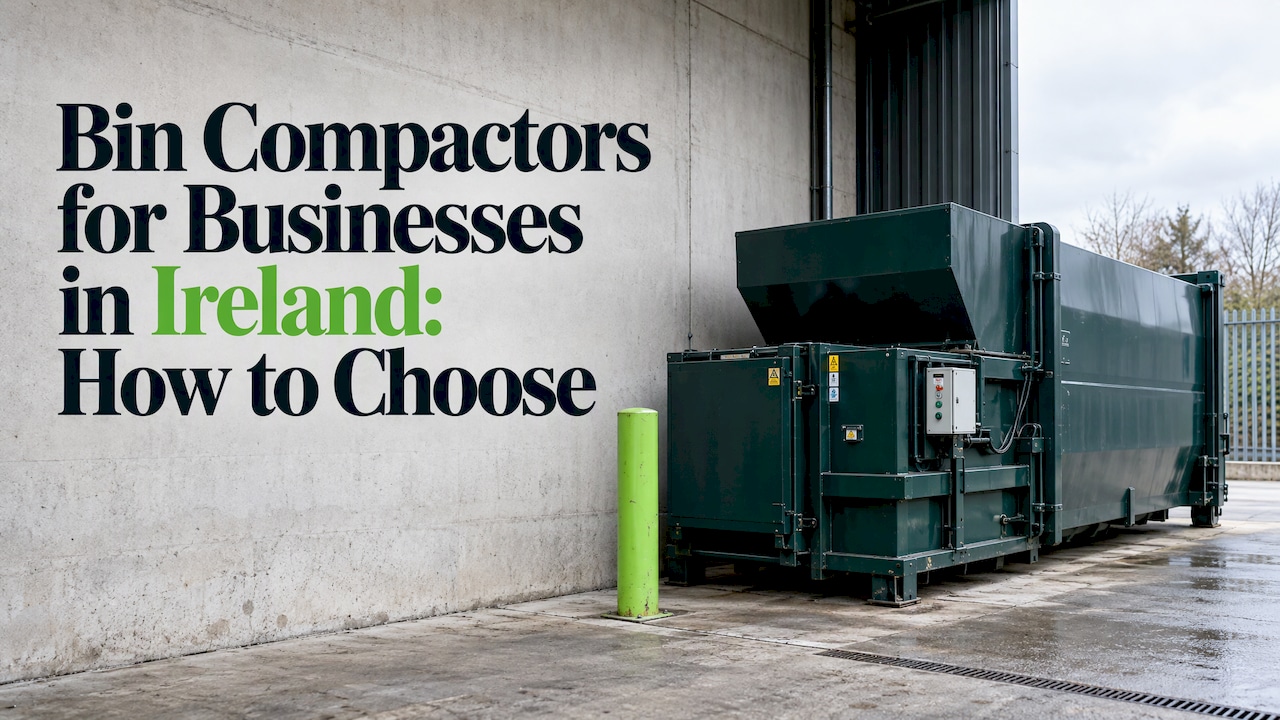
A compactor is a machine with a hydraulic ram that squeezes waste into a container, a bin or a sealed unit. Instead of loose rubbish filling a bin or skip quickly, the waste is compressed into a denser form, so the container takes more before it needs emptying. That is the whole principle, and it explains both the benefits and the checks you need to make.
The benefits for a business are practical:
- Fewer collections. A denser load means fewer lifts for the same output.
- Less space used. One compactor can replace a row of bins or an open skip at the back of a unit.
- Tidier, safer yards. No overflowing bins, fewer loose boxes and less manual handling of bulky packaging.
- A cleaner route to recycling. Compacted cardboard and dry recyclables are easier to store and move, and, once baled, can be sold.
The machine is not a saving on its own. It is a tool for turning a known waste stream into a smaller, cheaper one.
Why compacting makes sense under Irish commercial waste rules
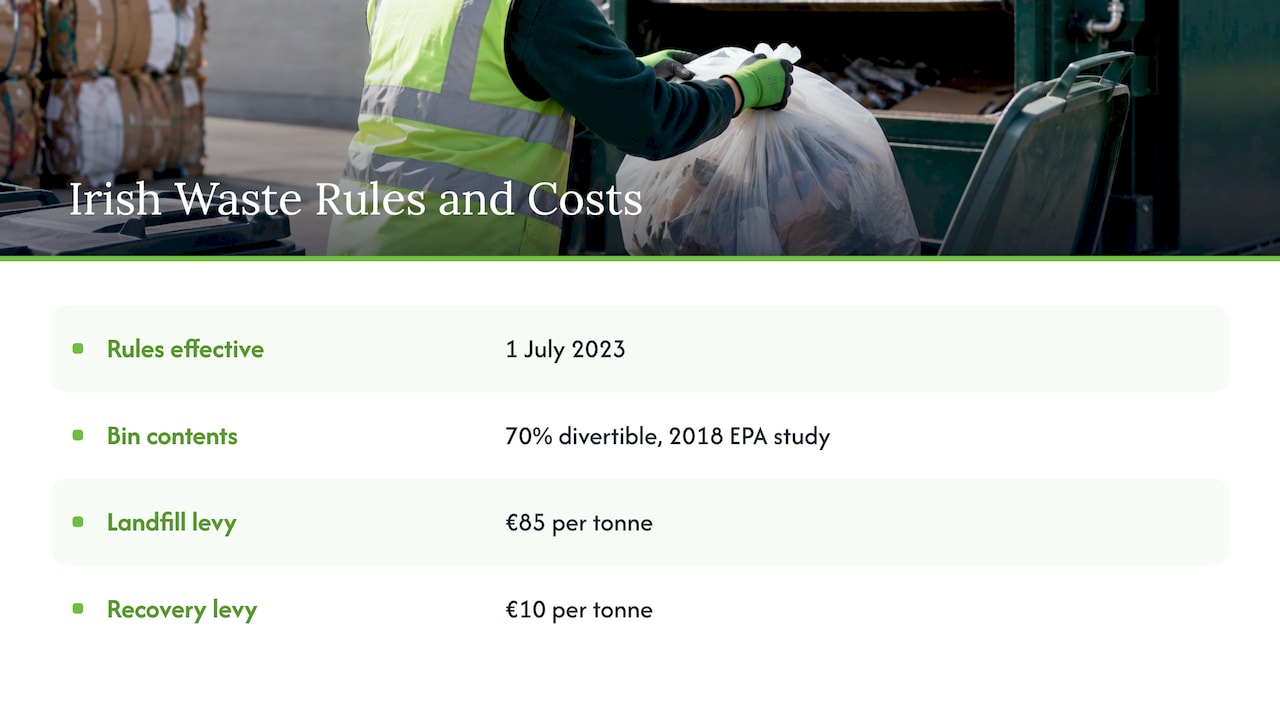
Irish businesses are now billed on a different basis from a few years ago. The Department of Climate, Energy and the Environment explained in 2023 that new commercial waste regulations, effective 1 July 2023, require collectors to provide residual, dry-recyclable and bio-waste bins, to weigh all waste, and to price recyclable and bio-waste collection below the cost of disposing of general waste. The same release cites a 2018 EPA study finding that 70% of the contents of the average Irish commercial waste bin could be diverted to recycling.
The practical reading is simple. If most of what is in your general waste bin is really cardboard, plastic film or other dry recyclables, you are paying the higher rate for material that qualifies for the lower one. Compacting or baling those recyclables at source helps you in two ways: they take up less space, and they leave your general waste bin lighter.
The legal framework sits on the Waste Management Act 1996, which defines commercial waste as waste from premises used wholly or mainly for trade, business, sport, recreation, education or entertainment. The consolidated Act records that S.I. No. 40/2024 brought sections 14A and 14B into effect from 15 February 2024, with approved codes of practice, and that the National Waste Management Plan for a Circular Economy 2024 to 2030 replaced the three 2015 regional plans.
Landfill costs also feed into your bill. Ireland’s landfill levy is €85 per tonne, plus a €10 per tonne recovery levy on general and general skip waste. Collectors pay the levies, but they are often covered by the fees you pay for your bins. Every tonne of recyclable material you keep out of the general bin is a tonne that avoids that route.
Which waste you can compact
Compactors suit dry, bulky, consistent waste best. The usual candidates are:
- Cardboard and paper packaging, the biggest volume for retail, distribution and food service.
- Dry mixed recyclables, such as plastic wrap and light plastic packaging.
- General waste from sites that produce a steady daily flow, such as shopping centres, hotels and manufacturers.
- Polystyrene (EPS), which is mostly air and needs a dedicated machine. See our EPS compactors and the EPS Styrofoam recycling compactors page.
Two practical rules come from official guidance. NetRegs, the environmental guidance service for Northern Ireland and Scotland, advises that if you compact waste you should drain and clean containers that held liquid first, keep paper and card dry, and keep the compactor area separate from surface water drains. It also advises separating waste by type, storing it in sealed, labelled containers and separating plastics by grade. The principles apply equally on an Irish site: dry material stays clean and sellable, and runoff stays out of drains.
Food waste is a separate stream under its own rules. If your premises produce it, read our guide to food waste regulations in Ireland before deciding where a compactor fits.
Static, portable, press or baler: which machine fits
The word “compactor” covers several machines. This table sets out how they differ in use.
| Machine | Best for | Typical site |
|---|---|---|
| Static compactor | Steady, high daily volumes of general waste or cardboard, with the ram fixed to a container | Loading bays, shopping centres, factories, large retail |
| Portable compactor | Sealed container moved to where it is needed and swapped by the collector | Sites that need flexibility or have limited fixed space |
| Bin press | Compressing a wheelie bin or roller container’s contents in place | Offices, shops, kitchens and smaller units |
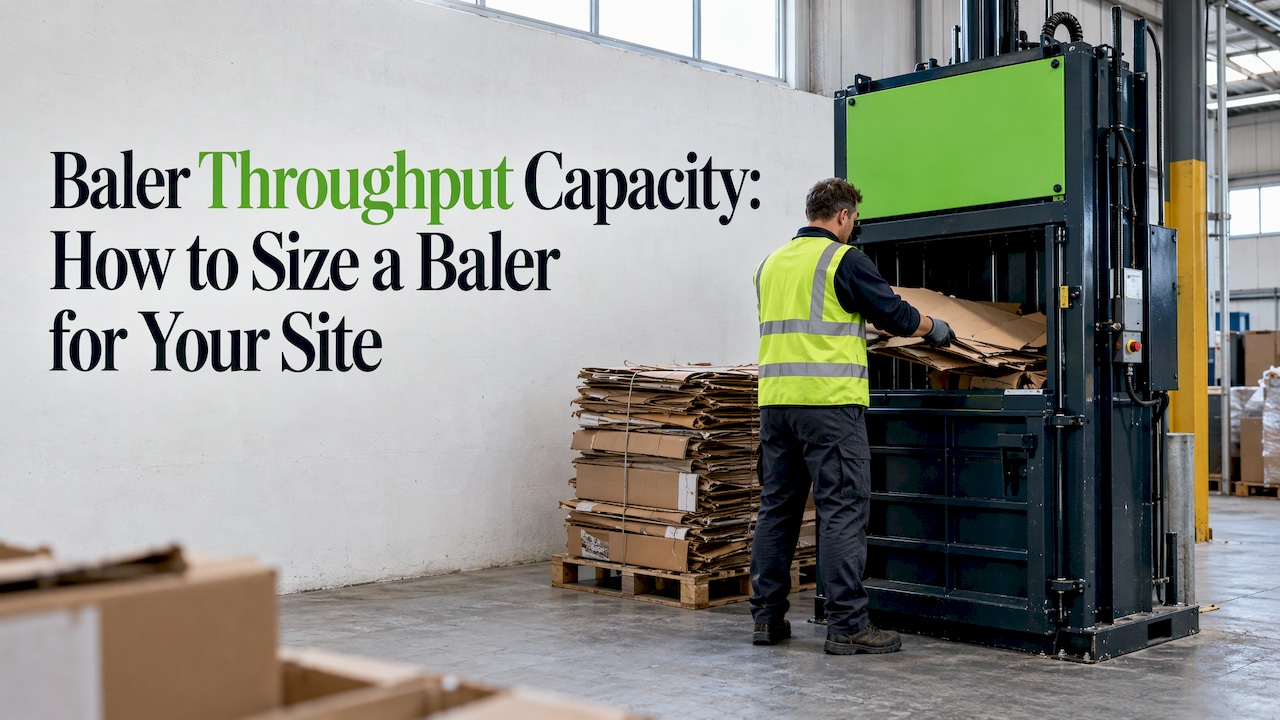
| Cardboard baler | Cardboard and plastics where you want a tied, stackable bale | Retail, warehousing, distribution |
If you produce mostly cardboard, a baler often beats a compactor on value, because a tied bale is something you can sell rather than something you pay to dispose of. Our bale buyback scheme is built for exactly that, and our page on how the bale buyback programme works explains the process.
For general waste or wetter mixed loads, a hydraulic compactor is the machine to look at. For cardboard, our cardboard compactors and roller container presses cover the options, and the bin press suits smaller sites.
How to size a compactor in four steps
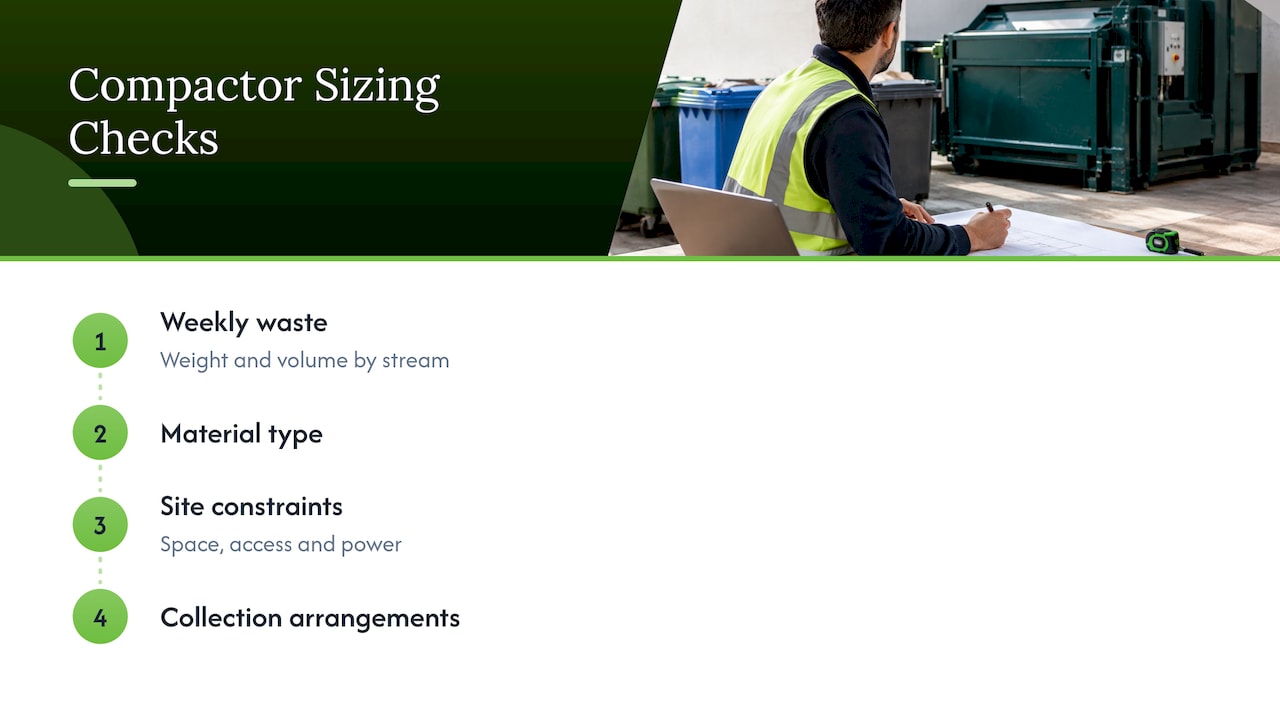
1. Measure your waste
Start with the weight and volume you actually produce per week, by stream: cardboard, general waste, plastics. Collector invoices and weighing records are a good starting point, because Irish collectors now have to weigh waste. A site walk with a tape measure and a count of bins and lifts fills in the rest. This is the step our audit covers, and it prevents the most common mistake, which is buying a machine sized to a guess.
2. Identify the material
Cardboard, mixed dry waste, polystyrene and wet waste each call for different machines. Do not choose a model until you know which stream is the biggest cost.
3. Check space, access and power
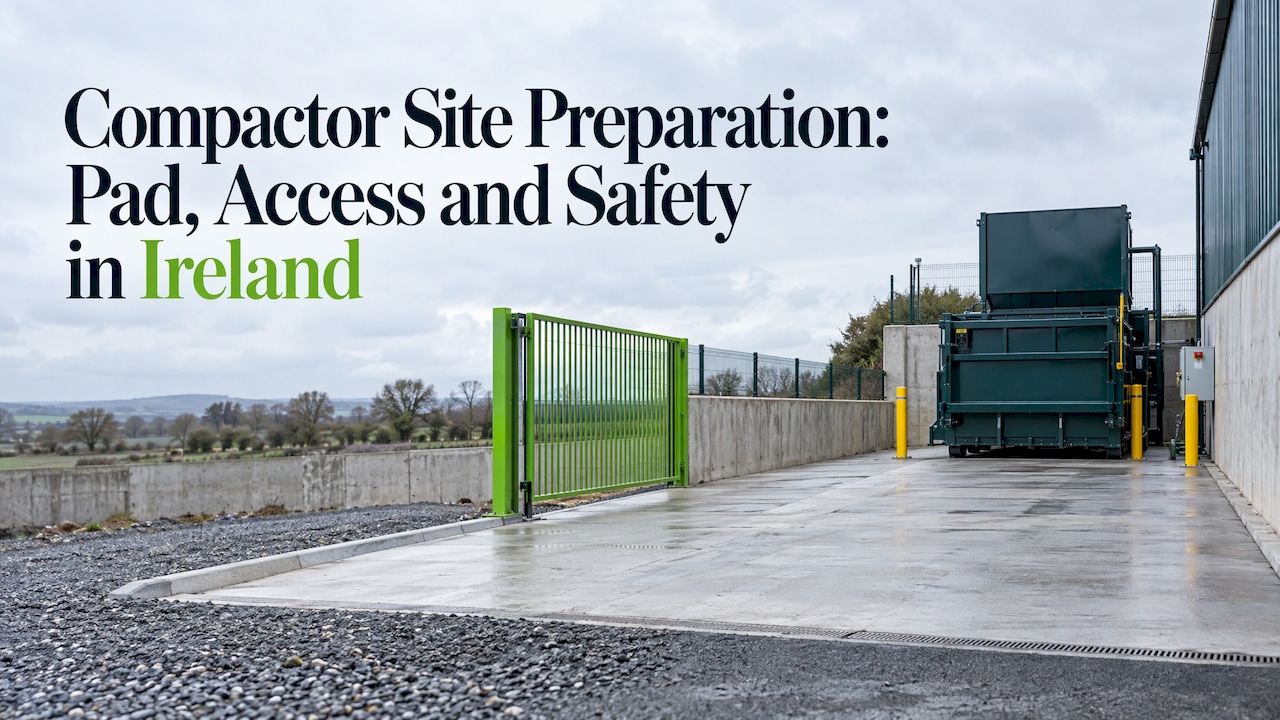
Guidance on waste storage published in Northern Ireland sets out design points that apply well beyond that jurisdiction. The Waste Storage Guide (September 2010) calls for a metal floor plate where waste is compacted, guide rails for static compactors, a heavy-duty stop barrier at the rear of portable units, vehicle access that does not block public rights of way or fire exits, and a management strategy covering operator training and restricted access. It also notes that most compactors need an electrical supply, possibly three-phase. Ask early which supply your chosen machine needs and whether your building has it.
4. Confirm the collection arrangement
The same guide points out that compacted wheeled bins weigh more, which affects manual handling and the lifting gear on collection vehicles, and that councils and contractors should be asked about their arrangements before you invest. Because collectors weigh waste in Ireland, ask your collector how a compacted container will be lifted and billed. Doing this before the machine arrives avoids surprises.
Our compactor size guide and the guide to choosing a cardboard compactor go further into capacity and sizing.
What to count when you compare costs
The sticker price is one line of several. A fair comparison of buying, renting or leasing covers:
- Purchase or rental cost of the machine and its container or bin.
- Installation: floor plate, power supply, ramp or access works.
- Servicing and safety checks across the life of the machine.
- Collection and disposal charges before and after, including the weight-based pricing now standard in Ireland.
- Income from any recyclable material you can sell, such as baled cardboard.
- Space freed up and the cost of the bins or skips you no longer need.
For scale, public bodies buy compaction as a package. A 2025 tender from Waterford City and County Council for two 24-tonne-force static compactors, one 32-tonne-force compactor, four 40 cubic yard containers and a vehicle access ramp at the Dungarvan civic amenity site had an estimated value of €150,000 excluding VAT over 60 months. A single business unit will need a fraction of that, but the tender shows how containers, access and term all sit in the total.
If budget is tight, refurbished compactors and balers are a way to bring the machine cost down. For baler costs specifically, see what a cardboard baler costs in Ireland, and for what buyers pay for bales, see cardboard bale prices.
Safe operation
A compactor is a powerful machine, and safe use is part of owning one. Restrict operation to trained staff, keep access to the ram and container controlled, keep fire exits and rights of way clear, and follow the manufacturer’s instructions for loading and emptying. Our compactor safety guide for Irish employers sets out what an employer needs to put in place. For your own legal duties as an employer, the Health and Safety Authority is the body to consult.
Our view: start with the waste, not the machine
We see the same pattern whenever a business starts with the machine: it picks a size from a brochure, then discovers its real waste is different. Our approach runs the other way.
We begin with a waste audit, so the numbers decide the equipment. If the answer is a compactor, we supply it. If cardboard is the main stream, a baler and a bale buyback can turn a disposal cost into income. If you want to keep the capital outlay down, we also supply refurbished machines.
What we offer is one point of service from audit through equipment to recycling and payment, designed to maximise the rebates you receive and keep the process simple for your team.
Graham
Start with a free waste audit
If you are weighing up a bin compactor, the quickest way to a sound decision is to know what you are throwing away. Our free waste audit looks at your site’s requirements, your waste streams and the equipment that would suit them, so that you can meet your legal and corporate obligations while managing costs. From there we can supply the compactor, baler or bin press, and arrange the buyback of baled cardboard and plastic.
Book your free waste audit, or see how Irish businesses can reduce waste costs first.
FAQ
Will a compactor reduce my waste bill?
It can, because denser loads mean fewer collections and less storage. The size of the saving depends on how your collector charges, since Irish collectors now weigh waste. A waste audit shows your current volumes and weights, so the saving can be worked out before you commit.
Should I choose a compactor or a baler?
A compactor suits steady volumes of general or mixed dry waste. A baler suits cardboard and plastics, because the tied bale can be stored, stacked and sold. Many sites with heavy cardboard use go straight to a baler and a buyback arrangement.
What is the difference between a static and a portable compactor?
A static compactor is fixed in place and suits high, steady daily volumes, usually with a three-phase power supply. A portable unit is a sealed container that can be positioned where needed and swapped by the collector. Your volume, space and available power decide which is right.
What do I need in place before installation?
You need a suitable base, clear vehicle access that does not block fire exits or rights of way, the right electrical supply, trained operators and a confirmed collection arrangement with your waste collector. Our team can talk you through these during the audit.
Sources
- Introduction of incentivised waste collection charges, Department of Climate, Energy and the Environment
- Waste Management Act 1996, Law Reform Commission revised acts
- Landfill sites, Citizens Information
- Separating and storing waste, NetRegs
- Waste Storage Guide, Building Control NI
- Waste compactors tender WCCC25 442, eTenders