The most reliable fix is layered: stop the odour at its source, treat the liquids and film that feed it, then contain and clean the air around the unit. Chemical neutralisers and bio-enzymatic treatments handle the biology, while extraction or ozone systems manage what remains, provided they meet HSA occupational exposure guidance. We can audit a site and help implement an odour treatment plan if you want it handled end to end.
TL;DR:
- Fixing leachate buildup and biofilm is essential, as most persistent odour originates from these sources in waste handling areas.
- Regular site inspections and log-keeping of odour levels help identify whether odour problems are transient or continuous, guiding appropriate responses.
- A layered approach combining source control, chemical treatment, and capture systems offers more reliable odour mitigation than relying on a single solution.
- Bio-enzymatic neutralisers, especially when paired with scheduled cleanup, are more effective long-term than masking sprays or surface deodorizers.
- Implementing a comprehensive Odour Management Plan with defined triggers, routines, and records ensures ongoing compliance and reduces complaints.
Table of Contents
- Diagnose the source before you treat the symptom
- The three-layer approach: prevent, treat, contain
- Chemical treatments: sprays, granules and bio-enzymatic neutralisers
- Electronic systems and oxidising units: effectiveness and safety rules
- Scaling up: misting, extraction, scrubbers and biofilters
- Building an Odour Management Plan that holds up to scrutiny
- Why a mixed strategy beats any single fix
- How we help with audits, equipment and ongoing odour control
- FAQ
- Sources
Diagnose the source before you treat the symptom
Most persistent compactor odour comes from leachate, liquid squeezed out of waste that pools in the hopper, pit or drain lines and ferments. Biofilm builds on the walls and seals of that same wet area, feeding bacteria that keep producing smell long after the waste itself has gone. Treating the air without fixing this is why sprays and dispensers so often fail within days.
A short walk-round tells you what you are dealing with:
- Check the pit tray and hopper floor for standing liquid or dried residue rings.
- Run the drain and confirm it flows freely rather than backing up.
- Inspect hydraulic rams and hoses for leaks that mix oil into the leachate.
- Test bay door seals and roller shutters for gaps that let odour escape.
- Note where biofilm has formed, usually on vertical surfaces near the waterline.
Log what you find with a simple sniff-test score at set times of day. A smell that spikes after loading and fades within the hour points to transient waste; one that lingers overnight points to leachate and biofilm.
The three-layer approach: prevent, treat, contain
Odour control works best when you think in layers rather than reaching for a single product.
- Prevent: housekeeping, scheduled pulls, sealed bays and reduced waste residence time stop odour forming in the first place.
- Treat: chemical neutralisers and bio-enzymatic dosing break down the organic matter already causing the smell.
- Contain: extraction, misting or ducted abatement capture and clean whatever odour still escapes.
Quick wins sit in the first layer: tightening a cleaning schedule or fixing a door seal costs little and often resolves the bulk of a complaint within a week. Chemical dosing is the next cheapest step and can run alongside housekeeping fixes. Engineering controls, extraction systems, scrubbers or biofilters, are capital projects, so they are worth scheduling in parallel while the cheaper layers buy time rather than waiting for a single big fix to solve everything.
Chemical treatments: sprays, granules and bio-enzymatic neutralisers
Not all odour products work the same way. A masking agent covers a smell with a stronger one and does nothing to the source. A neutraliser chemically binds odour molecules. A bio-enzymatic treatment introduces bacteria or enzymes that digest the organic waste causing the smell, which makes it the better choice for leachate and biofilm rather than surface odour.
- Hand-spray treatments suit small sites or spot problems but need frequent reapplication.
- Automatic dosing units feed neutraliser or enzyme solution into drain lines continuously, which suits higher-throughput bays.
- Granules placed directly in the pit or drain work well where standing liquid is the main issue.
Store concentrated products away from heat and check manufacturer data sheets for PPE requirements before handling undiluted solution.
Pro Tip: Track your sniff-test scores before and after a treatment change; a falling trend over two weeks is a better efficacy signal than any single day’s result.
Electronic systems and oxidising units: effectiveness and safety rules
Ozone and other oxidising units work by altering the chemical structure of odour molecules rather than masking them, which makes them effective inside a ducted or extracted air stream where contact time and concentration can be controlled. They are far less reliable in an open hopper, where airflow is unpredictable and any benefit disperses quickly.
- Fit oxidising units to extract ductwork, not open bays, so the treated air stays contained.
- Use interlocks and monitoring so the unit shuts down if ventilation fails.
- Never install an open-air ozone dispenser in a space where staff work or pass through regularly.
The HSA Code of Practice for chemical agents treats ozone as a respiratory irritant and requires exposure to be kept as low as reasonably practicable, below advisory or binding occupational exposure limit values, through engineering controls, monitoring and PPE where risk remains.
Scaling up: misting, extraction, scrubbers and biofilters
When housekeeping and dosing are not enough, usually because the odour is continuous, neighbours or staff in other areas are affected, or a regulator has raised the issue, it is time to look at plant-level abatement. A mist-air system suits moderate, intermittent odour. An acid scrubber paired with a biofilter suits continuous, higher-strength odour streams and is the configuration most often specified in technical odour impact assessments for waste facilities.
| Control measure | Typical application | Key maintenance point |
|---|---|---|
| Mist-air system | Moderate, intermittent odour | Nozzle checks, water quality |
| Acid scrubber + biofilter | Continuous, high-strength odour | Residence time should be maintained within an appropriate range (e.g., several tens of seconds) with regular differential-pressure checks as recommended by the manufacturer |
| Dedicated abatement stack | Site-wide or regulatory-driven need | Media replacement and spare parts should be scheduled and kept available to ensure system reliability |
Biofilter performance depends on getting residence time and moisture right; under-sizing or skipping maintenance causes efficiency to drop fast and complaints to return. Building integrity matters just as much as the hardware: keeping the bay under negative pressure, fitting rapid roller doors and using air curtains at openings all reduce how much odour escapes before any treatment system gets to it.
- Match the system to the odour’s continuity and strength, not just the budget available.
- Build a maintenance calendar around the manufacturer’s stated media and part replacement intervals.
- Treat negative pressure and door seals as part of the control system, not a separate issue.
Building an Odour Management Plan that holds up to scrutiny
An Odour Management Plan turns ad hoc fixes into a documented, defensible process. The EPA’s AG9 guidance sets out what a workable OMP should contain, and many issues it covers can be resolved through housekeeping and operational discipline rather than new equipment.
- Source inventory: list every pit, drain and hopper, and note which is the most frequent offender.
- Cleaning schedule: set a fixed cadence for pit cleaning and drain dosing rather than reacting to complaints.
- Sniff-test log: record intensity and timing daily so trends are visible before they become a problem.
- Complaint response flow: assign who investigates, what they check first, and how fast they respond.
- Trigger points: define what log pattern or complaint volume escalates to extraction upgrades or outside help.
Daily and weekly routines matter more than any single product. A pre-holiday container pull, increased cleaning frequency in warm months, and a quick drain dose before a known busy period all reduce risk cheaply. Keeping these records, alongside preventative maintenance logs and staff training records, gives you a paper trail that supports AG9 alignment and stands up well if a regulator or auditor asks how odour is managed on site.
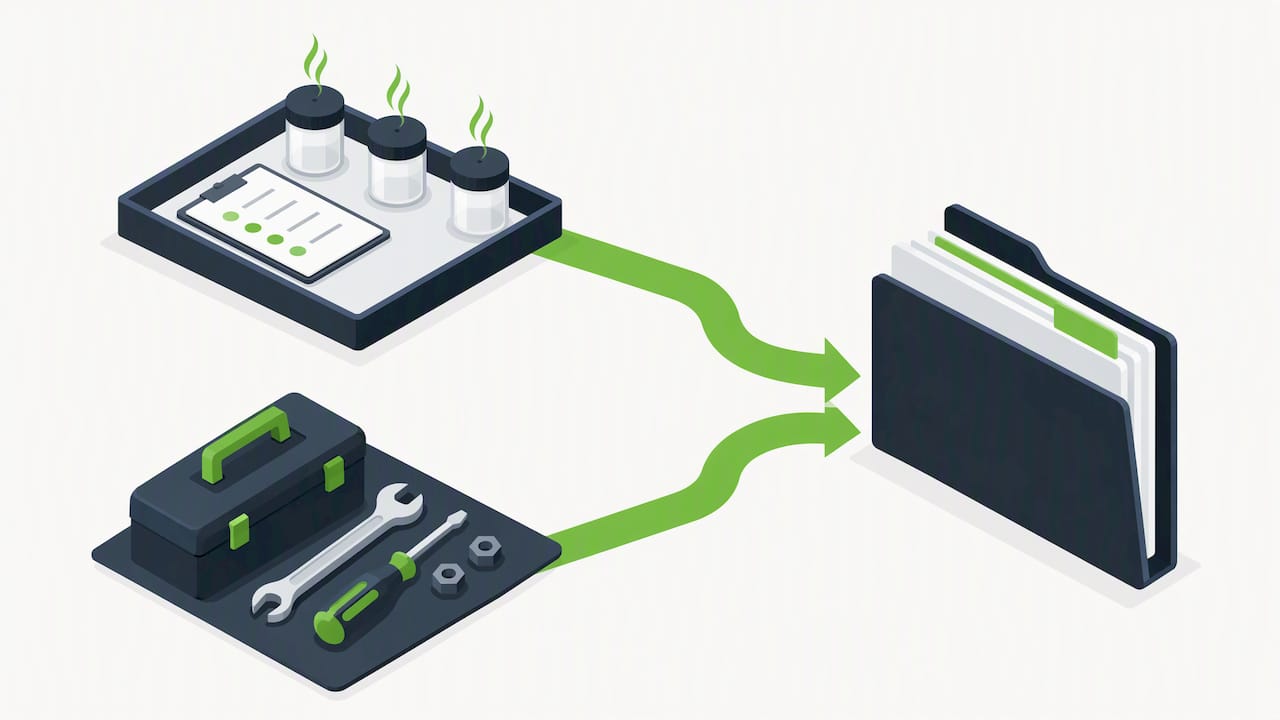
Pro Tip: Keep your sniff-test log and maintenance log in the same file; a regulator or auditor reading one without the other only gets half the picture.
Why a mixed strategy beats any single fix
Single-solution approaches fail predictably: a spray without drain cleaning wears off, an extraction fan without source control just moves the smell. A site that cleaned its pit weekly, dosed drains with a bio-enzymatic product, and fitted ducted extraction saw complaints drop and stay down, because each layer covered what the others missed. Diagnosis and a maintenance regime beat reactive masking every time.
— Graham
How we help with audits, equipment and ongoing odour control
We start with a Free Waste Audit that looks at your compactor setup alongside your wider waste handling, so odour fixes get planned against the equipment you actually run rather than guesswork. From there, a typical engagement moves from audit to a tailored plan, then equipment installation or upgrade, then ongoing maintenance and monitoring.

Where the fix calls for new or upgraded hardware, we supply cardboard compactors built with drainage and sealing in mind, which cuts down the leachate pooling that causes most persistent odour problems. For sites handling cardboard and plastic, a bale buyback scheme can turn recyclable material into a revenue stream rather than another cost line. Book a free audit to get a site-specific plan rather than another one-off spray.
FAQ
Is there an odour eliminator that actually works?
Bio-enzymatic neutralisers that target leachate and biofilm at the source work more reliably than masking sprays, because they break down the organic matter causing the smell rather than covering it. Pairing one with a fixed pit-cleaning schedule gets the best result.
What is a good odour eliminator for concrete?
Concrete pits and bay floors absorb leachate into their pores, so a penetrating bio-enzymatic treatment applied directly to the surface works better than a surface spray. Regular drain dosing alongside this prevents the leachate from soaking back in.
What is a good deodorizer for dumpsters?
A bio-enzymatic drain treatment combined with a fixed cleaning cadence addresses the leachate that causes most dumpster odour, and works better long-term than scented sprays. Where odour is continuous, ducted extraction with an oxidising unit fitted to the airflow adds a further layer of control, following HSA exposure guidance.
What powder gets rid of odour?
Granular bio-enzymatic or neutralising powders placed directly in the pit or drain line work well where liquid pools, because they stay in contact with the source longer than a spray. They need topping up on a schedule rather than a one-off application to keep working.
Sources
- AG9 Odour Emissions Guidance Note (EPA)
- Odour impact assessment (Kerry Central Recycling Facility)
- Code of Practice for chemical agents (HSA)