Zero waste to landfill is achievable for most businesses once diversion and documentation reach recognised thresholds. The common benchmark, drawn from frameworks like UL 2799, starts at 90% diversion from landfill, incineration and the environment, with higher bands above that.
TL;DR:
- Most businesses need to divert at least 90% of waste to meet credible zero waste to landfill standards, with higher tiers requiring up to 100% diversion.
- Effective segregation, staff training, and proper equipment sizing are crucial for reaching and maintaining a verified diversion rate over 90%.
- Regular documentation, chain-of-custody records, and site site checks ensure verification bodies confirm a business’s diversion claims.
- The fastest initial progress typically involves recycling high-volume, easily segregated waste streams like cardboard and plastics.
- Continuous oversight is essential, with monthly tracking and equipment reviews to prevent diversion rates from slipping below certification thresholds over time.
Table of Contents
- What zero waste to landfill means and how standards define it
- Why zero waste to landfill pays for itself
- Step-by-step programme to reach zero waste to landfill
- How to calculate and report your diversion rate
- What verifiers check before granting certification
- Common challenges and quick solutions
- How Compact supports a zero waste to landfill programme
- Keeping zero waste to landfill status over time
- Training staff to make waste reduction stick
- What successful implementations tend to look like
- Realistic timelines for making zero waste to landfill stick
- Start with a free waste audit
- Sources
- FAQ
What zero waste to landfill means and how standards define it
Zero waste to landfill describes a business sending no non-hazardous solid waste to landfill, instead channelling it into reuse, recycling, composting or recovery. The phrase sounds absolute, but verification schemes treat it as a measurable band rather than a literal zero.
UL Solutions sets tiered diversion bands: Silver at 90 to 94%, Gold at 95 to 99%, and Platinum at 100%. TRUE certification uses a similar floor, requiring at least 90% diversion of solid, non-hazardous waste away from landfill, incineration and the environment, alongside documented programme elements such as policies, training records and purchasing changes.
A few things separate a credible claim from a marketing line:
- The waste hierarchy of prevention, reuse, recycling and recovery guides how schemes rank diversion methods, with prevention valued above recycling.
- Waste-to-energy is treated inconsistently across frameworks: some count it towards diversion, others favour material recycling over incineration when calculating the final percentage.
- Chain-of-custody evidence, not self-reported estimates, is what separates a verified claim from an internal target.
Why zero waste to landfill pays for itself
The commercial case starts with what is actually inside a typical bin. The Irish government and EPA have found that around A significant share of material in commercial general waste bins is suitable for recycling or organic treatment. This means most businesses are paying landfill rates to dispose of material that could be sold or composted instead.
A large proportion of general commercial waste bin contents are recyclable or compostable, according to government and EPA findings, which means better segregation directly cuts disposal costs while opening new revenue lines.
The gains tend to show up in three places:
- Lower disposal costs as segregated loads replace expensive mixed general waste collections.
- New revenue from baled cardboard and plastic through buyback arrangements rather than paying to throw them away.
- Stronger procurement and reporting positions, since diversion data feeds directly into scope 3 emissions reporting and tender requirements.
Step-by-step programme to reach zero waste to landfill
Getting to a verifiable diversion rate is a sequence, not a single project. Each stage builds the evidence base the next one needs.
- Commission a waste audit that produces a material map, weigh data by stream and a ranked list of the highest-volume or highest-cost waste types.
- Build segregation infrastructure with clearly labelled, colour-coded bins at the point of generation, not just at a central compound.
- Train staff on what goes where, with refresher sessions and visible accountability for contamination.
- Change procurement policy to favour reusable packaging, bulk deliveries and suppliers who take back pallets or film.
- Install the right equipment for your volumes: cardboard balers and compactors reduce collection frequency and create saleable bales, while industrial dewatering shredders and composting machines handle bulkier or organic residuals.
- Manage contractors tightly, insisting on destination receipts and waste transfer documentation for every collection, not just a general assurance that material is “recycled”.
A cardboard recycling and compaction approach often delivers the fastest visible win, since cardboard volumes are high, easy to segregate and straightforward to bale.
Pro Tip: Start the audit before buying any equipment, since the material map tells you which baler, compactor or shredder size actually matches your volumes.
How to calculate and report your diversion rate
Diversion rate is calculated as the weight diverted from landfill (reused, recycled, composted or recovered) divided by total waste generated, expressed as a percentage.
Most verifiers expect this tracked on a rolling 12-month basis rather than a single snapshot, since seasonal spikes and one-off projects can distort a short window.
- Include all regular operational waste streams: general waste, cardboard, plastics, organics and mixed recyclables.
- Exclude hazardous waste, material still in process, and loads sent to transfer stations where the final destination cannot be confirmed.
- Keep weighbridge tickets, reprocessor receipts, invoices and waste transfer manifests as your primary evidence set.
Track internally every month, then compile the rolling annual figure when it is time to report to management or a verifier.
What verifiers check before granting certification
Verification bodies work from documentation first, site visits second. Before inviting an auditor, most of the groundwork should already be filed and current.
- A written waste policy, measurement logs and chain-of-custody records for every outbound load.
- Diversion figures that meet the scheme’s threshold, typically 90% for an entry-level zero waste to landfill claim and 95% or higher for upper bands, with waste-to-energy sometimes excluded from the diversion calculation depending on the standard.
- Physical checks of segregation points, staff training records and bin signage during the site visit.
- Spot checks on whether labelled streams actually match what is inside the container.
The most common documentary failure is incomplete contractor paperwork: destination receipts that stop at a transfer station rather than showing the final reprocessor. Fixing that gap before an audit saves a repeat visit.
Common challenges and quick solutions
Contamination is the recurring problem. Clear signage, colour-coded bins and regular spot-checks at the point of disposal catch most of it before a load is rejected by a reprocessor.
Stubborn residuals, items that are not recyclable locally, need a specialised reprocessor, a recovery route, or at minimum correct labelling so they are not contaminating a recyclable stream. For construction and demolition waste or seasonal volume spikes, pre-arrange extra collection routes rather than defaulting to a mixed skip.
- Demand transparent onward evidence from every contractor: a load that cannot be traced to its final destination should not count towards your diversion figure.
- A local recycling and collection partner can help confirm collection routes match the destinations on paper.
Pro Tip: Audit one contractor’s paperwork trail every quarter, it usually surfaces gaps before they become a verification problem.
How Compact supports a zero waste to landfill programme
Compact’s Free Waste Audit maps material streams and weigh data, giving businesses the baseline evidence a diversion programme and any later verification process both need.
- The audit identifies which streams are costing the most in general waste charges and which could be baled or composted instead.
- The We Buyback Bales scheme pays for separated cardboard and plastic, turning disposal costs into potential revenue.
- Balers, compactors and dewatering shredders reduce collection frequency and the volume going to general waste in the first place.
- Typical early wins include lower disposal charges and a measurable jump in the recycling rate within the first few collection cycles.
Keeping zero waste to landfill status over time
Reaching a diversion threshold once is a project. Holding it is a management discipline. Waste streams shift as product lines change, suppliers switch packaging, or a site adds new equipment, so a diversion rate that looked solid at certification can slip within a year without active oversight.
The businesses that keep their status treat diversion tracking as a standing agenda item, not an annual scramble. Monthly weigh data gets reviewed against the rolling 12-month figure, and any stream trending the wrong way gets investigated before it drags the annual number down. Procurement stays in the loop too: a change of packaging supplier or a new product format can quietly introduce a material that the current segregation setup was not built to handle.
Equipment also needs revisiting as volumes grow. A baler sized for last year’s cardboard output can become a bottleneck, pushing overflow into general waste simply because the compaction capacity has not kept pace. Reviewing equipment capacity alongside the annual audit catches this before it shows up as a dip in diversion.
Continuous improvement here is less about chasing a higher percentage and more about protecting the one already achieved: fixing contamination drift early, renegotiating contractor terms as volumes change, and keeping documentation current so a verification renewal is a formality rather than a scramble.
Training staff to make waste reduction stick
No segregation system survives contact with untrained staff. The physical infrastructure, colour-coded bins, clear signage, a baler on the loading dock, only works if the people generating the waste understand what goes where and why it matters.
Effective programmes start training at induction, not as an afterthought months into the job. New starters should see the segregation setup explained in practical terms: which bin, which bag colour, what happens to the material afterwards. That last point matters more than it sounds. Staff who understand that separated cardboard gets baled and sold, rather than vanishing into an abstract “recycling” bin, tend to sort more carefully.
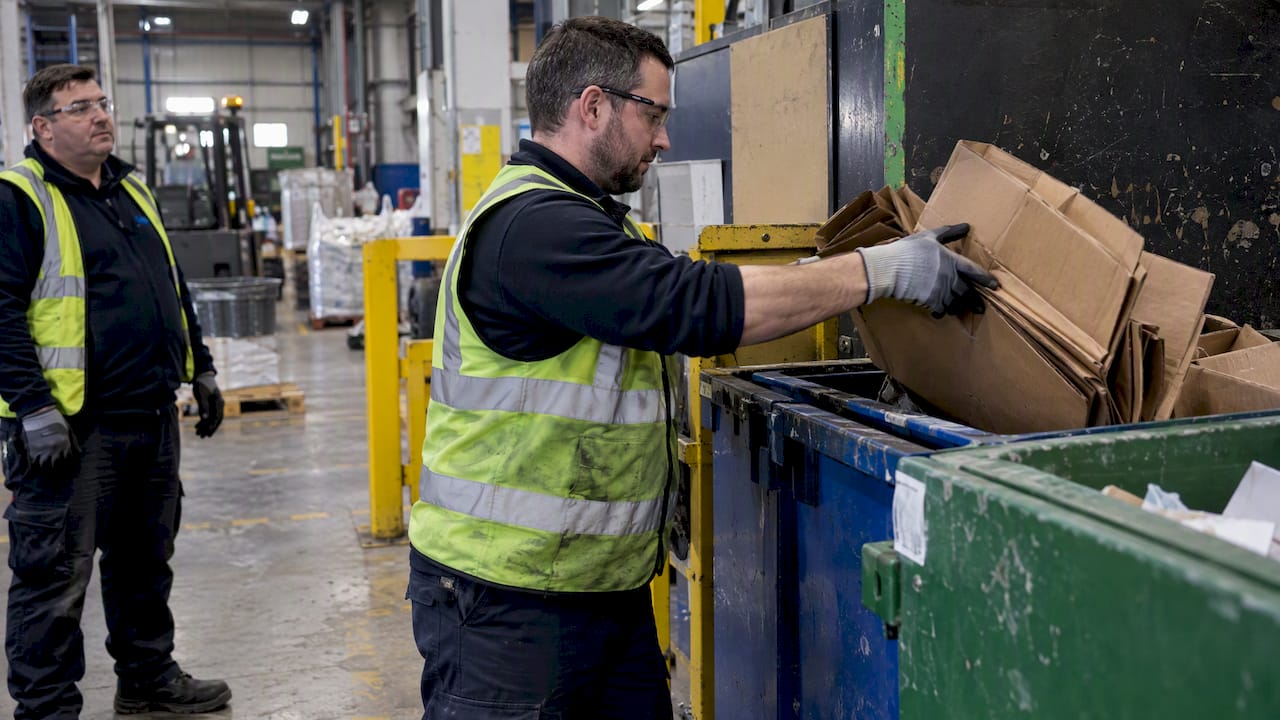
Refresher sessions matter as much as the initial training, particularly after a change in waste contractor, a new bin layout, or a drop in diversion figures that suggests contamination is creeping back in. Short, regular reminders beat an annual all-staff briefing that nobody remembers by the following month.
Making waste reduction visible helps too: sharing monthly diversion figures with the team, or flagging a specific win, like a reduction in general waste collections, connects the daily sorting habit to a result people can see. Some sites nominate a waste champion per department or shift, someone responsible for spotting contamination early and answering colleagues’ questions, which keeps the programme owned at floor level rather than only by a sustainability manager.
What successful implementations tend to look like
Across the businesses that reach and hold a strong diversion rate, a pattern recurs regardless of sector. A manufacturing site with high cardboard and plastic film volumes typically sees the fastest early win simply by baling those streams on-site rather than sending them out mixed with general waste, both cutting collection costs and generating buyback revenue.
A retail or distribution operation, by contrast, often finds its biggest opportunity in packaging reduction upstream: working with suppliers to cut incoming plastic film or switch to reusable crates, which reduces the waste problem before it reaches the bin at all. Food and hospitality businesses tend to get the most value from organic waste composting, diverting a stream that would otherwise sit in general waste and attract high disposal charges due to weight.
Office-based or professional services businesses face a different challenge: lower waste volumes overall but a heavier mix of mixed recyclables and residual packaging from deliveries, where the win often comes from consolidating waste contracts and tightening segregation at fewer, better-placed collection points.
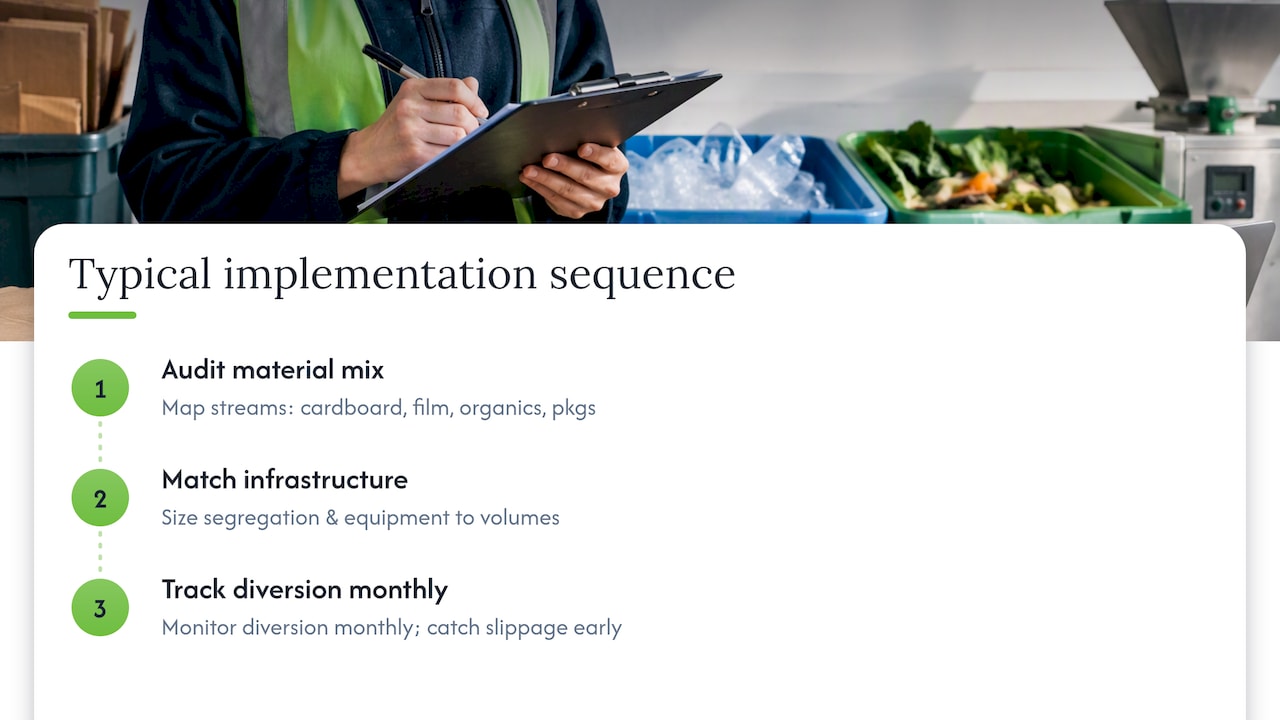
What connects these different paths is less the industry and more the sequence: audit first to understand the actual material mix, then match infrastructure and equipment to that mix rather than buying generic solutions, then track the diversion figure monthly so slippage gets caught early. Businesses that skip the audit step tend to invest in the wrong equipment for their volumes, which is the most common reason a diversion programme stalls before it reaches a verifiable threshold.
Realistic timelines for making zero waste to landfill stick
Most businesses see measurable gains within three to six months of a proper audit and segregation rollout, largely from stopping obviously recyclable material going into general waste.
Governance matters more than any single piece of equipment: assign one internal owner, set a simple diversion KPI, and align procurement decisions with the same target. Internal tracking is enough until you need the figure for a tender, an investor or a public claim, at which point formal validation against a recognised standard becomes worth commissioning.
— Graham
Start with a free waste audit
Compact turns a waste problem into a line of revenue rather than just a lower cost. The Free Waste Audit maps your current streams and weigh data, then translates those findings directly into equipment choices or a buyback arrangement rather than leaving you with a report and no next step.
- The audit covers material mapping, weigh data by stream and a ranked list of your highest-cost waste types.
- Findings feed directly into equipment recommendations, such as a cardboard baler or compactor sized to your volumes.
- Separated cardboard and plastic can move straight into the We Buyback Bales scheme, paying you for material you previously paid to dispose of.
Request a free waste audit to see where your business stands against a verifiable diversion target.
Sources
For readers preparing a formal claim, UL 2799 guidance and TRUE certification set out the diversion thresholds and documentation verifiers expect. Ireland’s Waste Action Plan for a Circular Economy and EPA data on commercial bin contents provide the policy and evidence context behind the business case. Reviewing a verifier’s own guidance before commissioning an audit saves time later.
- Introduction of incentivised waste collection charges will increase sustainability in the commercial sector
- How to achieve and validate zero waste to landfill | UL Solutions
- TRUE certification for zero waste | GBCI True
FAQ
What does zero waste to landfill mean?
It means a business sends no non-hazardous solid waste to landfill, instead diverting it through reuse, recycling, composting or recovery. In practice, recognised standards like TRUE certification treat this as diverting at least 90% of waste rather than a literal zero.
Which country sends almost none of its waste to landfill?
Several European countries have reduced landfilling to very low levels through strong recycling and recovery infrastructure, though exact figures vary by year and reporting body. For a specific national claim, check that country’s own environment agency rather than relying on a repeated statistic.
How much commercial waste ends up in landfill rather than being recycled?
In Ireland, government and EPA findings show that around A significant share of material in commercial general waste bins is suitable for recycling or organic treatment, meaning most of that material is landfilled unnecessarily rather than through lack of alternatives. Better segregation at source is the main lever for closing that gap.
What are the five rules of zero waste?
Definitions vary across organisations, but a common version follows the waste hierarchy: prevent, reduce, reuse, recycle and, where nothing else is possible, recover. EPA guidance on the waste hierarchy ranks prevention and reuse above recycling and treats landfill disposal as the last resort.
What diversion rate counts as zero waste to landfill?
UL Solutions sets Silver at 90 to 94%, Gold at 95 to 99%, and Platinum at 100%.