Plastic Film Recycling Equipment for Irish Businesses: A Smarter Way to Manage Packaging Waste
Plastic film is one of the most common and challenging waste materials produced by modern businesses. It appears in shrink wrap, pallet wrap, protective packaging, delivery film, product wrapping, bags, liners, and flexible packaging materials. For companies across Ireland, especially in retail, warehousing, logistics, food production, manufacturing, wholesale, and distribution, plastic film waste can build up quickly and become difficult to manage.
Unlike cardboard, which is usually easier to stack, bale, and recycle, plastic film is light, bulky, flexible, and often awkward to store. It can fill bins quickly, blow around outdoor yards, become contaminated, and create unnecessary handling problems for staff. This is why plastic film recycling equipment for Irish businesses is becoming an increasingly important part of professional waste management.
At Compact, we help companies across Ireland reduce waste volumes, improve recycling performance, and create more efficient waste handling systems. Alongside cardboard balers, cardboard compactors, and industrial shredders dewatering solutions, our plastic film recycling solutions support businesses that want to take better control of flexible plastic waste.
Why Plastic Film Recycling Matters in Ireland
Many Irish businesses produce plastic film every day without realising how much space it takes up. Pallet wrap from deliveries, protective film from incoming goods, packaging from production lines, and flexible plastic from stock handling can quickly fill bins and recycling areas. Because plastic film is lightweight, businesses may think it is not a major issue. In reality, it can be one of the most inefficient waste streams on site.
Loose plastic film can make waste areas look untidy and disorganised. It can also increase the frequency of waste collections because it fills containers with air and volume rather than weight. When mixed with general waste, it may also reduce recycling quality and make disposal less efficient.
Professional plastic film recycling equipment for Irish businesses helps solve this problem by processing the material more effectively. Instead of allowing loose film to build up in bags, cages, bins, or skips, businesses can introduce equipment that prepares plastic film for recycling, reuse, or more efficient handling.
The result is a cleaner site, better recycling control, and a more sustainable waste management process.
The Challenge of Flexible Plastic Packaging
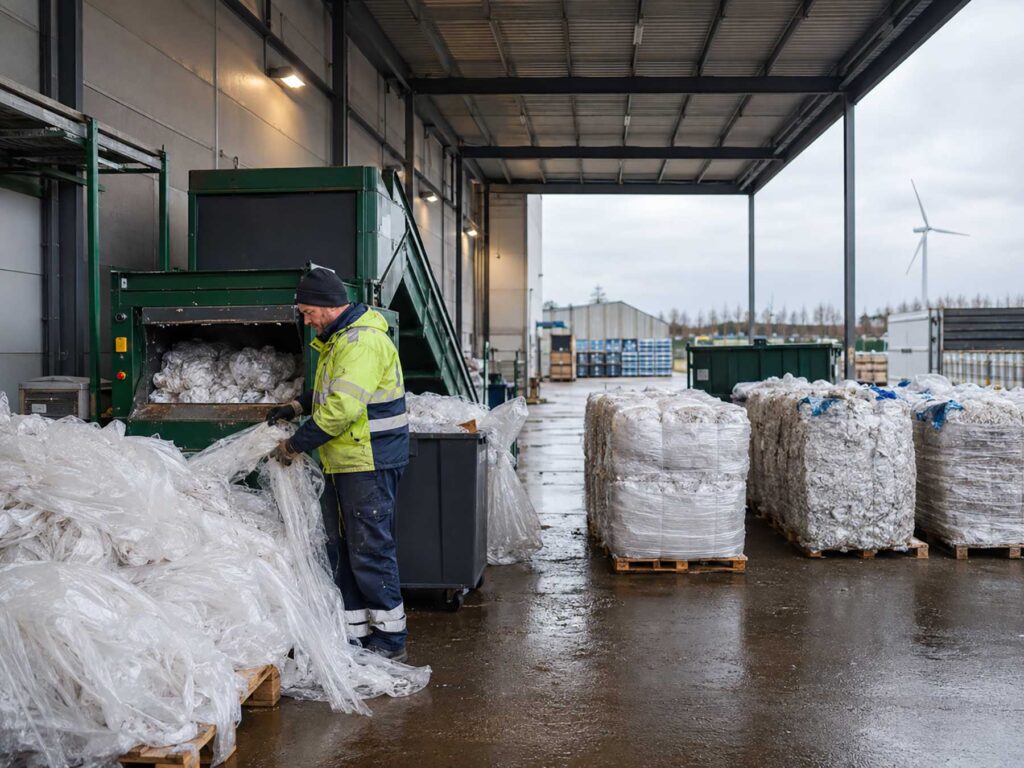
Flexible plastic packaging is useful because it protects goods, keeps pallets stable, and reduces damage during transport. However, once it has served its purpose, it becomes difficult to manage. Plastic film is often bulky, slippery, and hard to compact without the right equipment.
For warehouses and distribution centres, this can be a daily issue. Every incoming pallet may bring another layer of wrap. Every outgoing order may involve additional film or packaging. In food production and manufacturing, plastic film may be used across different parts of the operation, creating a constant stream of waste material.
Without a structured system, staff may simply place plastic film into general waste bins or mixed recycling containers. This can increase disposal costs and reduce the value of recyclable materials. It may also make recycling less consistent across shifts and departments.
A better approach is to separate plastic film at source and process it with appropriate machinery. This is where Compact’s recycling equipment can support Irish businesses looking for a cleaner and more efficient solution.
How Plastic Film Recycling Equipment Works
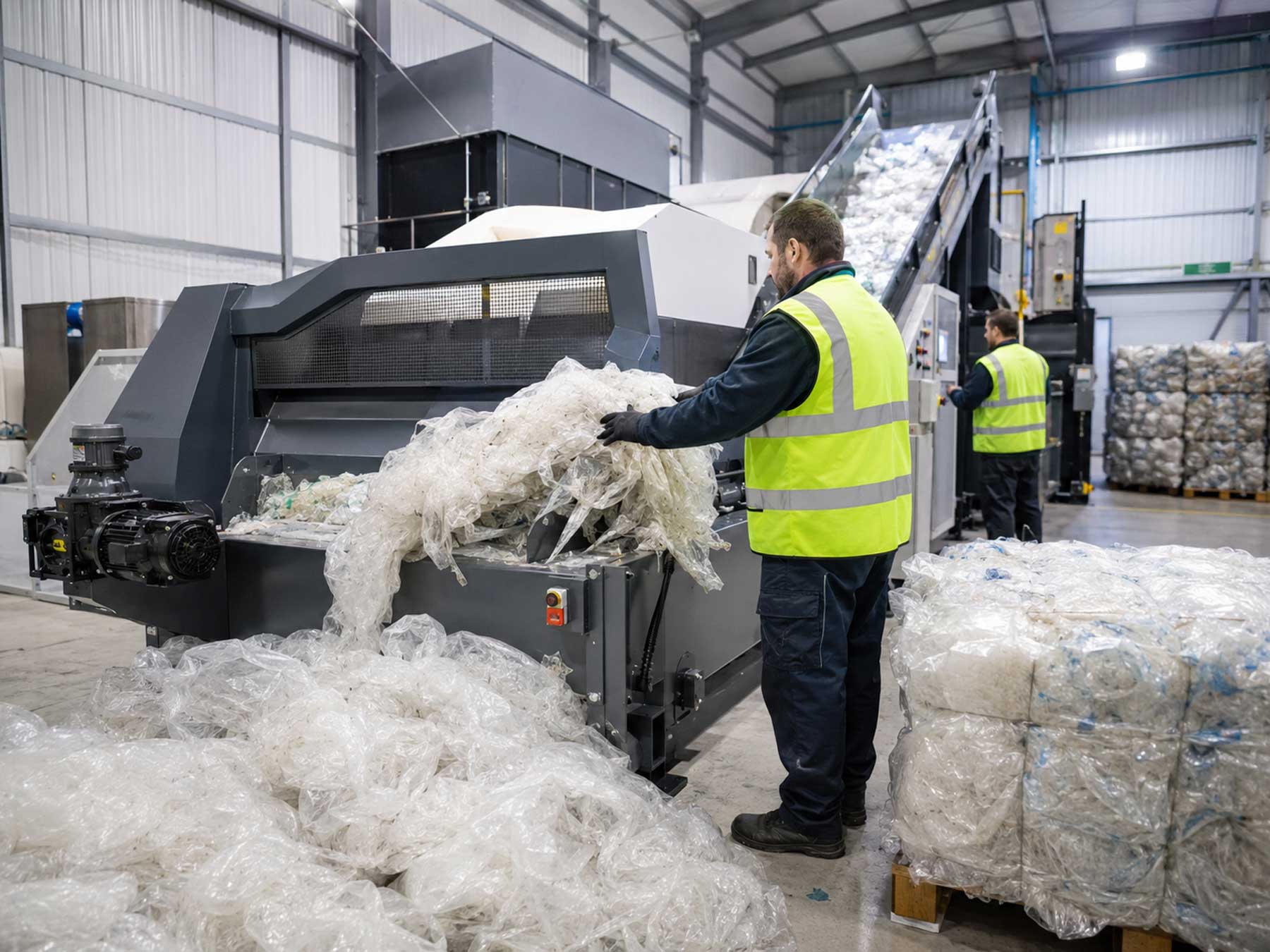
Plastic film recycling equipment is designed to process flexible plastic materials in a more controlled way. Depending on the solution, the system may involve feeding waste film into a hopper, shredding the material, reducing volume, and preparing it for further recycling or reprocessing.
The goal is to turn loose, difficult-to-handle film into a more manageable material stream. This can reduce storage problems, improve recycling logistics, and support a more professional waste process.
For businesses that produce high volumes of film, the right equipment can save significant time. Instead of staff manually stuffing plastic wrap into bags or bins, material can be fed into a system designed for that purpose. This improves consistency and can reduce the amount of labour required to manage waste.
Plastic film recycling equipment can be particularly valuable for businesses that already have strong recycling procedures in place for cardboard, paper, plastics, and packaging. Adding film recycling creates a more complete waste management strategy.
Plastic Film Recycling for Warehouses and Distribution Centres
Warehouses and distribution centres are among the biggest users of plastic film packaging. Pallets arrive wrapped, stock is stored and moved, orders are picked and dispatched, and goods often need to be protected in transit. This creates a constant flow of plastic film waste.
For these businesses, plastic film recycling equipment for Irish businesses can make a major difference. It helps keep loading bays, stock areas, and waste zones cleaner and more organised. It also supports better separation of recyclable materials.
A warehouse may already use a cardboard baler to manage boxes and packaging board. Adding plastic film recycling equipment allows the business to handle another major waste stream with the same level of control. Cardboard can be baled, plastic film can be processed separately, and general waste can be reduced.
This creates a more efficient system for staff. Instead of deciding where to put each type of material in a busy environment, they can follow a clear process: cardboard into the baler, film into the plastic recycling system, and other waste into the correct container.
Plastic Film Recycling for Retail and Supermarkets
Retail businesses and supermarkets also produce large quantities of plastic film. Deliveries arrive wrapped, stock is unpacked, promotional displays use packaging, and back-of-house areas can quickly become full of mixed materials.
In these environments, space is often limited. Waste areas must be kept tidy, safe, and hygienic. Loose plastic film can cause clutter and make recycling areas harder to manage.
Plastic film recycling equipment helps retailers create a cleaner process. It can reduce the volume of loose film, improve recycling separation, and support better site presentation. For larger stores and supermarket groups, the benefits can be even greater because waste is produced every day across multiple departments.
When combined with cardboard compactors or balers, plastic film recycling equipment gives retail businesses a more complete packaging waste solution.
Reducing Waste Volume and Collection Pressure
One of the biggest reasons to invest in waste equipment is volume reduction. Plastic film may not be heavy, but it takes up a surprising amount of space. This can make bins and cages fill quickly, leading to more frequent collections and more time spent managing waste areas.
By processing plastic film on site, businesses can reduce the volume of loose material and make collections more efficient. This helps improve waste logistics and can support cost control.
For companies trying to reduce operational waste costs, it is important to look at every major waste stream. Cardboard often receives attention first because it is highly visible. However, plastic film can also create unnecessary expense if it is not managed properly.
Compact can help businesses review their waste setup through a free waste audit, identifying where machinery could improve efficiency, reduce volume, and support better recycling.
Supporting Sustainability and Corporate Responsibility
Sustainability is now a serious consideration for Irish businesses. Customers, suppliers, employees, and corporate partners increasingly expect companies to reduce waste, recycle more effectively, and show environmental responsibility.
Plastic film recycling equipment supports these goals by helping businesses separate and process a difficult waste stream. Instead of treating film as a nuisance material, companies can bring it into a structured recycling process.
This can help reduce the amount of material sent to general waste, improve recycling rates, and support internal sustainability reporting. For businesses with environmental targets, waste reduction plans, or corporate responsibility commitments, plastic film recycling is a practical and visible improvement.
It also sends a strong message internally. When staff see that the business has invested in proper recycling systems, they are more likely to follow best-practice procedures.
Plastic Film Recycling and Bale Buyback Opportunities
For some businesses, recyclable materials can also create financial opportunities. Compact offers a We Buyback Bales service, helping companies turn compacted recyclable materials into potential revenue streams where suitable.
While the value of recyclable materials can depend on market conditions, quality, volume, and collection arrangements, the principle is clear: properly separated and processed waste is more valuable than mixed, contaminated waste.
This is why separation and equipment selection matter. A business that keeps cardboard, plastic film, and other recyclable materials clean and organised is in a better position to benefit from recycling opportunities.
Plastic film recycling equipment can therefore support both environmental and commercial goals.
Choosing the Right Plastic Film Recycling Equipment
The right equipment depends on the business. A small retail site will have different needs from a major distribution centre. A food producer may have different material handling requirements from a warehouse. A manufacturing plant may need a more robust solution due to higher volumes or specific packaging types.
Before choosing equipment, businesses should consider how much plastic film they produce, where it is generated, how staff currently handle it, how much space is available, and whether the business wants to rent or purchase machinery.
Compact supplies waste management equipment to businesses across Ireland and can advise on the most practical solution for each site. In some cases, plastic film recycling equipment may be the main requirement. In others, it may form part of a broader system that includes balers, compactors, shredders, dewatering equipment, and service support.
Why Choose Compact for Plastic Film Recycling Equipment in Ireland?
Compact works with businesses across the island of Ireland to provide practical waste management and recycling equipment. Our solutions are designed to reduce waste volume, improve recycling performance, cut disposal pressure, and create cleaner, safer working environments.
We supply equipment for cardboard, plastics, general waste, EPS, organic waste, and specialist waste streams. Customers can explore plastic film recycling, refurbished compactors and balers, and other solutions depending on their operational needs.
Our team can also help businesses understand whether rental, purchase, new machinery, refurbished equipment, or a full waste review is the best route forward.
Take Control of Plastic Film Waste
Plastic film does not have to be a messy, inefficient, or costly waste stream. With the right equipment and advice, Irish businesses can process flexible plastic more effectively, reduce waste volume, improve recycling, and create a more organised workplace.
If your business produces pallet wrap, shrink film, packaging film, or flexible plastic waste, Compact can help you find the right solution. Learn more about plastic film recycling equipment or contact Compact to discuss your site requirements.