A commercial food composter in Ireland costs from a few thousand euro for a small manual tumbler to tens of thousands for an automated, higher-capacity unit. The purchase price is only part of the figure. Space, bulking material, power, maintenance and permissions all change what you actually pay. This guide shows you how to build a realistic budget before you ask anyone for a quote.
TL;DR
- Small manual tumblers for cafés and pubs sit in the low thousands of euro, ex. VAT. Automated units cost noticeably more, and industrial digesters for 50 kg to 250 kg a day are quoted in the tens of thousands.
- The unit price excludes VAT, delivery, installation and extras such as maturation bins, so add a margin when you budget.
- Meat, fish and dairy waste can bring animal by-product rules into play, which can add a registration step and cost.
- Measure first: a waste audit tells you how many kilos you produce, which decides the size of machine and whether you need one at all.
- Our Free Waste Audit is the cheapest first step if you are still comparing options.
Table of Contents
- What a commercial food composter costs in Ireland
- The costs that never appear on the price tag
- Rules that can change the price
- Is a composter cheaper than collection?
- Prevent first, then size the machine
- Our view on commercial composters
- Choosing the right size and type
- Promo: see what we supply
- Questions to ask before you sign a quote
- FAQ
- Sources
What a commercial food composter costs in Ireland
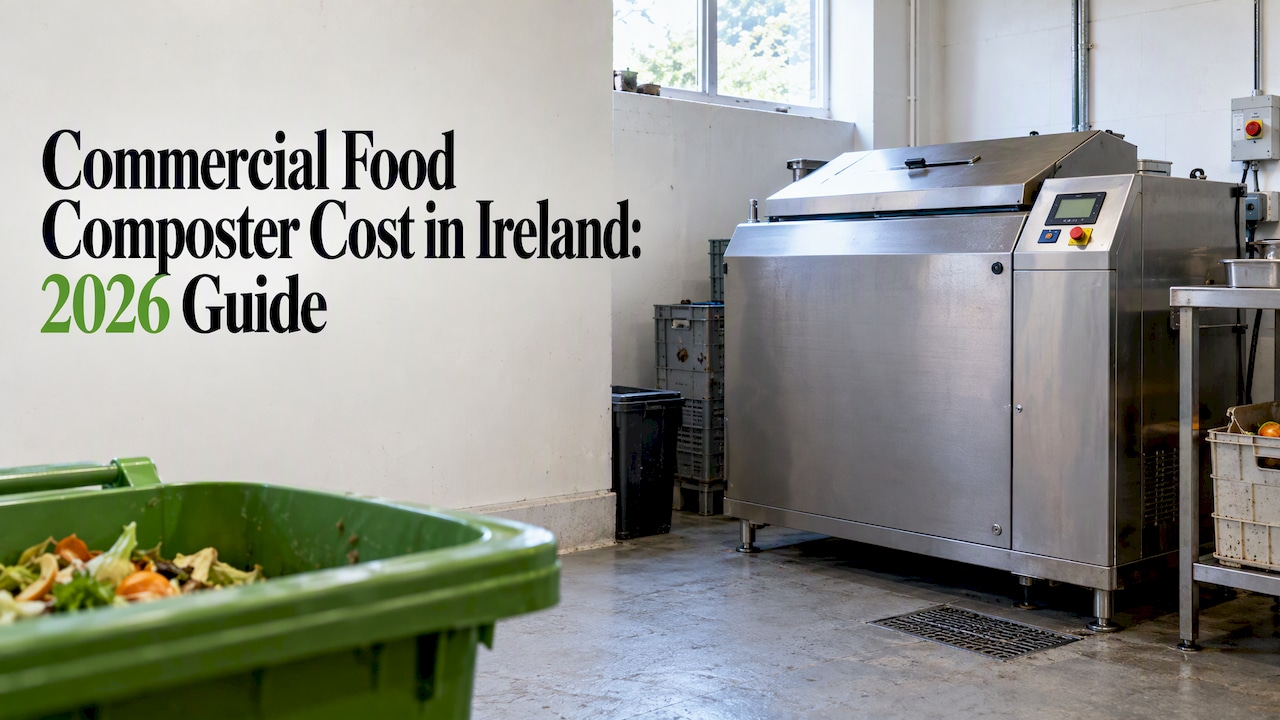
Prices vary with capacity and how much of the work the machine does for you. Published Irish retail listings for small commercial units show a clear spread. A manual tumbling composter aimed at a medium restaurant, café or guesthouse is listed at roughly €3,750 ex. VAT, while an automated unit for a school, care home or catering kitchen is listed at roughly €7,276 ex. VAT. Those figures are unit prices as listed in October 2026. They leave out VAT, shipping, installation and auxiliary equipment.
At the larger end, in-vessel aerobic and anaerobic digestion systems that handle 50 kg to 250 kg of food waste a day have recently been quoted at between €30,000 and €85,000 in Irish project specifications. The premium usually pays for automation, remote monitoring and, with digestion, some energy recovery.
| Type of system | Typical user | Budget range (ex. VAT) | What the price usually leaves out |
|---|---|---|---|
| Manual tumbling composter | Café, pub, small guesthouse | Around €3,750 | Delivery, installation, bulking agent, maturation space |
| Automated in-vessel unit, small | Restaurant, school, care home | Around €7,276 | Same, plus power connection |
| Aerobic or anaerobic digester, 50 to 250 kg a day | Hotel, hospital, food producer | €30,000 to €85,000 | Site works, permits, servicing contract |
| Large-scale composting or AD plant | Waste operator, large campus | Hundreds of thousands to millions | Planning, licensing, staffing |
The last row is for context. A 2025 life cycle costing study of Irish food waste treatment found that simple composting at large scale had total lifetime costs of €218,592 to €558,624, while anaerobic digestion needed far higher capital of €677,000 to €2,033,000, offset in part by energy recovery. Almost no restaurant or hotel will operate at that scale, but it shows why composting has the lowest barrier to entry.
The costs that never appear on the price tag
Experienced buyers budget for the whole system rather than the machine. A composter is part of a waste strategy, and it needs room, a supply of bulking agent such as wood pellets or sawdust, and regular care to stay odour-free. Here is what to add.
Installation and site preparation
You need a level, drained base, access for staff with caddies and, for automated machines, a power supply and sometimes water or ventilation. Outdoor tumblers need a sheltered, hygienic spot away from customer areas. Price a day of a contractor’s time even for a simple installation.
Bulking agent and consumables
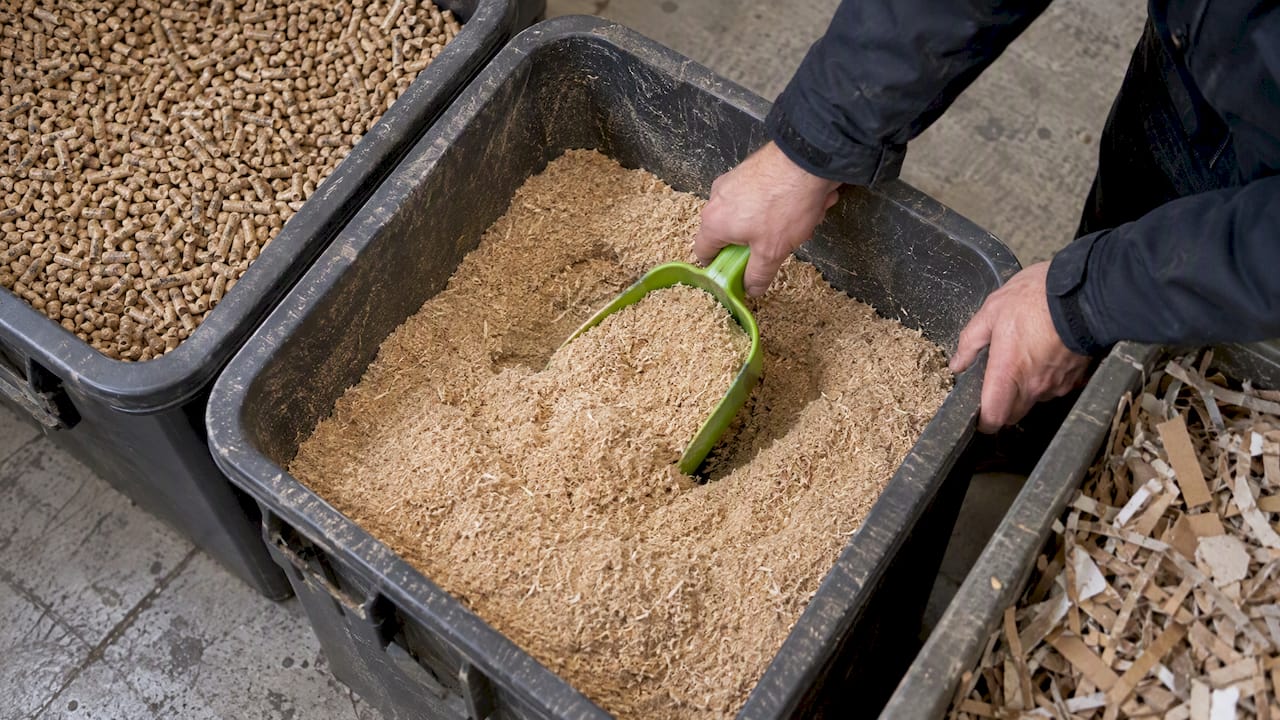
Food waste is wet and nitrogen-rich. Without a dry carbon material the process turns sour and smelly. Wood pellets, sawdust or shredded cardboard are the usual choices, and you have to buy, store and dose them. Over a year this is a small but steady cost.
Labour
Even the best machine needs someone to load it, monitor temperature or moisture, empty the output and clean. Count the minutes per shift. If this lands on a chef already under pressure, the machine will be neglected within weeks.
Energy and maintenance
Manual units use no power but need effort. Automated and digestion units draw electricity, have wear parts, and benefit from a service contract. Ask any supplier for the annual running cost in euro, not only the kWh figure.
Handling the output
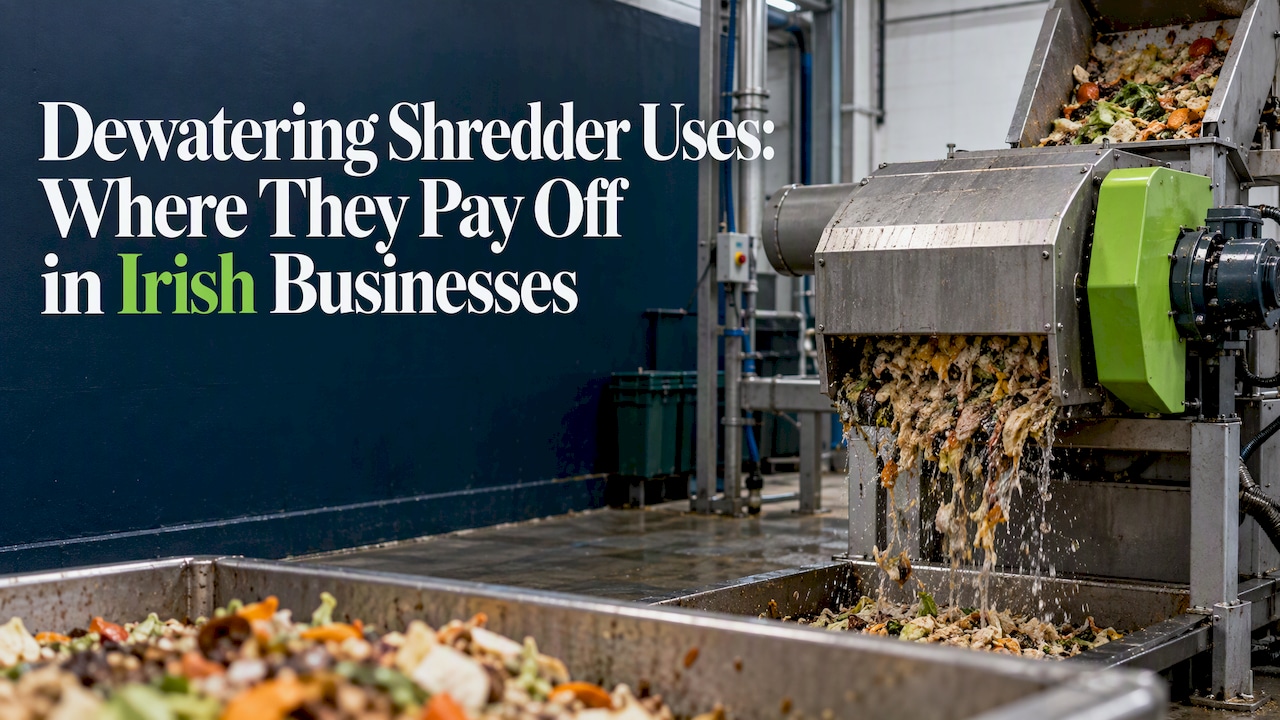
The material that comes out is not always finished compost. Many commercial food machines work as dewatering or aerobic digestion units. They convert wet organic waste into a dry, stable product that is much smaller in volume, which then goes for disposal or further composting. Decide in advance where the output goes and what that costs.
Rules that can change the price
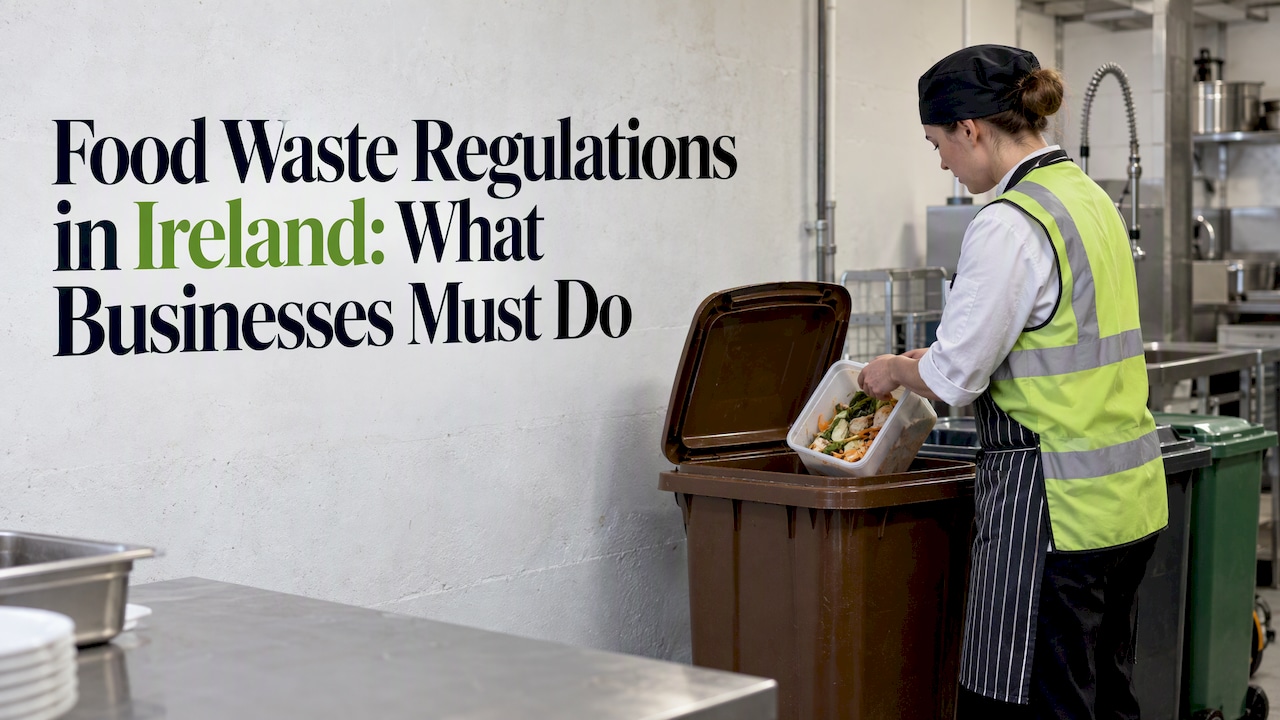
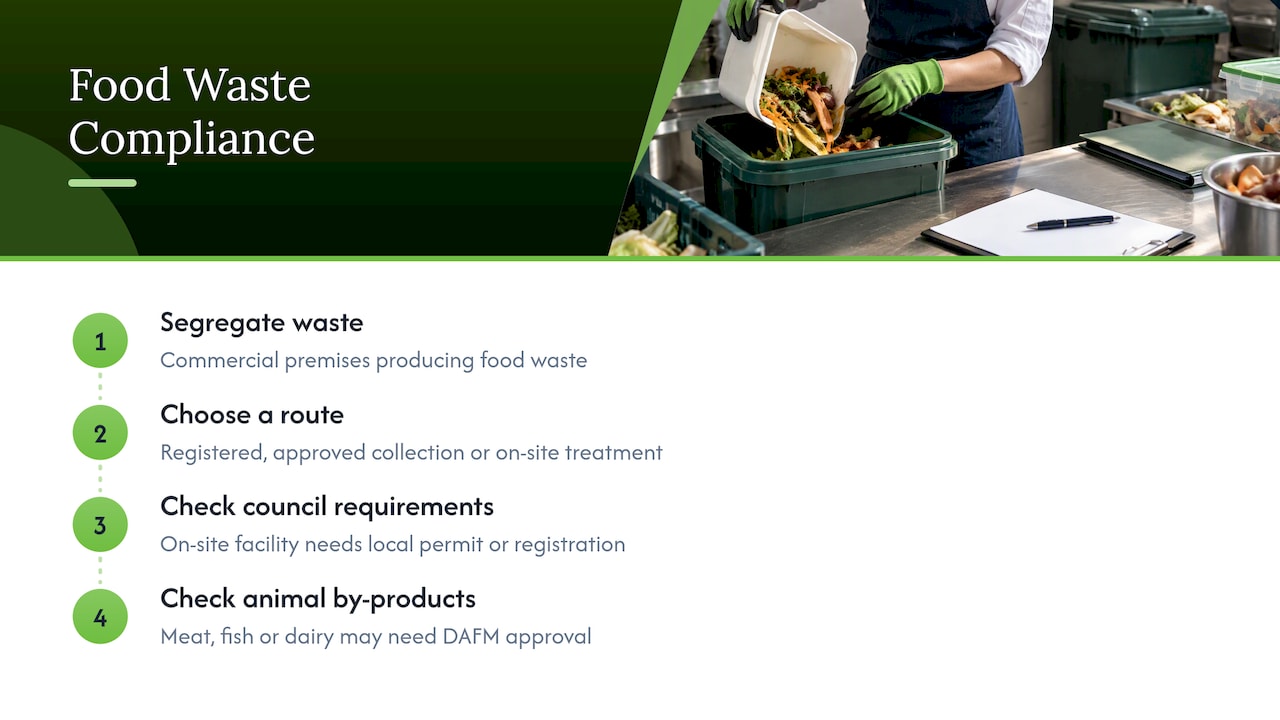
In Ireland, compliance is part of the cost. Under the Waste Management (Food Waste) (Amendment) Regulations 2024, commercial premises that produce food waste must segregate it. The exceptions are treating it on-site with local authority approval, or using a registered, approved collection service. Treating waste yourself is therefore not a free pass: the on-site facility needs to meet the permit or registration requirements that the local authority sets.
Local authorities enforce this. Galway County Council’s guidance on commercial food waste lists the types of premises affected, including restaurants, cafés and places where hot food is prepared. Contact your own council’s environment section before you buy.
Meat, fish and dairy add another layer. On-site composting of food waste containing animal by-products is regulated under EU and national law and may require approval from the Department of Agriculture, Food and the Marine. The Department publishes the application forms for animal by-product composting operations. If your kitchen produces plate waste with meat, ask the council and the Department what applies to you before ordering anything. A machine that cannot legally take your waste is the most expensive mistake on this list.
Is a composter cheaper than collection?
Compare like with like over five years. A rough method:
- Current cost. Add up your brown bin collection charges, any food waste surcharges on your general waste bill and the labour you already spend handling it.
- Machine cost. Take the quoted price ex. VAT, add 23% VAT if you cannot reclaim it, then add installation, bulking agent, labour, power and servicing for five years.
- Value of the output. Count it only if you will use it or someone will take it away for free. Do not assume compost has a sale price.
- Compare. A machine that costs more over five years may still make sense for site-specific reasons, such as no collection service within reach or a sustainability target. Be honest about which reason is driving the decision.
For a small café producing a few kilos a day, collection is often cheaper in cash terms. For a hotel or hospital producing well over 50 kg a day, on-site treatment can shift the sums, particularly where collection prices are high or rural collection is patchy. The cost of heavy, wet waste is largely cost of water, which is why dewatering is worth a look. Our page on leachate management explains how reducing the weight of wet waste can cut disposal costs, and our industrial shredders and dewatering machines are built for that job.
Prevent first, then size the machine
The cheapest kilo of food waste is the one you never produce. Technology that monitors what a kitchen throws away can pay back faster than treatment equipment. Hospitality is estimated to produce about 23% of Ireland’s food waste, and Positive Carbon’s Mark Kirwan told RTÉ that businesses are often surprised at the savings from monitoring: sometimes up to half a million euro a year in large workplaces. That is the top end for very large sites, not a promise for a café, but it explains why good buyers measure before they buy.
Start with a simple weighing routine. Weigh food waste at the end of each service for two weeks and note what it was: prep waste, spoilage, plate waste. Accurate precision scales and balances make the numbers trustworthy, though even a decent platform scale will do. The result tells you your kilos a day, the first number every supplier will ask for. Our waste audit checklist walks you through what to record.
Our view on commercial composters
We see the same pattern with Irish businesses. They start by asking for the price of a machine, and the real question is what their waste looks like and what it costs them today. A machine bought on a brochure’s capacity figure is either too small, so waste still goes out the door, or too big, so capital sits idle.
Our approach is the one we use for every stream, whether cardboard, plastics, wet waste or food. We audit first, then match equipment to the findings, then help you cut cost or earn from the materials that have value. Food waste is the stream where the revenue side is thinnest, so the case for a composter has to stand on savings, compliance and your own sustainability goals. We say so plainly. If an audit shows your volumes are better served by a collection contract, we would rather tell you that than sell you a machine.
We also look at the whole site. A kitchen that sends clean cardboard to a baler and sells the bales can offset part of its food waste costs, which is what our bale buyback scheme is for. The savings in one stream can fund the investment in another.
— Graham
Choosing the right size and type
Use these criteria in this order.
- Daily kilos. Use your measured average, then add the peak week, such as a wedding season or Christmas.
- Waste mix. Fruit and veg prep is easy. Cooked food, meat, fish, dairy and oils are harder and more regulated.
- Space and location. Check footprint, access for a collection vehicle if there is output to remove, and distance from neighbours and customers.
- Labour. Choose a manual unit only if a named person will own it.
- Output route. Know where the output goes before you buy.
- Support. Ask who services the machine in Ireland and how quickly they respond.
Promo: see what we supply
We supply organic waste composting machines for commercial kitchens and food sites. Our range runs across models such as the OC-30, OC-300 and OC-5000, so there is a step between a small café and a large site. We do not publish prices, because the right model depends on your audit. Book a Free Waste Audit and we will measure your waste, tell you if a composter fits and quote you for the right one.
Questions to ask before you sign a quote
- Is the price ex. VAT, and what is delivered, installed and commissioned?
- What is the annual cost of consumables, power and servicing?
- Which waste types can the machine legally and practically process, including animal by-products?
- Does the supplier help with local authority approval or tell you whom to contact?
- What is the output, how much of it is there and where does it go?
- What happens if the machine breaks during a busy weekend?
FAQ
How much does a commercial food composter cost in Ireland?
Small commercial units for cafés and restaurants are listed at roughly €3,750 to €7,276 ex. VAT, while digesters for 50 kg to 250 kg a day have been quoted at €30,000 to €85,000. Add VAT, delivery, installation and running costs. The right budget depends on your daily kilos.
Do I need permission to compost food waste on my business premises?
Usually yes, in some form. The 2024 regulations allow on-site treatment only with local authority approval, and food waste containing meat, fish or dairy may need animal by-product approval from the Department of Agriculture, Food and the Marine. Contact your council before buying.
Is commercial composting profitable?
For most single-site food businesses it is a cost saver at best, not a profit centre. Savings come from lower collection charges and weight, and the compost is rarely worth selling. Large or remote sites with high collection costs have the best case.
How does a food waste composting machine work?
The machine mixes and aerates food waste with a bulking agent, and often applies heat, so that microbes break it down. Many commercial machines dry the waste into a stable, much smaller product that is then cured or disposed of. Output quality depends on correct loading.
Sources
- Waste Management (Food Waste) (Amendment) Regulations 2024
- Galway County Council: commercial food waste regulations enforcement
- DAFM: animal by-product processing operations, composting
- Life cycle assessment and costing of food waste treatment in Ireland (MDPI)
- RTÉ: smart bin firm aims to reduce food waste in hospitality