A Practical Guide on How Irish Businesses Can Reduce Waste Costs
Waste is one of those business expenses that can quietly grow in the background. It may not always receive the same attention as wages, rent, energy, transport, or stock, but poor waste management can have a major impact on operational costs. Overflowing bins, frequent collections, bulky cardboard, mixed waste streams, inefficient recycling, and messy service areas all create unnecessary expense.
For companies across Ireland, the question is no longer whether waste needs to be managed. The real question is how Irish businesses can reduce waste costs while improving efficiency, safety, and sustainability.
The answer is not simply to change supplier or order more bins. In many cases, the biggest savings come from reducing waste volume at source, separating recyclable materials correctly, using the right machinery, and building a more structured waste process. Equipment such as cardboard balers, waste compactors, cardboard shredders, and dewatering machinery can make a significant difference.
At Compact, we help businesses across the entire island of Ireland reduce waste volumes, cut disposal costs, and improve recycling performance with practical waste management equipment and long-term support.
Why Waste Costs Add Up for Irish Businesses
Every business produces waste, but not every business understands the real cost of that waste. The obvious cost is collection and disposal. However, the hidden costs can be just as important.
Loose cardboard takes up valuable storage space. Staff spend time breaking down boxes, moving waste, clearing clutter, or dealing with overflowing bins. General waste containers may be collected more often than necessary because they are filled with bulky recyclable materials. Poorly organised waste areas can create safety risks, pest issues, odours, and operational disruption.
For businesses with high waste output, these small inefficiencies can build into a significant expense over time. Retailers, supermarkets, hotels, warehouses, distribution centres, factories, food producers, and manufacturing companies are especially affected because they handle regular deliveries, packaging, stock movement, and operational waste.
Understanding how Irish businesses can reduce waste costs starts with recognising that waste management is not just a disposal issue. It is an operational efficiency issue.
Reduce Waste Volume at Source
One of the most effective ways to reduce waste costs is to reduce the volume of waste before it leaves the site. Many commercial waste materials are bulky rather than heavy. Cardboard is a perfect example. A pile of loose boxes can fill a large bin very quickly, even though the material itself may not weigh much.
When businesses pay for frequent collections because bins are full of air and loose packaging, waste costs become inefficient. By compacting or baling waste at source, companies can reduce the space that materials occupy and improve collection efficiency.
A cardboard baler compresses loose cardboard into dense bales. A waste compactor compresses appropriate general waste or mixed commercial waste into a smaller volume. These machines help businesses fit more material into less space, which can reduce collection frequency and improve site organisation.
For many companies, this is the first step in controlling waste expenses. Before negotiating collection rates, it often makes sense to reduce the amount of volume being collected.
Use Cardboard Balers to Cut Cardboard Waste Costs
Cardboard is one of the most common waste streams in Irish businesses. It arrives with stock, supplies, packaging, deliveries, office materials, food products, retail goods, and industrial components. If it is not managed properly, it can quickly dominate bins, skips, loading bays, and stockrooms.
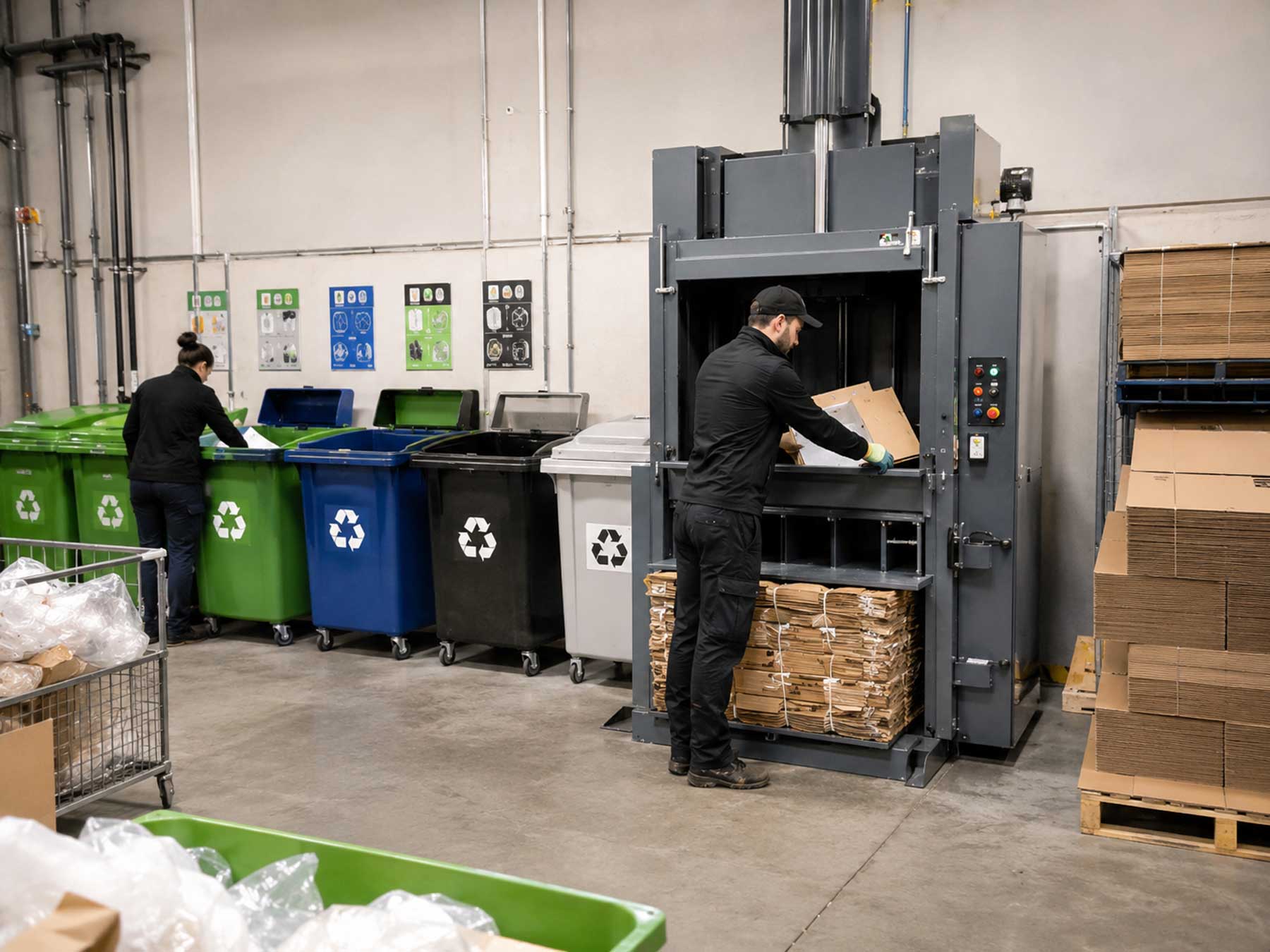
A cardboard baler helps businesses manage cardboard more efficiently. Staff place cardboard into the machine, the baler compresses it, and the result is a compact bale that can be stored neatly for collection or recycling.
This can help reduce waste costs in several ways. It reduces the volume of loose cardboard, which may lower the number of required collections. It keeps cardboard separate from general waste, which supports better recycling. It reduces time spent manually breaking down boxes and moving loose waste. It also keeps working areas tidier and safer.
For businesses asking how Irish businesses can reduce waste costs, cardboard baling is often one of the simplest and most practical answers. It turns a messy, bulky waste stream into a controlled recycling process.
Compact supplies new and refurbished balers for businesses across Ireland, allowing companies to choose a solution that matches their budget and waste volume.
Improve Recycling Separation
Mixed waste is usually more difficult and costly to manage than properly separated waste. When cardboard, plastics, food waste, packaging, and general waste are all placed into the same bin, businesses lose control over their recycling process. Valuable recyclable materials may be treated as general waste, and contamination can reduce recycling quality.
Improving waste separation is a practical way to reduce costs and improve environmental performance. Cardboard should be kept clean and dry where possible. Plastics should be separated according to the business’s recycling process. Wet waste should be managed carefully, especially in food production, hospitality, and agricultural settings.
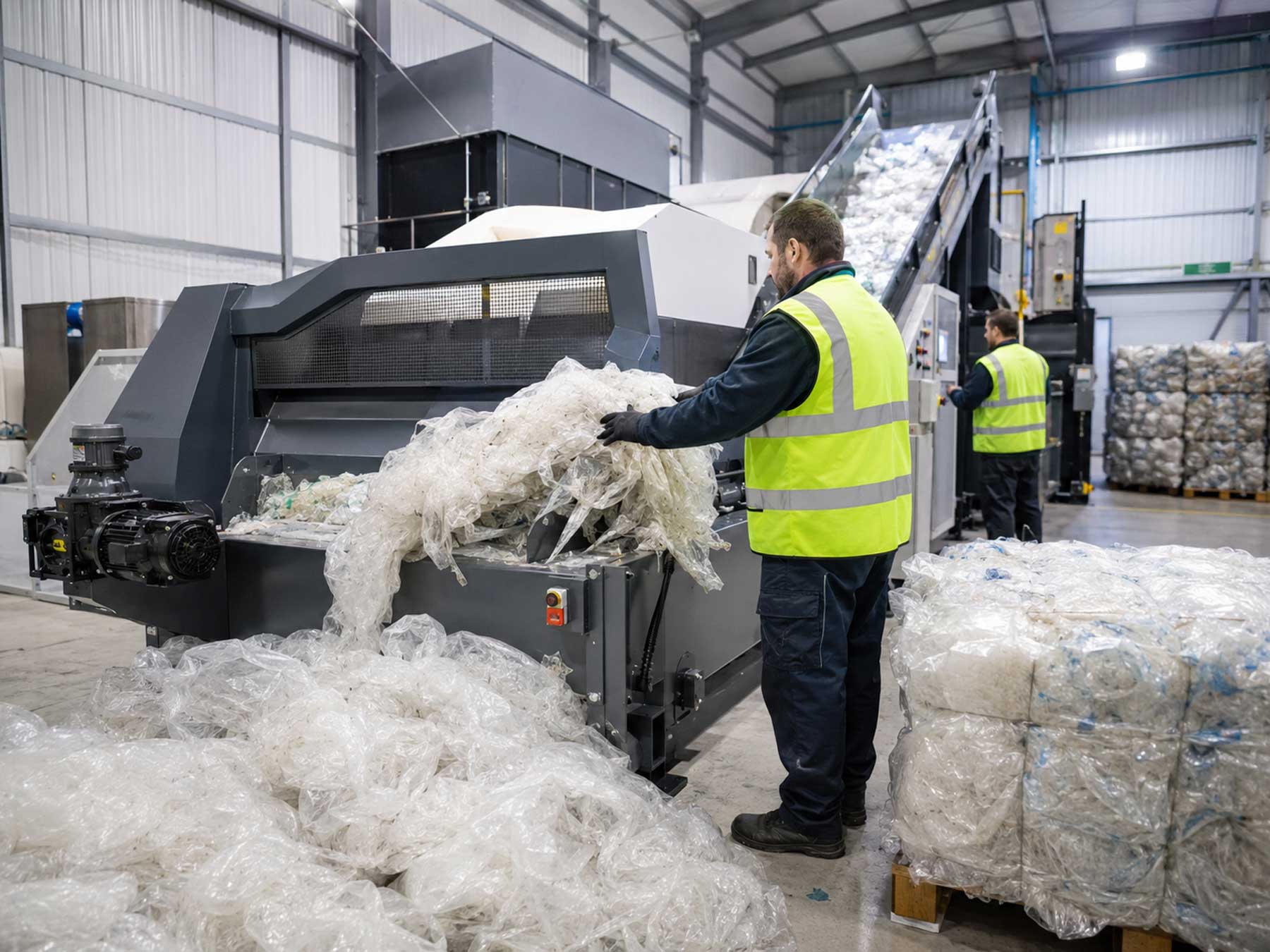
The right equipment makes separation easier. Cardboard balers create a clear place for cardboard. Waste compactors provide a controlled solution for appropriate general waste. Cardboard shredders can help businesses reuse cardboard internally. Dewatering equipment can help reduce the weight and volume of wet waste streams.
When staff have clear systems and the right machinery, recycling becomes part of the normal workflow rather than an extra task.
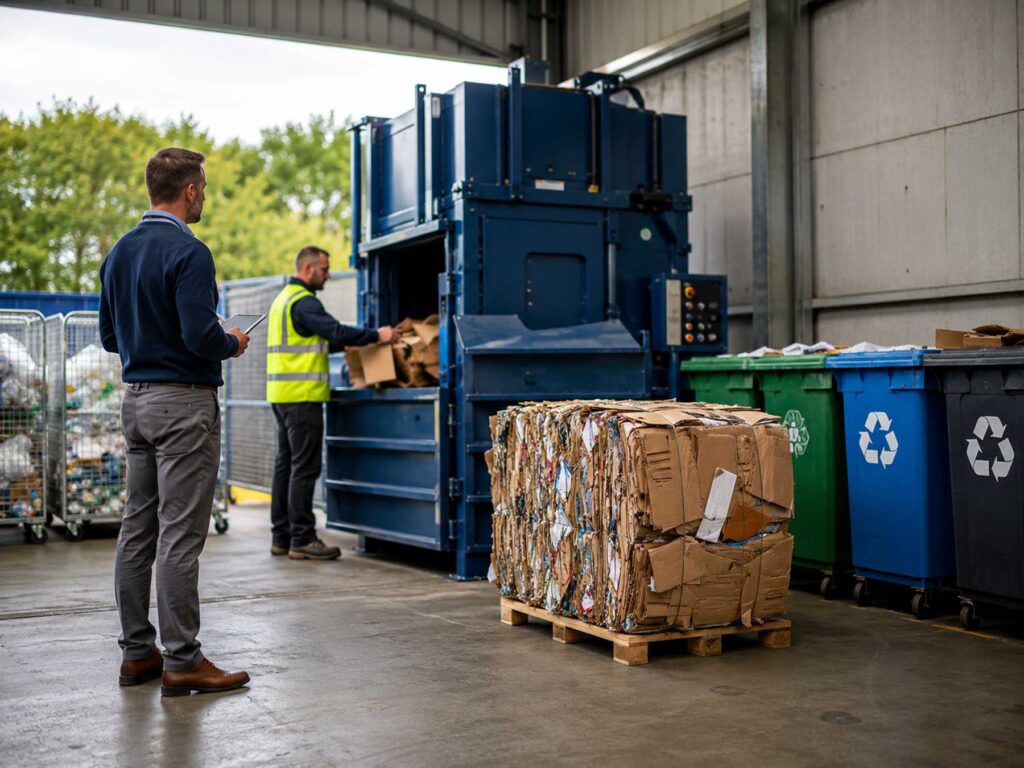
Use Waste Compactors for High-Volume Sites
For businesses that produce large quantities of general waste or packaging waste, waste compactors can be an effective way to reduce waste costs. A compactor compresses waste into a smaller volume, helping businesses reduce overflowing bins, improve hygiene, and manage collection schedules more efficiently.
Waste compactors are particularly useful for supermarkets, shopping centres, hotels, production facilities, hospitals, warehouses, and logistics sites. These businesses often produce waste continuously throughout the day and need a system that can keep up with operational demand.
A compactor can also improve site presentation. Instead of having multiple bins, loose bags, or open skips, waste can be contained in a more controlled way. This can reduce wind-blown litter, odours, pests, and manual handling risks.
When used alongside cardboard balers and recycling systems, compactors form part of a complete waste reduction strategy. Cardboard and recyclable materials can be separated, while appropriate general waste can be compacted for more efficient collection.
Reuse Cardboard with Cardboard Shredders
Reducing waste costs is not only about disposal. It is also about reusing materials where possible. For businesses that ship products, cardboard shredders can turn waste cardboard into useful packaging material.
Instead of buying large quantities of void fill, protective wrap, or packaging filler, companies can process their own cardboard waste and reuse it for outgoing shipments. This can reduce packaging costs while also lowering waste volume.
This approach is particularly useful for e-commerce companies, fulfilment centres, manufacturers, craft producers, and businesses that regularly send parcels. Cardboard shredders support a more circular use of materials, helping companies get more value from packaging that would otherwise be discarded.
For Irish businesses looking to reduce waste costs and improve sustainability, reusing cardboard can be a simple but powerful improvement.
Review Collection Frequency and Bin Usage
Many businesses become used to a waste collection routine without regularly reviewing whether it still makes sense. Bins may be collected too often because materials are not compacted. General waste may include cardboard that should be recycled. Waste areas may be poorly organised, leading to unnecessary overflow.
Once a business introduces balers, compactors, or better separation systems, it is worth reviewing collection frequency and bin usage. If waste volume is reduced significantly, fewer collections may be needed. If cardboard is baled separately, general waste bins may last longer. If wet waste is processed more efficiently, handling may become easier.
This is where machinery and waste process design work together. Equipment reduces the volume, but the business also needs to adjust its waste routine to benefit fully from that reduction.
Compact can help businesses think through these practical details when choosing equipment. The aim is not just to install a machine, but to improve the entire waste management process.
Train Staff to Follow Better Waste Procedures
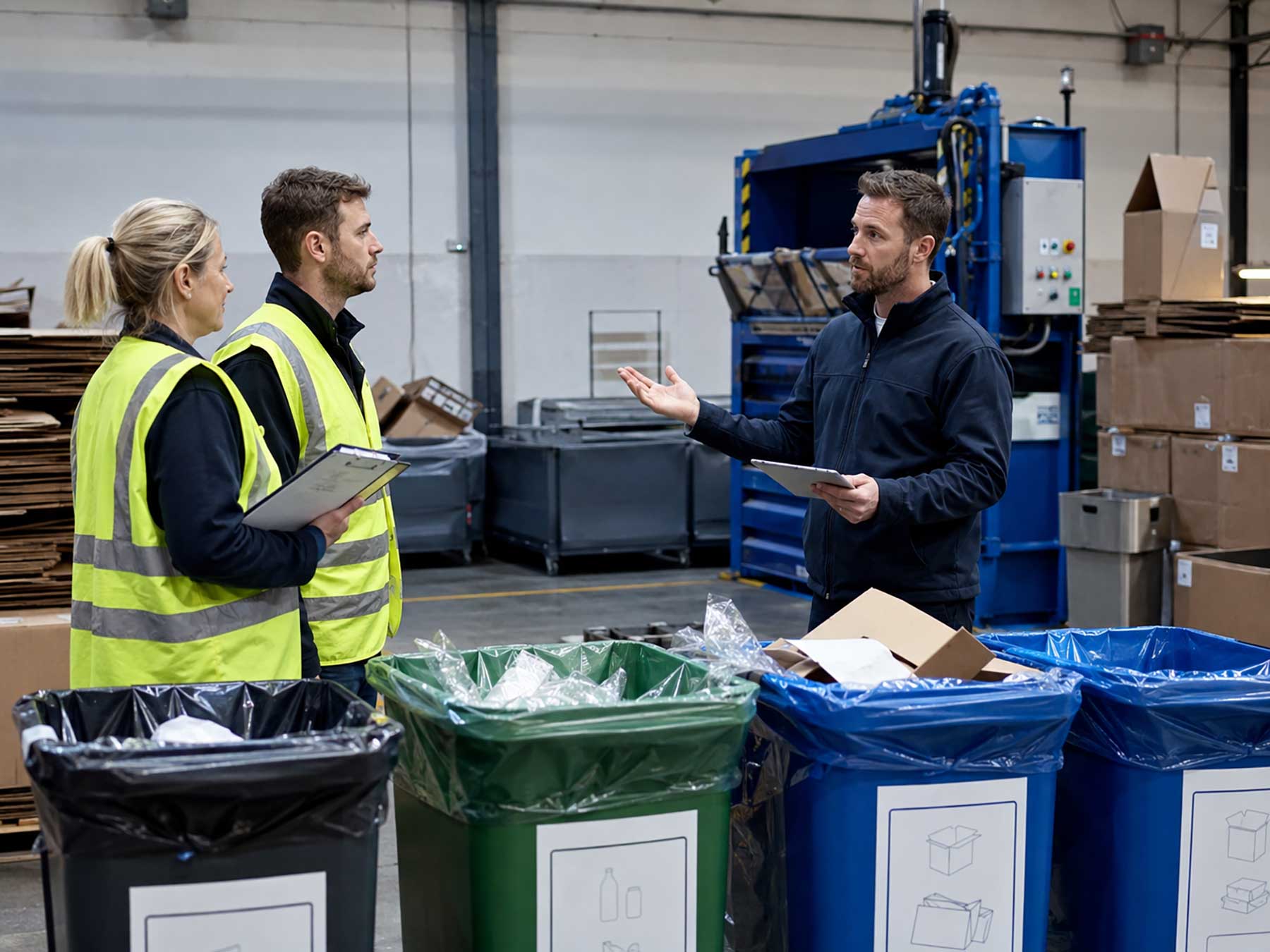
Even the best machinery will not deliver full value if staff do not use it correctly. Training is essential for businesses that want to reduce waste costs consistently. Employees need to understand what goes where, how to operate equipment safely, when to bale cardboard, how to avoid contamination, and how to keep waste areas organised.
On-site staff training can make a major difference. It turns waste management from an informal habit into a clear business process. Staff become more confident using the equipment, and recycling procedures become more consistent across shifts and departments.
Compact provides training for the equipment we supply, helping businesses operate machinery safely and efficiently. This supports better recycling performance and helps companies get long-term value from their investment.
For larger organisations, training is especially important because multiple teams may use the same waste area. Without clear procedures, cardboard, plastics, and general waste can quickly become mixed again. With proper training, the system becomes easier to maintain.
Choose Between Renting and Buying Waste Equipment
Another important part of how Irish businesses can reduce waste costs is choosing the right financial model for machinery. Some companies prefer to buy equipment outright. Others prefer to rent.
Buying a baler, compactor, or shredder can be a strong long-term investment for businesses with predictable waste volumes. Ownership gives the company full control of the machine and can offer good value over time.
Rental gives businesses flexibility. It can reduce upfront costs and make it easier to access professional equipment without a large capital expense. Rental can suit seasonal businesses, growing companies, or organisations that want to test a solution before committing to purchase.
Compact offers both rental and purchase options, helping businesses choose the arrangement that best fits their budget and operational needs. We also supply new and refurbished machinery, giving customers even more flexibility.
A refurbished baler or compactor can be a smart option for businesses that want reliable performance at a lower initial cost. A new machine may be ideal for high-volume sites or companies planning for long-term growth.
Maintain Equipment to Avoid Downtime
Waste equipment should be reliable. When a baler or compactor is used every day, unexpected downtime can cause problems quickly. Cardboard may build up, waste areas may become cluttered, and staff may lose confidence in the process.
Regular service and maintenance helps prevent these issues. It keeps machinery operating safely, efficiently, and consistently. Good maintenance can extend equipment life, reduce repair risks, and protect the value of the investment.
Businesses should see maintenance as part of cost reduction. A well-maintained machine is more likely to perform properly, reduce downtime, and support efficient waste handling over the long term.
Compact supports equipment with service and maintenance guarantees, giving customers confidence that their waste management system is backed by experienced support.
Reduce Manual Handling and Improve Safety
Waste costs are not only financial. Poor waste management can create safety risks that affect staff and operations. Loose cardboard can block walkways, create trip hazards, or require unnecessary manual handling. Heavy bins, overflowing waste areas, and repeated lifting can all increase workplace risk.
Balers and compactors help reduce these problems by creating a more organised system. Cardboard is placed into a baler rather than left around the site. General waste can be compacted in a controlled area. Bales can be stored neatly. Waste zones become easier to manage.
A cleaner waste area improves safety, but it also improves efficiency. Staff spend less time dealing with disorder and more time focusing on productive work.
For businesses that care about workplace standards, machinery can support both cost reduction and safer operations.
Match Equipment to Your Business Type
There is no single solution for every company. A small retail business may only need a compact cardboard baler. A hotel may need a baler and a waste compactor. A supermarket may need larger equipment due to constant deliveries and packaging waste. A warehouse may need a high-capacity baler to handle daily cardboard output. A food producer may need dewatering machinery for wet waste in addition to cardboard recycling equipment.
The best way to reduce waste costs is to choose machinery based on actual waste output, available space, staff workflow, and collection arrangements.
Compact works with businesses across Ireland to recommend practical waste equipment that fits the site. We consider waste type, volume, space, budget, and long-term goals before advising on a solution.
This consultative approach helps businesses avoid common mistakes, such as buying a machine that is too small, renting equipment that does not match daily waste output, or failing to separate recyclable materials properly.
Why Choose Compact to Help Reduce Waste Costs?
Compact is a trusted supplier of cardboard balers, waste compactors, cardboard shredders, and dewatering shredders for business customers across Ireland. We help companies reduce waste volumes, cut disposal costs, improve recycling performance, and create cleaner, safer workplaces.
Our equipment is available new or refurbished, and customers can rent or purchase depending on their needs. We support businesses with service, maintenance, and on-site staff training, helping them get reliable long-term value from their machinery.
We work with small enterprises, growing businesses, and large commercial operations across the island of Ireland. Whether your company produces cardboard, plastics, general waste, packaging waste, or wet waste, Compact can help you build a more efficient waste management process.
Start Reducing Waste Costs Today
Learning how Irish businesses can reduce waste costs begins with looking at waste differently. Waste is not just something to remove from the site. It is a process that can be improved, measured, controlled, and made more efficient.
By reducing waste volume at source, separating recyclable materials, using cardboard balers, installing waste compactors, reusing cardboard with shredders, training staff, and maintaining equipment properly, businesses can make waste management cleaner and more cost-effective.
Compact provides the machinery and support needed to make this happen. Explore our cardboard balers, learn more about waste compactors, or contact Compact to discuss the best solution for your business in Ireland.