A dewatering shredder breaks wet or organic waste down and presses the water out of it. The main benefits are less weight and volume to haul away, fewer collections, cleaner and easier-to-handle material, and a simpler route to meeting Irish food waste rules. Food producers, hotels, restaurants, canteens and wet-waste sites see the biggest gains. This guide explains how the machine works, where each benefit comes from, what to keep out of it, and how to decide whether one fits your site.
TL;DR
- A dewatering shredder shreds waste and presses out the liquid, so you pay to move less water.
- Lower volume and weight usually mean fewer bin lifts, fewer trips and a more manageable waste area.
- Separated solids can go to composting or digestion, and the liquid has to be managed properly, not tipped to the sewer.
- In Ireland, commercial premises must source-segregate food waste, and sewer discharge from mechanical devices is restricted.
- A site waste audit tells you if the numbers work before you buy anything.
Table of Contents
- What a dewatering shredder actually does
- The main benefits
- Irish rules that make this relevant
- What can and cannot go in
- How much will it deliver on your site?
- Shredder or chipper?
- Is a dewatering shredder right for your site?
- Start with a free waste audit
- FAQ
- Sources
What a dewatering shredder actually does
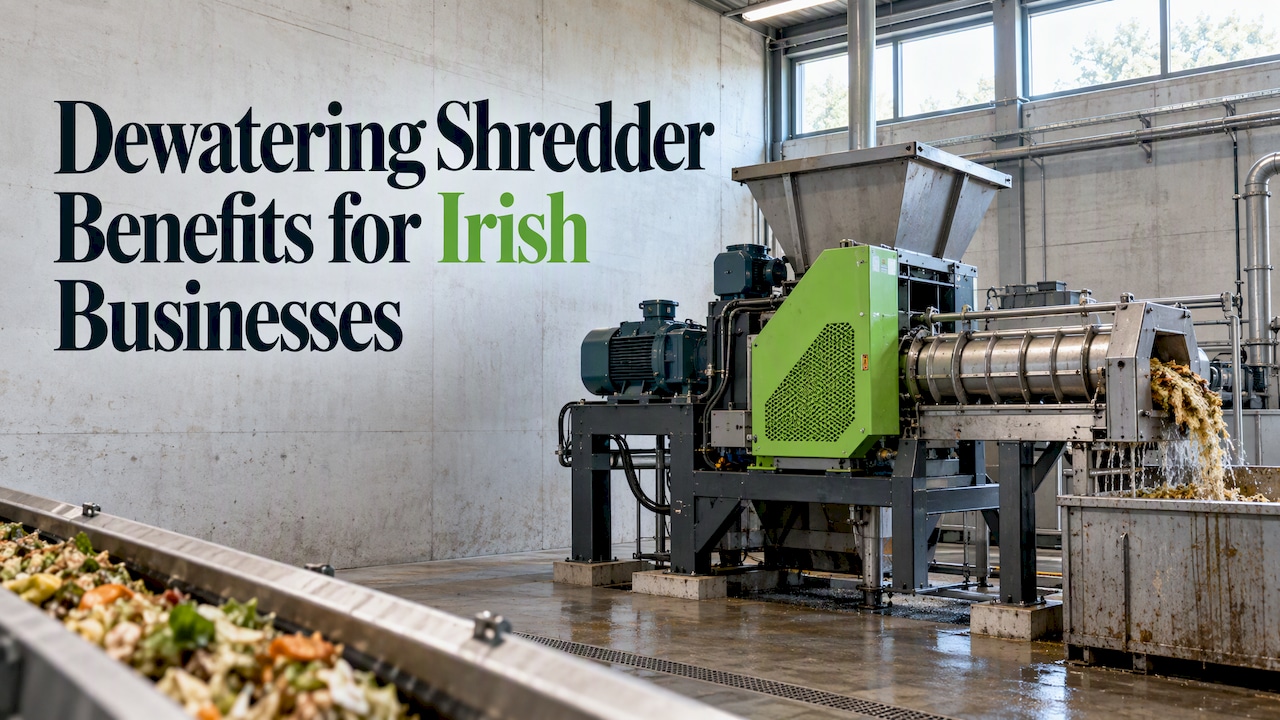
The machine has two jobs in one line. First, a shredder reduces bulky, mixed or packaged material to a smaller, more uniform size. Second, a press, usually a screw press, squeezes the shredded material so the liquid separates from the solids.
A typical food waste line works in stages. Waste is crushed by a two-shaft shredder, then a depackaging stage separates and grinds the organics to pulp. A screw press then splits the pulp into a solid fraction and a liquid fraction. According to one equipment manufacturer’s description of its system, the liquid can be refined into biofuel or biogas, while the solids can go to composting or digestion. Whether those routes are open to you depends on your collector and local facilities, so confirm them before you plan around them.
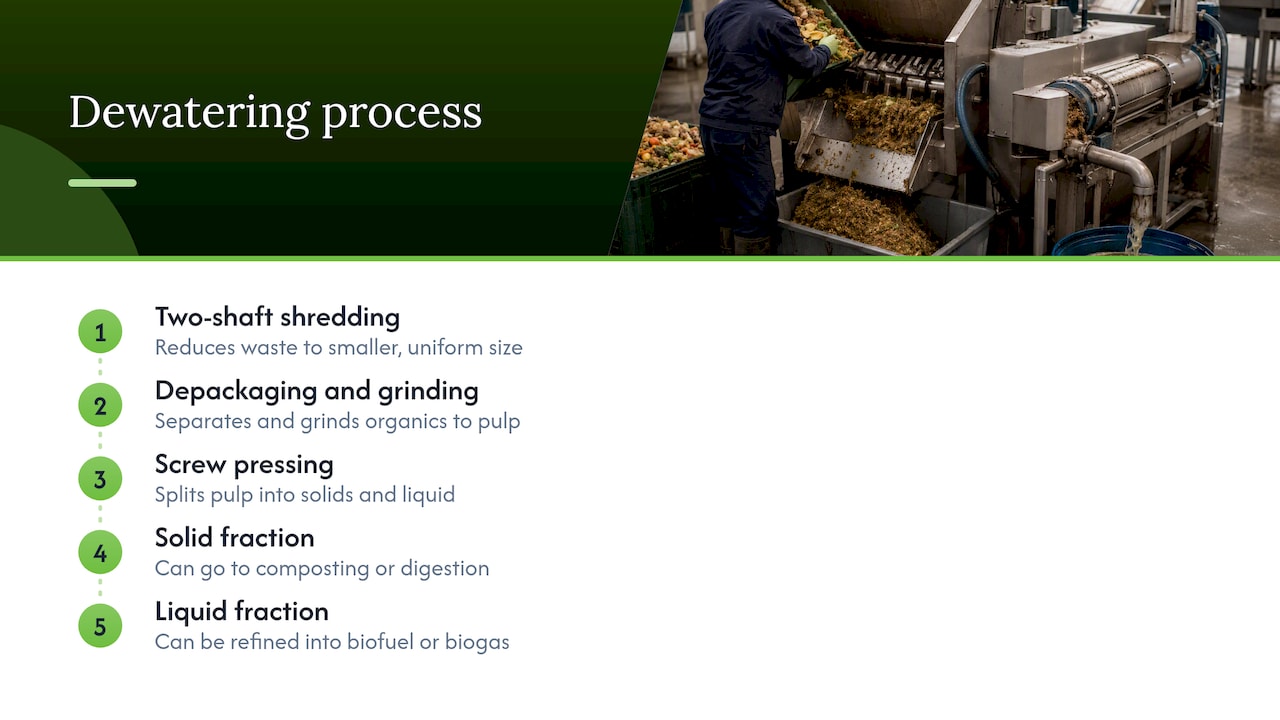
The result is a drier, denser solid and a separate liquid stream, instead of a heavy, leaking mass of mixed waste.
The main benefits
Less weight and volume to pay for
Wet waste is expensive because so much of what you pay to move is water. Remove a large share of that water and compress the remainder, and every lift, load and tonne carries less. This is the benefit most businesses buy a dewatering shredder for.
The size of the saving depends on your waste type and your starting moisture. Food waste, sludge-like residues and wet plastic fines all behave differently, and a good machine specification starts from a measurement of your actual waste, not from a brochure figure. We cover the measurement step further down.
For a wider look at how this fits into a cost plan, see our guide on how Irish businesses can reduce waste costs and our page on how to reduce wet waste weight in your business.
Fewer collections and smaller bin footprints
When the same waste occupies less space, bins fill more slowly. That can mean fewer lifts, a smaller number of containers on site, or a collection frequency that matches your real output rather than a worst-case week. For a facility manager, it also means a tidier yard and fewer smells and spills around the bin area.
The exact reduction in collections depends on your contract with your waste collector, so work from your current lift schedule and bin sizes when you model it.
Easier, cleaner handling
Leaking bins are a hygiene and housekeeping problem. Removing the liquid at source gives you a drier solid that is easier to store, move and load. Staff handle a more consistent material, and the liquid is captured in a controlled way rather than seeping from bins and drains.
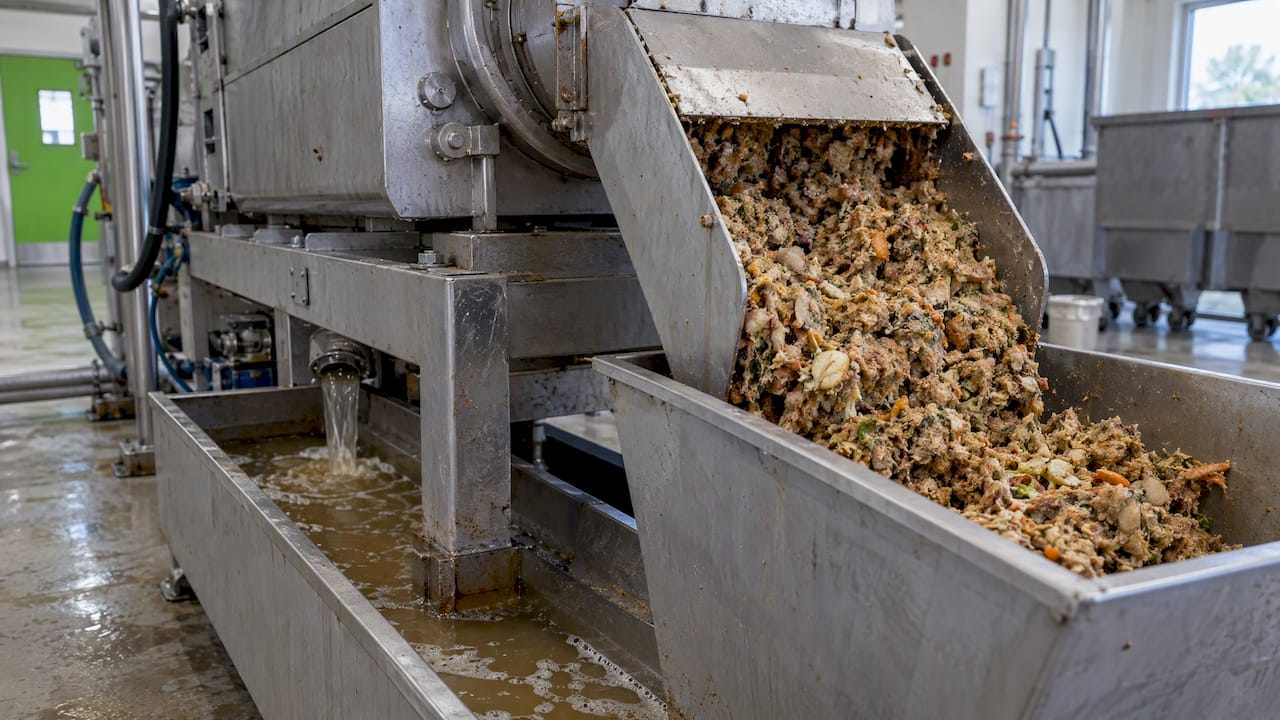
That controlled capture matters beyond tidiness. Dewatering wet waste separates solids from liquids, which helps stop contaminants leaching into groundwater or surface water and makes the effluent easier to treat, as an equipment supplier in this field points out.
A better feedstock for recovery
Shredded, dewatered organic material is easier to send on for composting or anaerobic digestion than a mixed, wet load. Uniform particle size and lower moisture help downstream processing. This is where the machine links to your recycling story: you are not only reducing waste, you are preparing it for recovery.
If you want to go further and treat food waste on site, our guide to commercial food composter cost in Ireland sets out what to weigh up.
Lower transport emissions and a stronger sustainability case
Fewer and lighter loads leaving your site means fewer vehicle movements for the same waste. For companies reporting on sustainability, that gives you a measurable item to track: tonnes collected, collections per month and the destination of each fraction. A dewatering shredder gives you cleaner data because you can weigh the solids and the liquid separately.
Proven results with wet recyclate
The benefit is not limited to food. A Dutch plastics recycler uses a drainage press to dewater and compress plastic fines from HDPE and PP recycling, cutting moisture from 70 to 80% down to 15 to 30%, according to the equipment maker’s case study. That is a supplier’s own account of one site, so treat it as an example of what is possible, not a promise for your waste.
Irish rules that make this relevant
In Ireland, the regulatory side is a real reason to look at this equipment, and getting it right is part of the benefit.
Segregation is compulsory. Under the Waste Management (Food Waste) Regulations, as amended in 2024, commercial premises must source-segregate food waste at the point of generation and use an authorised waste collector, unless specifically exempted, according to Dún Laoghaire-Rathdown County Council. The same page notes that the 2024 amendment removed the exemption for businesses producing less than 50kg of food waste per week, so the requirement now applies to every commercial premises. Our guide to food waste regulations in Ireland walks through what businesses must do.
Do not send shredded food waste to the sewer. The 2009 Regulations prohibit purpose-built mechanical devices from altering the structure of food waste and discharging it to the sewerage network unless a discharge consent authorises it, as set out in the Department’s circular on the Regulations. The EPA has also said that using food waste disposers to send organic waste to sewers is not consistent with Irish government waste policy, because it shifts treatment costs to the wastewater network (EPA STRIVE report). A dewatering shredder is the opposite approach: the solids stay in the waste chain and the liquid is managed deliberately. Before you decide where the liquid goes, check your options and any consent requirement with your local authority and your waste collector.
Keep the stream clean. EPA-funded research published in 2024 found plastic contamination of 7% in commercial food waste collections (EPA Research 463). The same research links high contamination to higher processing costs and lower-quality compost and digestate, and recommends stricter feedstock quality control. For you, that means the benefit of shredding and dewatering only holds if what goes in is the right material.
Bin colours. The national Waste Action Plan standardised bin colours: black for recovery, green for dry recycling and brown for organic waste, as set out in the Waste Action Plan for a Circular Economy. The brown stream is the one a dewatering shredder feeds.
For a summary of commercial duties in one place, the mywaste.ie information note on commercial premises is a good reference.
What can and cannot go in
The right input depends on the machine and its specification, so always follow the manufacturer’s manual. As a working guide:
| Usually suitable | Keep out unless the machine is specified for it |
|---|---|
| Kitchen and plate waste | Metal, cutlery and crockery |
| Fruit and vegetable trimmings | Glass |
| Out-of-date food, with packaging removed or a depackaging stage | Stones, bones in large pieces and other hard items |
| Wet organic residues from food prep | Textiles, rope and wire |
| Wet plastic fines, on suitable plastics equipment | Hazardous, chemical or medical waste |
Two habits protect both your machine and your compliance. First, train kitchen and production staff on what goes in, with clear signage at the point of disposal. Second, check the stream regularly for contamination. Plastics and packaging are the usual culprits, and they are exactly what the EPA research flagged.
How much will it deliver on your site?
There is no honest single figure. Results depend on three things.
- Waste type. Soft, wet food waste gives up liquid more easily than fibrous or fatty material.
- Starting moisture. The wetter the input, the more there is to remove.
- Equipment and capacity. Manufacturers offer units from small ones handling around 0.2 tonnes an hour to industrial systems running up to 40 tonnes an hour, according to one supplier’s product page. Sizing should follow your daily and peak volumes, not the biggest figure on offer.
Running costs come from power, wear parts such as screens and blades, cleaning time and the handling of the separated liquid. Ask any supplier for a written list of wear parts and service intervals before you compare quotes.
Shredder or chipper?
They solve different problems. A chipper is built for woody material such as branches and timber offcuts. A dewatering shredder is built for wet, soft, organic or mixed material where moisture is the cost driver. If your waste is mostly kitchen, production or process residue, the shredder with a dewatering stage is the match. If you have grounds and landscaping waste as well, treat that as a separate stream with separate equipment.
Is a dewatering shredder right for your site?
It tends to pay off where three things are true: you produce wet waste every day, you pay by lift or by weight, and you need a clean, documented route for the solids and the liquid. Typical sites include food manufacturers, hotels, large restaurants, canteens, supermarkets and wet-waste processing sites. Our page on where dewatering shredders pay off in Irish businesses goes through examples by sector, and the industrial shredder dewatering machines run-down covers the main specification questions.
A short checklist before you ask for quotes:
- Weigh your wet waste for two to four weeks, by stream.
- Record your current lifts, bin sizes and the price per lift or tonne.
- Note where the machine would sit, plus power, water and drainage access.
- Confirm with your collector which fraction they will take and in what condition.
- Decide where the liquid goes and whether any consent is needed.
What we think
In our experience, the businesses that get the most from a dewatering shredder are the ones that treat it as one part of a system, not a stand-alone purchase. The machine reduces what you move. The audit tells you what you actually produce. The collection and recycling route decides what you earn or save at the end.
That is why we start with a waste audit rather than a catalogue. Once we know your streams, volumes and current costs, we can say which equipment suits your site, how it fits with your recyclables and what the realistic benefit looks like. Our aim is a single point of service from audit through equipment to recycling, so you are not juggling several suppliers who each see only their own piece.
We would rather size a machine to your real waste and make it work properly than sell you the largest unit. Wet waste is one of the most overpaid streams on many Irish sites, and fixing it is often the quickest win in a waste plan.
Graham
Start with a free waste audit
We supply industrial dewatering shredders and the other equipment around them, including balers, compactors and composting machines. The simplest first step is our free waste audit, which looks at your waste streams, your current costs and your compliance position, and shows where a dewatering shredder would or would not make sense.
If you also produce cardboard or plastic, the audit covers those too, and our bale buyback scheme is designed to turn clean baled material into income. Pairing the two is how many sites bring total waste costs down, not just the wet fraction.
FAQ
What are the main benefits of a dewatering shredder?
The main benefits are lower waste weight and volume, fewer collections, drier and easier handling, and a cleaner feedstock for composting or digestion. It also gives you a controlled way to manage the liquid. The size of each benefit depends on your waste type and moisture level.
Can I put the liquid down the drain?
Not as a default. Irish rules restrict mechanical devices that discharge altered food waste to the sewerage network unless a discharge consent allows it. Ask your local authority and your waste collector how the liquid should be handled for your site.
What should never go into a dewatering shredder?
Metal, glass, stones, textiles, rope and hazardous or chemical waste should stay out unless your machine is specified for them. Packaging should also be removed or handled by a depackaging stage, since plastic contamination is a known problem in Irish food waste streams.
Is a shredder better than a chipper?
They are for different materials. A chipper suits wood and branches, while a dewatering shredder suits wet, soft or organic waste where moisture drives your disposal cost. Many sites with both food and grounds waste treat them as separate streams.
Do small businesses need to segregate food waste?
Yes. The 2024 amendment to the Irish food waste regulations removed the exemption for businesses producing under 50kg per week, so all commercial premises must segregate food waste, unless specifically exempted.
Sources
- Food Waste, Dún Laoghaire-Rathdown County Council
- EPA Research 463: plastic in compost from household and commercial food waste
- EPA STRIVE report on food waste disposers
- Circular on the Waste Management (Food Waste) Regulations
- A Waste Action Plan for a Circular Economy
- Information Note: Commercial Premises Regulatory Obligations, mywaste.ie
- Shredding and dewatering at Stiphout Plastics
- Fruit and vegetable waste dewatering machine product page