A pallet wrap recycling programme works when you do four things: keep the film separate at source, keep it clean and dry, bale it so it is dense enough to collect, and then have it collected or bought back by someone who tracks the weights. Done properly, a waste stream that sits in your general waste bin as a cost can become one that is collected for free or earns a rebate. We run free waste audits and a bale buyback scheme for Irish businesses, so this guide follows the same route: audit, segregate, bale, sell.
TL;DR
- Pallet wrap (stretch film) is mostly LDPE or LLDPE, and Repak says most film collected for recycling from Irish businesses is LDPE. It is recyclable when it is clean, dry and separated from other waste.
- Irish law requires packaging waste to be separated at source by material type, and since 1 July 2023 collectors must offer commercial customers a mixed dry recyclable bin.
- Baling film makes it dense and tidy to store, and Repak notes that baled, source-segregated material is often collected free of charge.
- Start with a waste audit: MyWaste says businesses could save as much as 10% on waste costs with no-cost and low-cost measures.
Table of Contents
- What pallet wrap is and why it can be recycled
- The Irish rules your programme has to meet
- Step 1: Audit what you actually use
- Step 2: Sort and prepare the film
- Step 3: Bale it so it can be collected and sold
- Step 4: Get the bales collected or bought back
- Cut the film before you recycle it
- What it is worth: a way to assess the numbers
- Promo: audit first, then the right machine
- Our perspective
- FAQ
- Sources
What pallet wrap is and why it can be recycled
Pallet wrap is the stretch film wound around pallet loads to hold them together in transit. It is made from linear low-density polyethylene (LLDPE), and a manufacturer such as Signode describes it as 100% recyclable, with its own Gorey, Co. Wexford plant reprocessing almost all of its internal scrap. The same brochure notes that recycled-content stretch film, with 30% post-consumer resin, performs the same mechanically as virgin film, which is why the material has real demand behind it.
In practice the quality of what you hand over decides everything. Repak’s 2024 packaging design guide points out that most film collected from Irish businesses is LDPE, that household film is not accepted in kerbside bins, and that PVC or PVDC layers make polyethylene films non-recyclable. Metallised layers should go to general waste. So the film you can recycle is plain, uncontaminated polyethylene stretch wrap. Shrink hoods, case wrap and pallet sheets are in the same family, and your collector or buyer will tell you which of them they take together.
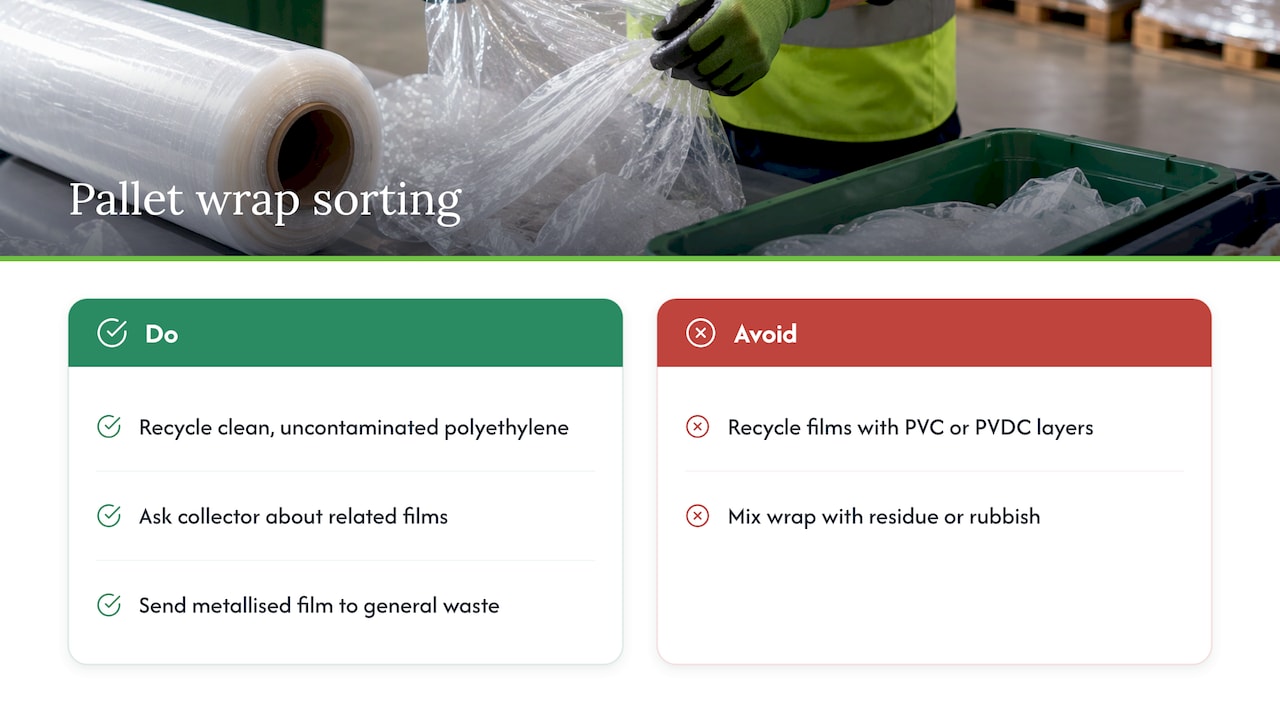
The practical consequence: a business that wraps hundreds of pallets a week is producing a clean, single-polymer material every day. That is exactly what a recycler wants, as long as it does not get mixed with cardboard dust, food residue, labels and general rubbish.
The Irish rules your programme has to meet
Two pieces of regulation shape what you do.
Separation at source. Regulation 5 of the EU (Packaging) Regulations 2014, as explained in Repak’s guidance on the enhanced commercial rules, requires producers to ensure packaging waste is separated at source by material type and collected by a contractor for recycling. For pallet wrap that means keeping it apart from other waste and as clean and dry as possible.
Bins and weighing. Under S.I. No. 104 of 2023, in force from 1 July 2023, every waste collector must provide commercial customers with a residual, mixed dry recyclable and bio-waste bin. Soft plastics were added to the recyclable materials listed on mywaste.ie. The same regulations require collectors to weigh commercial kerbside collections and report the weights at least monthly, and to charge in a way that follows the polluter-pays principle and rewards segregation.
The point for you is simple: the better you segregate, the lower your charges should be, and your bills will show weights you can check. If you want the wider picture, our guides to packaging waste compliance in Ireland and waste contractor due diligence cover what to ask your contractor and what records to keep.
Step 1: Audit what you actually use
Before buying anything, find out how much film you generate and where. MyWaste’s 2026 business brochure recommends engaging staff and assigning responsibility, running a waste audit, segregating waste and then monitoring progress in kilograms or percentages. It also says businesses could save as much as 10% on waste costs through no-cost and low-cost solutions.
For pallet wrap, the audit should answer:
- How many kilograms of film leave the site each week, and from which points (goods-in, dispatch, returns, production)?
- Is the film currently in general waste, mixed with cardboard, or already separated?
- What else is wrapped up with it: labels, tape, paper, strapping, black or coloured film?
- What are you paying per lift or per tonne today?
Here is where the client earns its place in the process: our free waste audit is tailored to your site and requirements, and it is built to show how compliance and cost savings fit together. Our waste audit checklist sets out what to weigh and record if your facilities team wants to prepare in advance.
Step 2: Sort and prepare the film
The quality rules are the same whether you are baling or just filling a recycling bin.
- Separate the film. Put pallet wrap in its own container at the point it is removed, usually the dispatch bay or goods-in area. Do not let it fall into the cardboard or general waste.
- Remove what is not polyethylene. Pull off labels, tape and paper where you can. Anything with PVC or PVDC layers, and metallised film, is not suitable, as Repak’s design guide explains.
- Keep it clean and dry. MyWaste’s brochure advises keeping recyclables clean, dry and loose, with regular spot checks to cut contamination. Wet or dirty film is the quickest way to get a load downgraded or rejected.
- Check the colour. Clear film is the usual recycling grade. Check with your collector or buyer how they treat black or heavily tinted wrap before you mix it in.
- Train the people who strip pallets. The person unwrapping a pallet decides which bin the film goes in. A simple sign with a photo of acceptable film does more than a policy document.
- Spot check weekly. A two-minute look in the film container every week catches contamination before it becomes a rejected lift.
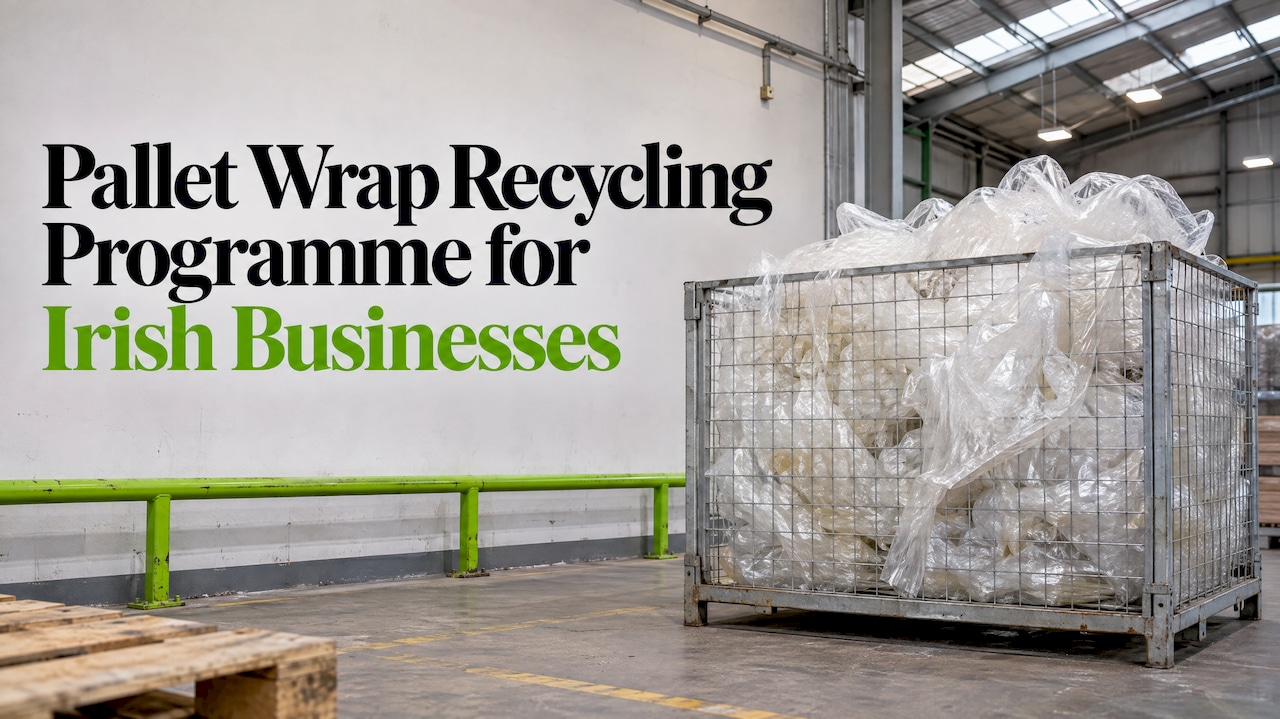
Where the loose film sits in a bin, it is bulky, light and awkward, which is why many sites stall at this step. That is the case for baling.
Step 3: Bale it so it can be collected and sold
Loose film takes up huge volume for very little weight. A baler compresses it into tied bales that are safe to stack, quick to load and, crucially, weighed and priced like any other recyclable commodity. Repak’s guidance on plastic recycling and your business says that source-segregated material that has been baled is often collected free of charge. For a site paying per lift for bulky film, that alone changes the arithmetic.
Irish industry has done this at scale. Freefoam installed four balers as part of an 18-month CirculÉire-funded project ending in December 2022, handling LDPE pallet hoods, cardboard and IBC bags, according to LSM’s write-up. At the larger end, a Teagasc case study of Danone Wexford’s zero waste to landfill programme records a saving of €123,000 per year from a programme that included installing balers, improving segregation and baling soft plastic.
Those are big operators, but the principle scales down. We supply cardboard balers, including Strautmann balers, refurbished compactors and balers and baling wire and tape, and we explain the choices in our guide to plastic film recycling equipment for Irish businesses. Our page on plastic film recycling covers the material side.
When choosing, work from your audit figures rather than the size of the machine you like the look of:
| Question | Why it matters |
|---|---|
| Kilograms of film per week | Sets the bale size and how often you will tie a bale |
| Do you also bale cardboard? | A single machine can often handle both streams, which saves floor space |
| Floor space and access | Decide between a compact vertical baler and a larger unit |
| Who removes the bales? | Pick a machine whose bale size matches your collection arrangement |
| New or refurbished | Refurbished units can suit lower volumes and tighter budgets |
Because we offer equipment, collection and buyback together, the baler is chosen around what happens to the bale afterwards, not in isolation.
Step 4: Get the bales collected or bought back
A bale is only worth what someone will pay or collect it for, and that depends on the material grade and how clean it is. The EPA’s print industry best practice guide found Irish medium-to-large print facilities ranging from a net waste cost of €90,000 a year to a net income of €70,000 a year from selling waste streams, and notes that better segregation and cleanliness raises the price paid. Same sector, very different outcomes: the difference is how the waste is handled.
Our bale buyback programme is designed to pay businesses directly for baled recyclables, with the aim of maximising the rebate you receive. Our guide to cardboard bale prices shows how that market is priced; the principle that cleaner, denser, better-sorted bales earn more applies across baled materials.
Whichever route you use, ask for a monthly breakdown of what was recycled, recovered or disposed of, and the associated costs. Repak recommends this in its guidance so you can track trends. If the bales are weighed and the figures arrive monthly, you have the evidence for your sustainability reporting and your next contract review.
Cut the film before you recycle it
Recycling is the second question. The first is how much wrap each pallet needs. The EPA guide advises minimising pallet wrap use through pre-stretched wrap and properly set wrapper tension. Pre-stretched and well-set film puts less plastic on each pallet, so there is less to handle at every step of your programme.
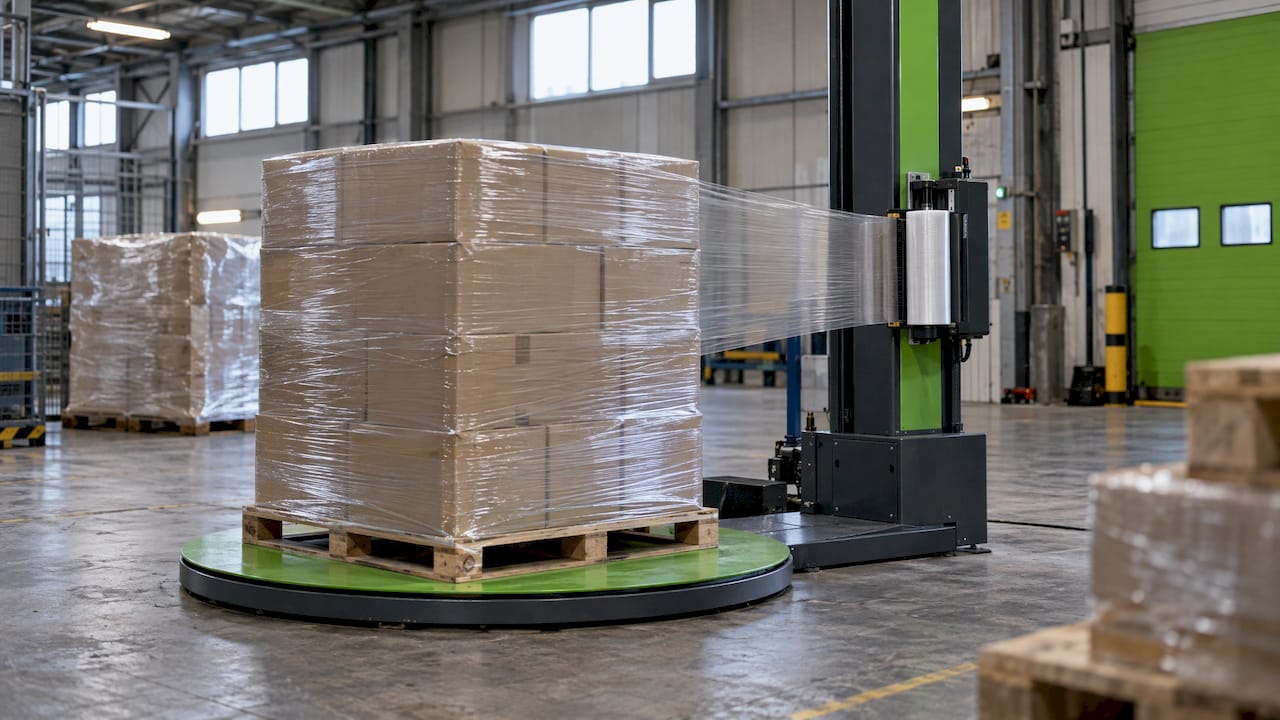
If you are reviewing your film specification, it helps to understand the difference between cast and blown stretch wrap before you change supplier, since the choice affects how much film each load needs. Fewer wraps per pallet also means a cleaner, more consistent bale.
What it is worth: a way to assess the numbers
Do not expect a single national figure. Your result depends on volume, how clean the film is, and what you pay today. Work it out in four lines:
- Your current annual cost for film: lifts, gate fees or the share of general waste it adds to.
- Your volume from the audit, in kilograms per week.
- The baler cost, spread over its working life.
- The expected collection arrangement or buyback rebate for the bales.
The saving comes from three places: fewer collections because the baled material is compact, lower or zero charges for segregated bales, and income from the buyback. Compare the sum with step 1 to see the payback. Recheck it a year in, using the monthly weights from your collector.
Promo: audit first, then the right machine
If you wrap pallets every day and your film is still going into general waste, the quickest way to see what a programme would be worth is our free waste audit. We look at your waste streams, your compliance position and your costs, then recommend the equipment and collection route that fits. From there, we can supply the baler and buy back the bales, so audit, equipment, recycling and payment sit with one team.
If you already know your volumes, go straight to our cardboard balers or the bale buyback page.
Our perspective
Most of the sites we talk to treat pallet wrap as a nuisance, something that blows around the yard and fills a skip with air. It is really a clean, single-material stream sitting at your dispatch door every day.
The mistake we see over and over in the way businesses approach this is starting with the bin. Start with the audit. Weigh what you produce, see what you pay, and then decide on equipment. Once you know the weight, the baler choice is a sums exercise, not a guess.
That is why we put the audit, the equipment and the buyback under one roof. Our approach is to turn waste disposal costs into a revenue line, and a baled, clean, dry stream of film is where that starts. One team from audit to payment means nobody is left holding a bale with no buyer.
Segregation is no longer optional in Ireland, so the question is whether you get paid for it or simply comply with it. We would rather you were paid.
Graham
FAQ
Can pallet wrap go in the commercial recycling bin in Ireland?
Soft plastics were added to the materials listed under plastic packaging on mywaste.ie when S.I. No. 104 of 2023 came into force on 1 July 2023. Keep the film clean, dry and free of labels, and confirm with your collector which film types they accept. Bulky film is far easier to manage once it is baled.
Is all pallet wrap recyclable?
Plain polyethylene stretch film is. Film with PVC or PVDC layers is not recyclable as polyethylene, and metallised film goes to general waste, according to Repak’s design guide. Check any specialist or coloured film with your collector or buyer first.
Do I need a baler to recycle pallet wrap?
Not to start, but at any real volume it makes the stream manageable. A baler turns bulky film into dense bales that are easier to store and load, and Repak notes that baled, source-segregated material is often collected free of charge. We can size one from your audit figures.
How do I find out what my film is worth?
Weigh it first. A waste audit gives you weekly kilograms and your current cost, and a buyback arrangement then puts a price on the bales. Ask your collector for monthly figures so the numbers keep coming after you set the programme up.
Sources
- Signode: Machine Film brochure
- Repak: Packaging and Design for the Circular Economy
- Repak: Enhanced Legislation for Commercial Business Waste
- S.I. No. 104/2023, Waste Management (Collection Permit) (Amendment) (No. 2) Regulations 2023
- MyWaste: How to manage your business waste
- Repak: Plastic recycling and your business
- LSM: Helping Improve Sustainability in the Building Sector
- Teagasc: Danone’s Sustainability Journey
- EPA: Print Industry Best Practice Guide
- Cast vs Blown Stretch Wrap: How to Choose