If you place packaging on the Irish market, you almost certainly have to register with an approved body and report your volumes. The threshold that matters most is 10 tonnes of packaging a year combined with turnover over €1 million, which makes you a major producer under Irish law. Repak is currently the approved body, a new EU regulation lands on 12 August 2026, and the fastest way to see where you stand is a packaging waste audit.
TL;DR:
- Legal responsibility rests with whoever first places packaging on the Irish market, including importers and online sellers; a supplier does not automatically assume it.
- Major producers must join an approved scheme; since January 1, 2023, they cannot manage their obligations themselves outside one.
- Repak membership requires annual reporting by material type, fees tied to reported tonnage, and records such as supplier specifications, invoices, and dispatch notes for audits.
- The PPWR takes effect August 12, 2026, and sets a 2030 recyclability target, with plastic recycled content requirements rising through 2040.
- Producers of PET bottles and metal cans from 150 milliliters to 3 liters must register before sale, meet labeling rules, and report monthly.
Table of Contents
- Who counts as a producer in Ireland and the major producer test
- Registration and approved bodies: Repak and membership obligations
- Reporting duties, deadlines and producer fees under packaging EPR
- PPWR changes and what they mean for packaging design and recyclability
- Deposit return scheme obligations for beverage producers and retailers
- How to comply: a step-by-step checklist for Irish businesses
- Why the PPWR transition matters for Irish businesses
- How Compact helps Irish businesses comply and profit
- FAQ
- Sources
Who counts as a producer in Ireland and the major producer test
A producer, under Irish packaging law, is whoever first places packaging on the Irish market. That covers manufacturers, but it also covers importers, online retailers selling into Ireland, and any business that brands or fills packaging before sale. If your name is on the product or you were the first to bring it into the country, you carry the legal obligation, not your supplier.
The threshold that decides how seriously this applies to you is specific: 10 tonnes of packaging placed on the market per year, combined with turnover above €1 million. Businesses that cross both marks become major producers, and that status triggers compulsory membership of an approved compliance scheme. Since 1 January 2023, self-compliance has been removed as an option, so a major producer can no longer manage its own obligations outside a scheme.
A quick self-assessment helps before you go further:
- Did you place 10 tonnes or more of packaging on the Irish market last year?
- Is your business turnover above €1 million?
- Are you importing branded or filled packaging rather than just raw materials?
- Are you selling online to Irish customers from outside the country?
Answering yes to the first two questions means registration is not optional.
Registration and approved bodies: Repak and membership obligations
Repak is the approved body currently operating Ireland’s packaging compliance scheme, and it was granted a ten-year licence running until 2035, which gives the scheme long-term standing through the PPWR transition.
Registering typically involves:
- Submitting company details, including turnover and the volume of packaging placed on the market in the previous year.
- Breaking that volume down by material type, such as cardboard, plastic, glass, wood and metal.
- Providing evidence to support those figures, including supplier invoices or internal dispatch records.
- Agreeing membership terms and a fee structure based on your reported tonnage.
Once registered, membership is an annual commitment. You report volumes yearly, pay fees based on those figures, and keep supporting records in case of an audit. Good recordkeeping from day one avoids a scramble later: keep supplier packaging specifications, delivery notes and internal stock movement data in one place rather than reconstructing them at reporting time.
Importers and online marketplaces selling into Ireland without a local base still carry producer obligations if they are the first to place packaging on the market here. That often means appointing a local representative or working through a distributor who takes on the registration role contractually, but the underlying legal responsibility does not disappear just because there is no Irish office.
Pro Tip: Treat every new imported product line as a packaging event: log its material weight and type the moment it lands, not at year-end.
Reporting duties, deadlines and producer fees under packaging EPR
Reporting under Irish EPR means submitting packaging volumes by material stream, usually annually, broken down into categories such as corrugated cardboard, rigid and flexible plastics, glass, wood, steel and aluminium. Repak uses these figures to calculate your fee and to feed Ireland’s national recycling statistics.
Fees are not a flat charge. They are calculated to cover the real costs of the scheme:
- Collection and sorting infrastructure for the material types you place on the market.
- Treatment and recycling costs, which vary by material.
- Public awareness and education campaigns tied to packaging waste.
- Scheme administration, including compliance checks and reporting systems.
One in a hundred: a single misreported material category can distort your fee calculation for an entire year, since fees scale directly with tonnage reported per stream rather than a blended average.
Missing a reporting deadline or submitting inaccurate data carries enforcement risk, since the 2022 regulations removed the self-compliance route specifically to tighten oversight of major producers. Before your next reporting cycle, gather delivery notes, packaging specification sheets from suppliers and any internal waste audit data. Having these ready before the deadline, rather than after, is what separates a straightforward submission from a stressful one.
PPWR changes and what they mean for packaging design and recyclability
The EU’s Packaging and Packaging Waste Regulation applies from 12 August 2026, and it replaces the current directive-based system with a single regulation that applies directly across member states, Ireland included. The headline targets are that all packaging must be recyclable by 2030, with recycled content requirements for plastic packaging increasing through 2030 and again by 2040.
For businesses, this is not a distant concern. Three things change in practice:
- Packaging design has to account for recyclability from the outset, not as an afterthought once a product is already on shelves.
- Certain formats and materials face restrictions, with the regulation pushing hard towards reusable and refillable packaging wherever that is feasible.
- Recycled content obligations for plastic packaging mean supplier contracts and material sourcing need review well before 2030.
PPWR sits alongside, not instead of, Irish EPR obligations. Repak’s ten-year licence was specifically approved to help manage this transition, which signals that the national scheme is expected to adapt its reporting and fee structures as PPWR targets phase in.
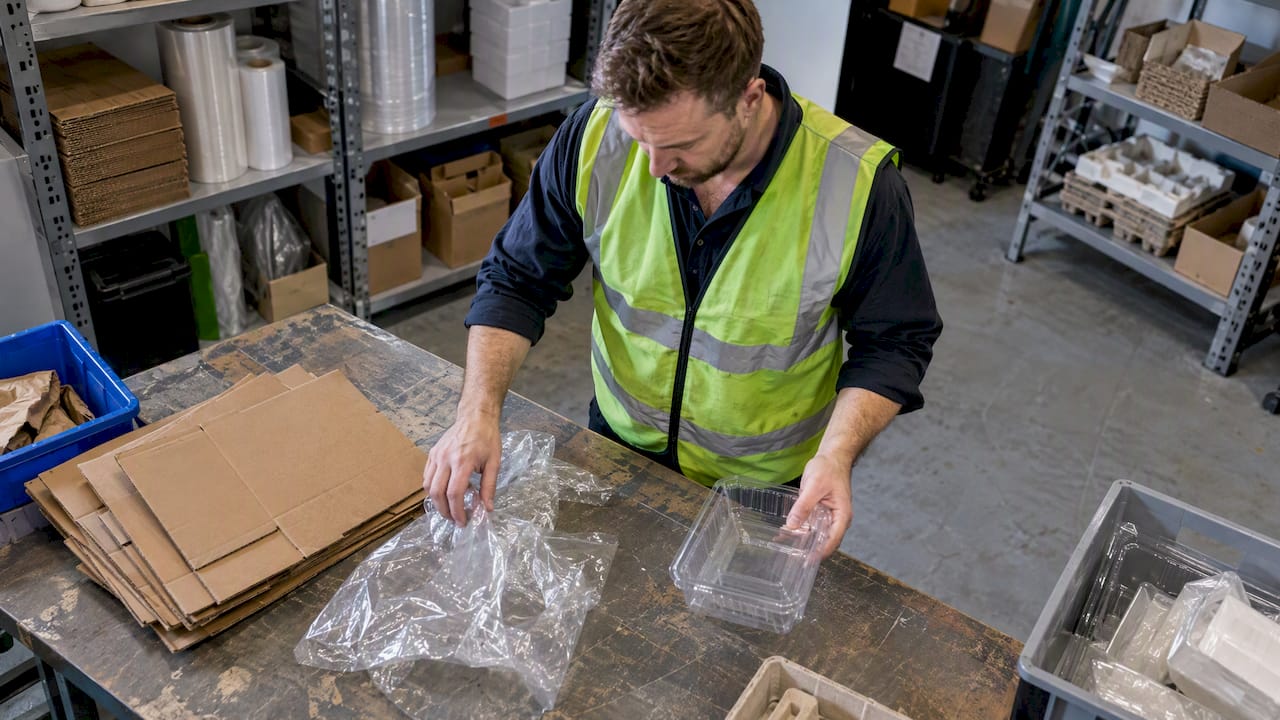
The practical move now is to start before the deadline forces your hand: run a packaging audit to understand your current material mix, review labelling against upcoming design requirements, and talk to suppliers about recycled content availability for your main packaging lines.
Pro Tip: Ask your packaging supplier now what recycled content they can guarantee by 2030, before the market gets crowded with every other business asking the same question.
Deposit return scheme obligations for beverage producers and retailers
If you place drinks in PET bottles or aluminium and steel cans between 150ml and 3L on the Irish market, you fall under Re-turn’s deposit return scheme, and registration happens before the product goes on sale, not after.
Key obligations include:
- Registering each product on the Re-turn portal with accurate barcode, weight and dimension data before launch.
- Applying the Re-turn logo correctly on labelling, following the scheme’s technical specification.
- Paying a producer fee per container, which Re-turn calculates per unit placed on the market.
- Submitting monthly reports on volumes placed on the market.
- For retailers, accepting returns and refunding deposits at point of sale or via collection units.
The most common pitfalls are barcode mismatches, labels that miss the technical specification, and incomplete registration data that blocks a product from going to market at all. Re-turn went live in February 2024, and the scheme has been tightening enforcement of these technical requirements since.
How to comply: a step-by-step checklist for Irish businesses
Start with a 90-day window. First, confirm your producer status against the 10-tonne and €1 million thresholds. Second, register with Repak if you meet them. Third, register any in-scope beverage containers with Re-turn before they reach shelves. Fourth, start collecting packaging volume data by material stream now, rather than waiting for the reporting deadline.
In the medium term, review recycled content options with suppliers, update labelling to match both Re-turn and upcoming PPWR requirements, and consider whether your current baling or compaction setup gives you clean enough material streams to report with confidence.
- Confirm your producer status and threshold position.
- Register with Repak and, where relevant, Re-turn.
- Run a packaging waste audit to establish accurate baseline volumes.
- Review supplier contracts for recycled content and design commitments.
- File supporting evidence, invoices and dispatch records somewhere you can retrieve them for an audit.
Pro Tip: Keep every audit report and registration confirmation in one folder; enforcement checks move faster when the paper trail is already assembled.
A waste audit does double duty here: it gives you the data for accurate reporting and shows you where better sorting or baling could turn a cost centre into recovered value.
Why the PPWR transition matters for Irish businesses
Compliance is usually framed as a cost. The more useful framing is that better sorting and cleaner material streams raise both your recycling rates and the market value of what you recover, which is where the real opportunity sits.
— Graham
How Compact helps Irish businesses comply and profit
We help businesses approach packaging compliance as a process that can offset costs rather than only add expenses. Our Free Waste Audit maps your material streams, giving you the tonnage data that feeds straight into Repak reporting without the guesswork.
Once we know what you are generating, our We Buyback Bales scheme pays you directly for baled cardboard and plastic, offsetting the fees that EPR and DRS obligations add to your costs. For businesses that need cleaner, denser bales to get better rebates, we also supply cardboard balers and compactors that improve both recycling quality and the accuracy of what you report.
- Free Waste Audit: maps your packaging volumes by material type.
- We Buyback Bales: converts recovered cardboard and plastic into revenue.
- Balers and compactors: improve bale quality and reporting accuracy.
Book your Free Waste Audit and see where your packaging obligations can start paying you back.
FAQ
What is packaging and packaging waste regulation?
Packaging and packaging waste regulation is the legal framework that makes producers responsible for the packaging they place on the market, covering registration, reporting and funding of collection and recycling. In Ireland, this currently operates through Repak as the approved body, with the EU’s PPWR adding harmonised design and recyclability rules from 12 August 2026.
Who is responsible for waste management in Ireland?
Producers who place packaging on the Irish market carry the legal responsibility for its end-of-life management under extended producer responsibility rules. Major producers, meeting the 10-tonne and €1 million turnover threshold, must join an approved body such as Repak rather than self-manage compliance.
Is all plastic recyclable in Ireland?
Not all plastic packaging is currently recyclable in practice, which is part of why the PPWR sets a target of making all packaging recyclable by 2030. Recyclability depends on the material type, design and how well it is sorted at collection, which is why clean material streams matter for recovery rates.
What are the regulations for plastic packaging?
Plastic packaging in Ireland falls under Repak’s EPR reporting requirements and, for beverage containers, the Re-turn deposit return scheme for PET bottles and cans between 150ml and 3L. From 2026, the EU’s PPWR adds recycled content targets for plastic packaging rising through 2030 and 2040, alongside design restrictions on certain formats.
Can a waste audit help with packaging compliance?
A waste audit identifies exactly what packaging materials and volumes your business generates, which is the same data you need for accurate Repak reporting. It also reveals opportunities to improve sorting and baling quality, which can increase the rebate value you recover from recyclable materials.
Sources
- Packaging & Packaging Waste Regulation – European Commission
- Producer | Re-turn (Deposit Return Scheme Ireland)