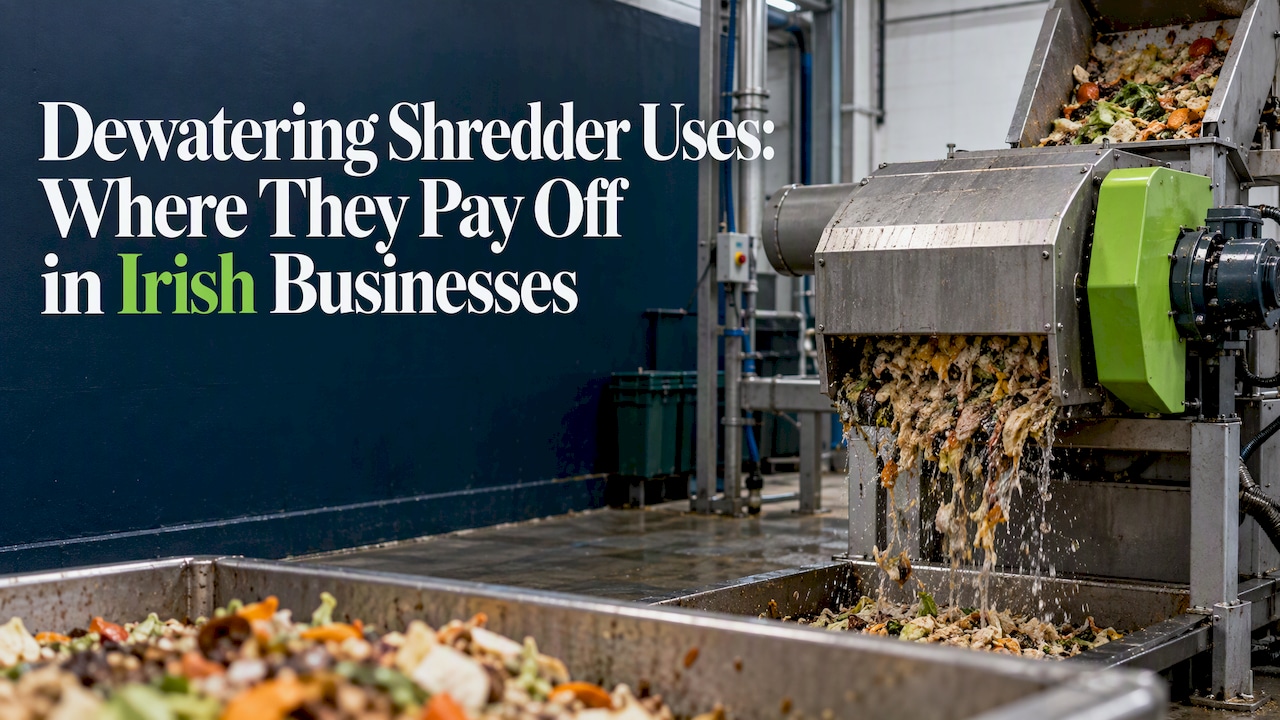
A dewatering shredder breaks wet waste into small pieces and presses the liquid out in the same machine. Its main use is preparing food and other organic waste for composting or anaerobic digestion (AD): the output is lighter, drier and more uniform, so it is cheaper to move and easier to process. It is not a way to send food waste down the drain, and that distinction matters a great deal in Ireland.
This guide covers where these machines are used, which businesses gain most, what the Irish rules say, and how to check whether your volumes justify the investment.
TL;DR
- A dewatering shredder combines size reduction and screw pressing in one unit, so wet organic waste leaves smaller, drier and lighter.
- Typical uses: food manufacturing, hotels and large catering kitchens, brewing and coffee by-products, and any site that sends organics to composting or AD.
- Volume reduction of over 90% is reported for materials such as vegetable scraps, but results depend on your waste. Test before you buy.
- Irish rules restrict using shredding devices to put food waste into the sewer. The machine must feed an authorised recovery route.
- Start with a waste audit. It tells you whether your tonnage justifies the capital cost.
Table of Contents
- What a dewatering shredder actually does
- The main uses
- What the Irish rules mean for your site
- Is the investment justified? A practical check
- Running one safely
- Where research is heading
- Our perspective
- Talk to us about your site
- FAQ
- Sources
What a dewatering shredder actually does
Two jobs happen in sequence. First, a shredder cuts incoming material into small, consistent pieces. Second, a screw press squeezes out free liquid. In an all-in-one design, the two stages are built together, so no conveyor is needed between them.
The result is two streams: a drier solid fraction and a liquid fraction. The solids are lighter, so a collection lorry carries more useful material per trip. The liquid (often called press liquor) has to be handled properly, which is where site planning comes in.
This is a different machine from a baler or compactor. Balers and compactors squeeze dry, clean materials such as cardboard. A dewatering shredder is for wet, soft, organic material that would otherwise leak, smell and weigh a lot.
The main uses
Preparing food waste for anaerobic digestion
This is the use most relevant to Ireland. Digesters work better when feedstock is uniform. Size reduction is the first step in homogenising material, which helps prevent clogging, settling and floating layers inside the digester. Manufacturers describe shredding AD feedstock to roughly 20 to 30 mm flakes to raise surface area for microbial breakdown.
SEAI’s technical guide to on-farm AD makes the same point for other feedstocks: root vegetables and silages need shredding, pulping or macerating so particles are small enough to be moved by auger or pump.
One caution from guidance on food separation for AD: digesters treat food scraps, not cutlery, cups or compostable plastics. AD is usually best suited to businesses that collect food waste only. A shredder does not fix contamination, so source separation still comes first.
Pre-treatment before composting
Shredded, partly dried organics compost more predictably. Moisture is the usual problem with kitchen waste: too wet and a compost mass turns anaerobic and smells. Pressing out liquid before the material goes to a composting stage brings it closer to a workable balance. Where a site wants to process food waste on its own premises, we also supply organic waste composting machines for business, and the right choice between composting on site and shredding for collection comes down to volume and space.
Cutting haulage costs
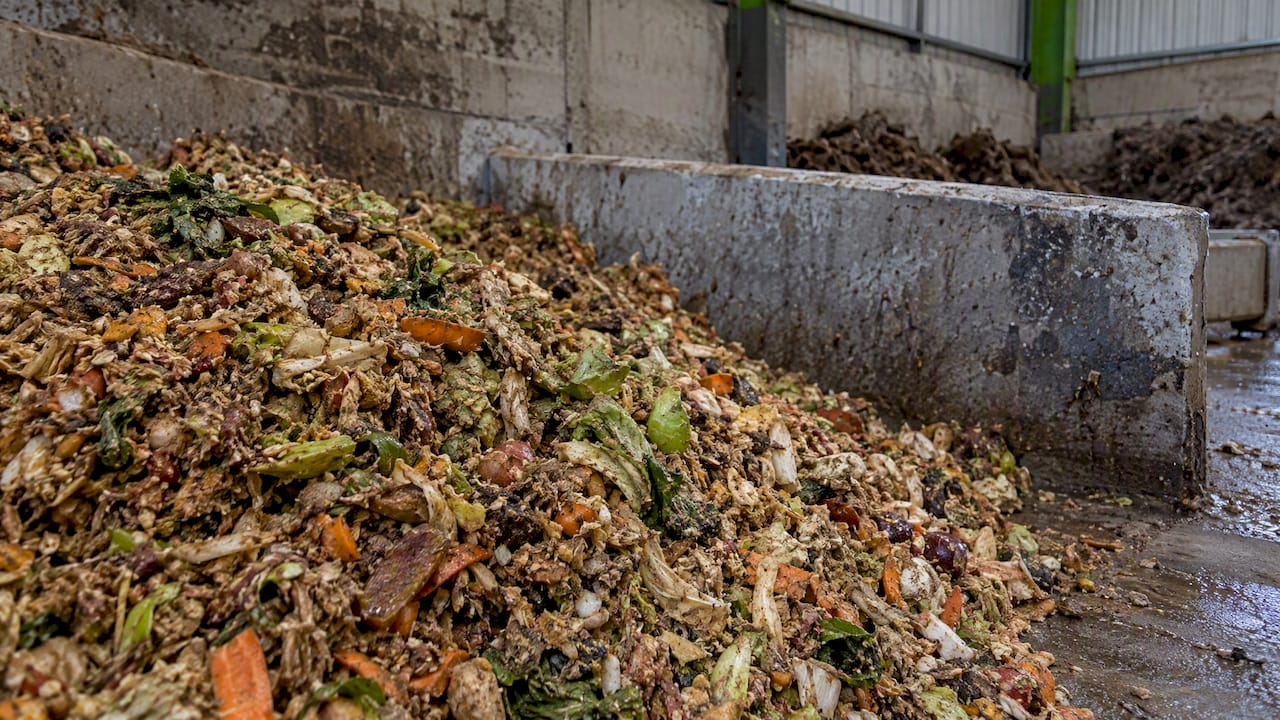
Water is heavy. Removing it lowers both mass and moisture before the waste leaves your site. One manufacturer reports volume reductions above 90% for vegetable scraps and kitchen waste. Treat that as a ceiling from supplier data, not a promise. Your own figure depends on what you throw in. For facility managers, the saving only shows up if the collection arrangement changes with it: fewer lifts, or lighter loads, or a better gate fee for cleaner material.
Food and drink processing by-products
The same manufacturer lists food waste, fruit and vegetable waste, brewery spent grain, coffee grounds and cocopeat among the materials its machines process. For Irish sites, that translates into:
- Food manufacturers and packers: trimmings, off-spec product and peelings.
- Breweries and distilleries: spent grain, which is wet and heavy.
- Coffee roasters and processors: grounds and chaff.
- Hotels, hospitals and large catering kitchens: mixed plate and prep waste, provided it is kept free of packaging.
- Supermarket and wholesale distribution: out-of-date produce, once unpacked.
Not every item above suits every machine. Fibrous, sticky or very fine materials behave differently, which is why a trial or audit matters.
What the Irish rules mean for your site
This is where many enquiries go wrong. A dewatering shredder must serve recovery, not shortcut disposal.
Source segregation. Under the Food Waste Regulations, where a source-segregated food waste collection is available, food waste must not be placed in the residual waste collection. The regulations are available as S.I. No. 508 of 2009. Check the current consolidated position with your local authority or the EPA before relying on any summary, because the rules have been amended since.
No sewer shortcut. The same departmental circular covers obligated businesses being prevented from using devices that shred or macerate food waste in order to discharge it to sewer. The reasoning is protecting wastewater networks from fats, oils and grease. Local authority guidance on discharge to sewer shows the consents that apply to trade effluent. If your machine produces press liquor, you need to know where it goes, and you should get the answer in writing before installation.
Animal by-products. Food waste containing meat or other animal-origin material falls under ABP rules. Confirm with the Department of Agriculture, Food and the Marine and your collector or treatment operator what is allowed on your route.
Documentation. Keep records of what you shred, how much, and where it goes. Auditors and local authorities look for evidence that segregation and recovery obligations are being met.
Is the investment justified? A practical check
A dewatering shredder is capital equipment. It earns its keep only when three things line up: enough volume, a clear downstream outlet and a cost you can actually cut.
- Measure what you produce. Weigh organic waste by stream for several weeks, not days. Include seasonal peaks.
- Characterise it. Moisture, packaging contamination and fat content decide the configuration. Guidance on AD feedstock stresses that one size does not fit all, and that some materials suit a horizontal centrifugal shredder-dewaterer while others need a screw press combination.
- Confirm the outlet. Who takes the solids, in what condition, and at what price or gate fee? Who takes the liquid?
- Price the storage. A machine that outpaces your collection schedule creates a pile of dewatered material with nowhere to go. Bin space, lift frequency and odour control belong in the plan.
- Compare with the alternatives. Other routes include a collection service with no on-site equipment, or on-site composting. Sometimes the cheapest answer is better segregation and no machine at all.
A useful rule: if the audit shows modest, irregular volumes, do not buy. If it shows steady tonnes of wet, clean organics, the sums often start to work.
Running one safely
Shredders have moving parts that can cause serious injury. General industrial guidance requires physical guards or safety interlocks on machinery with moving parts, lockout/tagout during maintenance or cleaning, and trained operators carrying out daily inspections. The main danger is contact with in-running nips and feed rolls.
In Ireland, your obligations as an employer sit under the Safety, Health and Welfare at Work Act, enforced by the Health and Safety Authority. Ask any supplier for the machine’s CE documentation, guarding arrangements and manual, and get your safety officer to review the installation before commissioning.
Wet organic processing also leaves fats and residues on surrounding equipment. Hygiene and downtime are real issues in food plants, and some sites bring in specialists such as dry ice cleaning providers who clean production equipment without shutting lines down. Plan cleaning access into the layout from the start.
Where research is heading
For sites that run their own digesters, dewatering is not only about the raw feedstock. Digestate, the material left after digestion, is hard to dewater. A 2025 study found that extracellular polymeric substances are a bottleneck, and that a conditioning treatment using iron-doped biochar cut capillary suction time by more than 90% and reduced water content to about 75.9% in lab conditions. That is laboratory research, not a product you can buy off the shelf, but it shows why digestate handling should be part of any AD project budget.
Our perspective
We see the same pattern with enquiries about dewatering equipment. Businesses ask for a machine when they really have a cost problem. Sometimes the machine is the answer. Often the first saving is elsewhere: a contaminated waste stream, too many lifts, or recyclables going into general waste when they could be sold.
That is why we start with the audit. We look at what you throw away, how it is stored and who collects it, then work out where equipment helps. For wet organics, a dewatering shredder can turn a heavy, leaking disposal cost into a controlled feedstock. For dry cardboard and plastic, a baler or compactor and a buyback arrangement do a similar job in the other direction, turning residue into income.
The honest test is whether the machine has a lawful, reliable outlet on both sides: clean material in, authorised recovery out. If it does not, we will say so before you spend anything.
— Graham
Talk to us about your site
We supply industrial dewatering shredders, and our guide to industrial shredder dewatering machines explains the options in more detail. If you are not sure whether your volumes justify one, start with our free waste audit. It looks at your actual waste streams and tells you what makes financial sense, whether that is a dewatering shredder, a composting machine, a baler or nothing at all.
FAQ
What is a dewatering shredder used for?
It shreds wet organic waste and presses out the liquid in one machine. The main uses are preparing food waste for anaerobic digestion or composting and reducing the weight and volume of organics before collection. Typical users are food manufacturers, breweries, large kitchens and distribution sites.
Can I use one to put food waste down the drain?
No. Irish food waste rules prevent obligated businesses from using shredding devices to discharge food waste to the sewer, and trade effluent needs a consent from the relevant authority. Use the machine only to feed an authorised recovery route, and confirm where any liquid goes before installation.
How much will it reduce my waste?
It depends on the material. Suppliers report reductions above 90% for vegetable scraps and kitchen waste, but contaminated or already dry waste will reduce far less. A waste audit and a trial on your own material give a realistic figure.
Is it the same as a food waste composter?
No. A dewatering shredder prepares material for something else, such as collection for AD or composting. A composting machine processes the food waste on site. Which one fits depends on volume, space and where the output will go.
Does a dewatering shredder need special safety measures?
Yes. It needs guarding or interlocks, lockout/tagout during cleaning and maintenance, and trained operators. Your employer duties under Irish health and safety law apply, so involve your safety officer and the Health and Safety Authority’s guidance before commissioning.
Sources
- Integrated shredding and dewatering system, Huatao Filter
- Shredder and screw press combo, TIMO
- Food waste digestion, IEA Bioenergy Task 37
- Anaerobic Digestion for On-farm Uses, SEAI
- Food Waste Separation for Anaerobic Digestion Processing
- Circular on the Food Waste Regulations
- S.I. No. 508 of 2009, Irish Statute Book
- Discharge to Sewer guidance, Tipperary County Council
- Pulp and paper mills EHS guidelines, IFC
- Novel approaches for the dewatering of anaerobic digestate from food waste, ACS Sustainable Chemistry & Engineering
- How to clean a conveyor line without shutting down, CryoMode