Most buyers pay somewhere in the low hundreds of euros per tonne for clean, well-baled OCC (old corrugated containers), but the figure you get depends on grade, moisture, bale weight, and whether you’re quoting ex-works or delivered. Headline indicators from Eurostat give useful context, not a guaranteed payout. Some companies buy back bales directly, offering sellers a more predictable route to payment than chasing spot prices alone.
TL;DR:
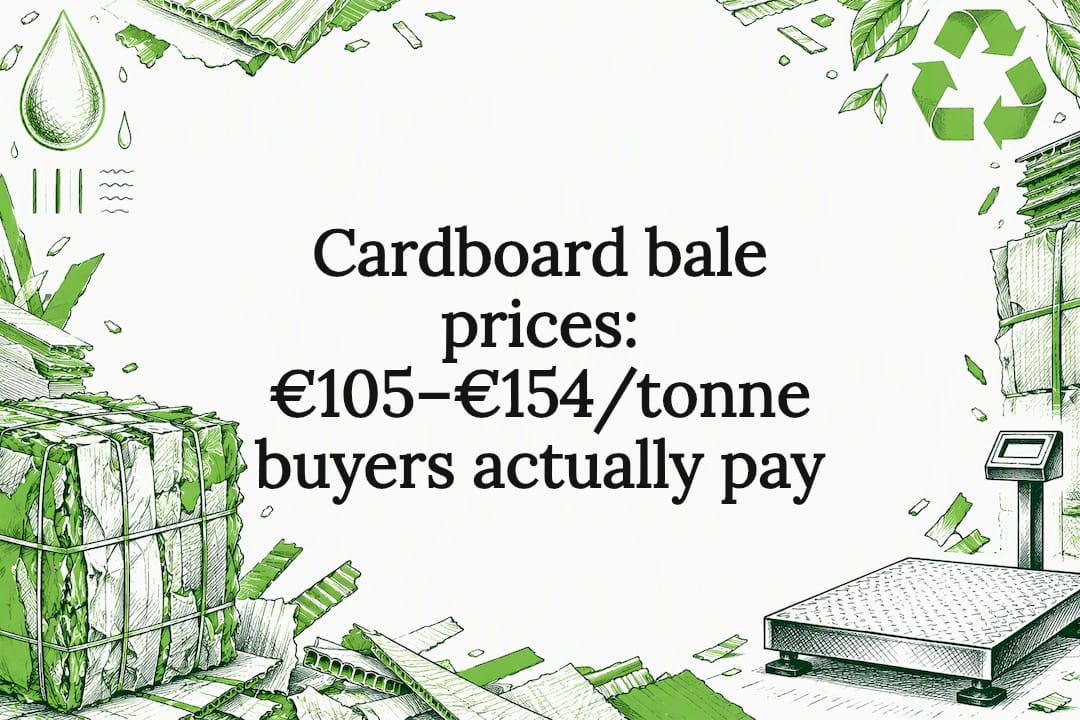
- The average market benchmark for cardboard in 2025 is around €154 per tonne, but actual quotes depend on grade, moisture, and delivery conditions.
- Proper bale density, minimal contamination, and storing away from moisture sources can significantly increase bale value and reduce rejection risks.
- Price quotes are influenced by delivered versus ex-works terms, with delivered prices typically lower but including transportation costs.
- Buyers apply deductions for contamination, moisture, and weight variances, often resulting in a net payment lower than the initial quote.
- A structured buyback agreement with a free waste audit provides better predictability and stability than ad-hoc, spot transactions.
Table of Contents
- What determines a cardboard bale price
- Reading market benchmarks without misusing them
- How to get a usable quote and compare buyer offers
- How to improve the value of your baled cardboard
- Common deductions and payment timing to expect
- Why a structured buyback often beats ad-hoc sales
- Our free waste audit and bale buyback, explained
- FAQ
- Sources
What determines a cardboard bale price
Buyers price bales on a handful of factors, some you control and some you don’t. Grade matters most: clean OCC, free of food residue, wet fibre and soft plastics, commands a noticeably better rate than mixed or contaminated loads, a point reinforced by BIR’s market commentary on recovered paper quality.
Weight basis changes the maths too. Some buyers quote per tonne, others per bale, and a weighing allowance (a small deduction to cover scale variance) can shift the net figure. Bale density affects transport economics: a denser bale means fewer trucks per tonne moved, which buyers factor into their offer. Moisture is penalised because wet cardboard weighs more without adding usable fibre.
Delivery terms decide who carries the freight cost. An ex-works price assumes you deliver to the buyer’s yard; a delivered price means the buyer collects, usually at a lower per-tonne rate to cover their own transport.
Before issuing a firm quote, most buyers will ask for:
- A clear statement of grade (OCC, mixed, or specific board type).
- Sample photos or a site visit to verify quality.
- Confirmed bale weight and dimensions.
- Your preferred collection frequency and volume per collection.
Reading market benchmarks without misusing them
Public indicators are a starting point for negotiation, not a promise of what you’ll receive. Eurostat’s secondary-material price indicator is calculated by summing trade value and volume across EU trade codes, then dividing one by the other. It reflects an EU-wide average across many transactions, not a quote for your specific bale.
Letsrecycle’s export price pages and BIR’s recovered-paper commentary serve a similar function: they show direction and range, driven by export demand, mill intake, and seasonal collection volumes. When export demand strengthens, as EUWID reported for UK recovered paper, local rebates can move quickly even if your baling process hasn’t changed at all.
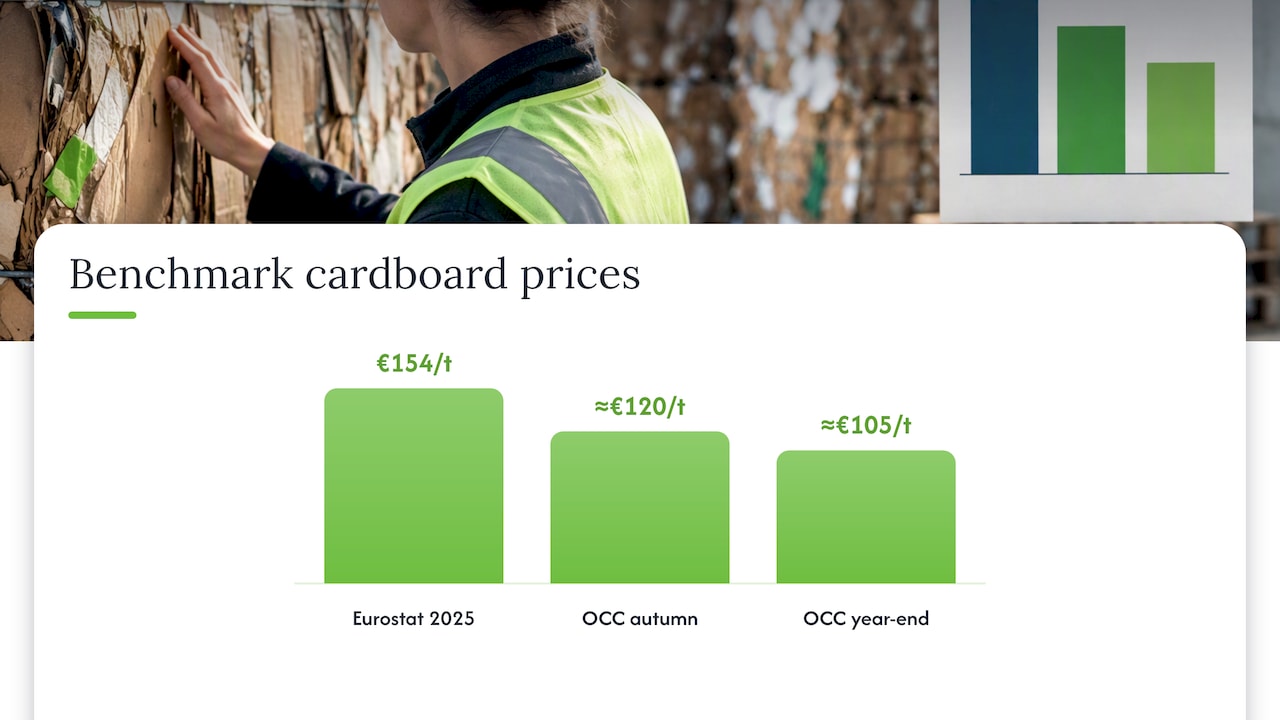
Eurostat’s indicator put paper and cardboard at €154 per tonne in 2025, an EU-wide average rather than a figure any single buyer is bound to match. Industry reports tracked OCC benchmarks drifting from around €120 per tonne in autumn to roughly €105 by year-end before stabilising in early 2026, a reminder that these numbers move with the season, not just with your material.
- Treat published indicators as a reference range, never a locked-in price.
- Ask every buyer to date their quote, since rates can shift within weeks.
- Expect seasonal softness around year-end collection surges.
How to get a usable quote and compare buyer offers
A vague request gets a vague answer. Buyers price bales properly only when you give them the same information they’d need to inspect the load in person.
- State the grade clearly: OCC, mixed, or a specific board type, with photos if possible.
- Confirm bale weight, dimensions, and whether you’re quoting per tonne or per bale.
- Specify the delivery basis: ex-works (you deliver) or delivered (they collect).
- Ask for a price date, since quotes drift with the market.
- Request the weighing allowance and contamination tolerance in writing.
Once you have two or three quotes, compare them line by line rather than headline figure against headline figure. Check who carries freight, what the weighing allowance is, how contamination is handled, and when payment lands after collection. A buyer offering a slightly higher headline price but charging for freight and applying a tight contamination tolerance may net you less than a lower quote with no freight deduction.
Before signing anything, agree how often the price is reviewed, what triggers a load rejection, and how quickly you’ll be paid once the weighbridge ticket is issued.
Pro Tip: Ask every buyer the same five questions in the same order. It makes comparing offers far quicker than reading separate PDFs.
How to improve the value of your baled cardboard
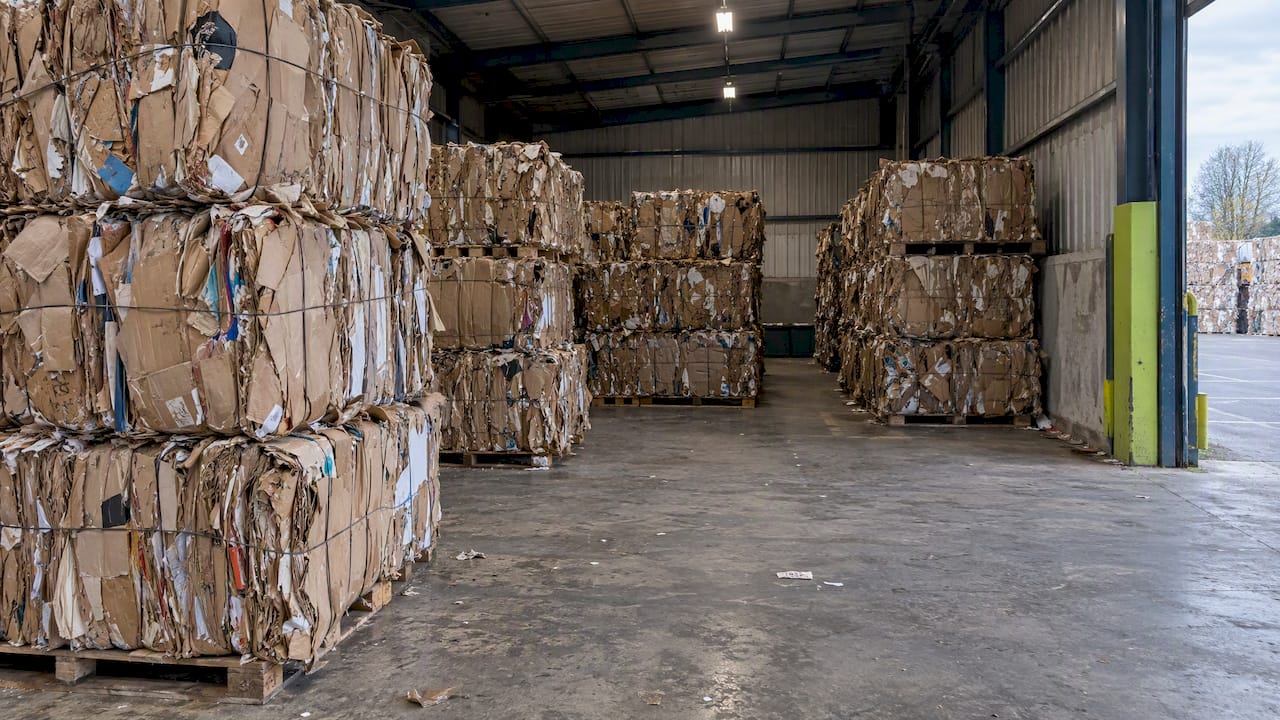
Bale quality is largely within your control, and small operational changes shift a load from “merchant grade” to “clean OCC” without any extra spend. Keep bales covered and raised off the ground to stop moisture creeping in, and store cardboard away from soft plastics, food packaging, and general waste.
A simple staff checklist at the point of collection, removing tape rolls, polythene wrap, and wet board before baling, prevents a load being downgraded or rejected outright. Regular baling schedules also help, since cardboard left loose for days tends to pick up moisture and contamination that a same-day bale avoids.
- Store bales under cover, off bare ground, away from soft plastics.
- Train staff to strip contaminants before material goes into the baler.
- Bale on a fixed schedule rather than letting loose cardboard accumulate.
If your volumes are steady, whether that’s weekly or daily, investing in or hiring a cardboard baler usually pays for itself through better grading and fewer rejected loads, especially once paired with a buyback agreement that gives you a predictable collection rhythm.
Pro Tip: A covered, dry storage bay is often the single cheapest upgrade that moves a bale into a higher price band.
Common deductions and payment timing to expect
The headline price rarely matches the figure that lands in your account. Buyers typically apply a weighing allowance, per-lift or per-collection service charges, and deductions for excess moisture or contamination. Examples of these charge types appear in government procurement schedules.
Ex-works pricing usually nets you more per tonne because you’ve already covered transport, while delivered pricing is lower per tonne but removes your freight cost and hassle. Neither is universally better; it depends on whether you have the vehicles and time to run collections yourself.
- Expect a weighing allowance of a small percentage to cover scale variance.
- Service or per-lift charges may apply depending on collection frequency.
- Moisture or contamination adjustments reduce the paid weight, not the bale count.
Payment typically follows the weighbridge ticket, so keep copies of every collection docket; most buyers settle once the ticket and any agreed paperwork are confirmed.
Why a structured buyback often beats ad-hoc sales
Selling bales load by load to whoever quotes highest that week works, but it leaves you exposed to the swings we’ve covered, export demand, seasonal softness, and inconsistent grading between buyers. A waste audit followed by a standing buyback agreement removes most of that guesswork.
Businesses producing steady volumes, with space to store and bale cleanly, tend to benefit most: the arrangement turns a variable cost centre into a predictable line of income rather than a one-off sale. We built our Bale Buyback scheme and free waste audits around that exact problem, converting disposal costs into revenue for businesses that would otherwise treat cardboard as pure overhead.
— Graham
Our free waste audit and bale buyback, explained
Some buyback arrangements start with a free waste audit rather than a guess at tonnage. The audit looks at current volumes, storage, and baling setup, then turns that into a dated buyback quote so the business knows what to expect and when the price gets reviewed.
That structure removes the two biggest frustrations with ad-hoc sales: chasing quotes every few weeks and discovering deductions only after the load has been weighed.
- A free waste audit assesses your volumes, storage, and baling process.
- The audit feeds into a dated buyback quote with clear review terms.
- Ongoing collections run on a schedule you agree upfront.
If you’re producing regular volumes of cardboard and want a clearer line on what it’s worth, book a free waste audit or go straight to We Buyback Bales to request a quote.
FAQ
What is a fair price per tonne for baled cardboard?
There’s no single fair price, since rates depend on grade, moisture, and delivery terms, but Eurostat’s EU-wide indicator put paper and cardboard at €154 per tonne in 2025 as a general reference point. Treat any quoted figure as a starting point for negotiation rather than a fixed market rate.
How often do cardboard prices change?
Prices move with export demand, mill intake, and seasonal collection volumes, sometimes within weeks, as shown by Letsrecycle’s export price tracking. Always ask a buyer to date their quote rather than assuming it holds for months.
What’s the difference between ex-works and delivered pricing?
Ex-works pricing assumes you deliver the bales to the buyer’s yard, usually earning a higher per-tonne rate. Delivered pricing means the buyer collects, which typically lowers the per-tonne figure to cover their transport cost.
Does Compact buy baled cardboard directly?
Yes, our Bale Buyback scheme purchases baled cardboard directly from businesses, usually following a free waste audit that sets out a dated quote. It’s designed for businesses wanting predictable payment rather than chasing spot prices each collection.
What reduces the price a buyer offers?
Contamination (soft plastics, food residue), excess moisture, and poor bale density are the most common reasons for a lower offer or a rejected load. Clean, well-baled OCC stored under cover consistently commands a better rate than mixed or damp material, according to BIR’s recovered-paper commentary.
Sources
- Recycling – secondary material price indicator – Statistics Explained
- Letsrecycle
- Government schedule of service charges and weight allowances